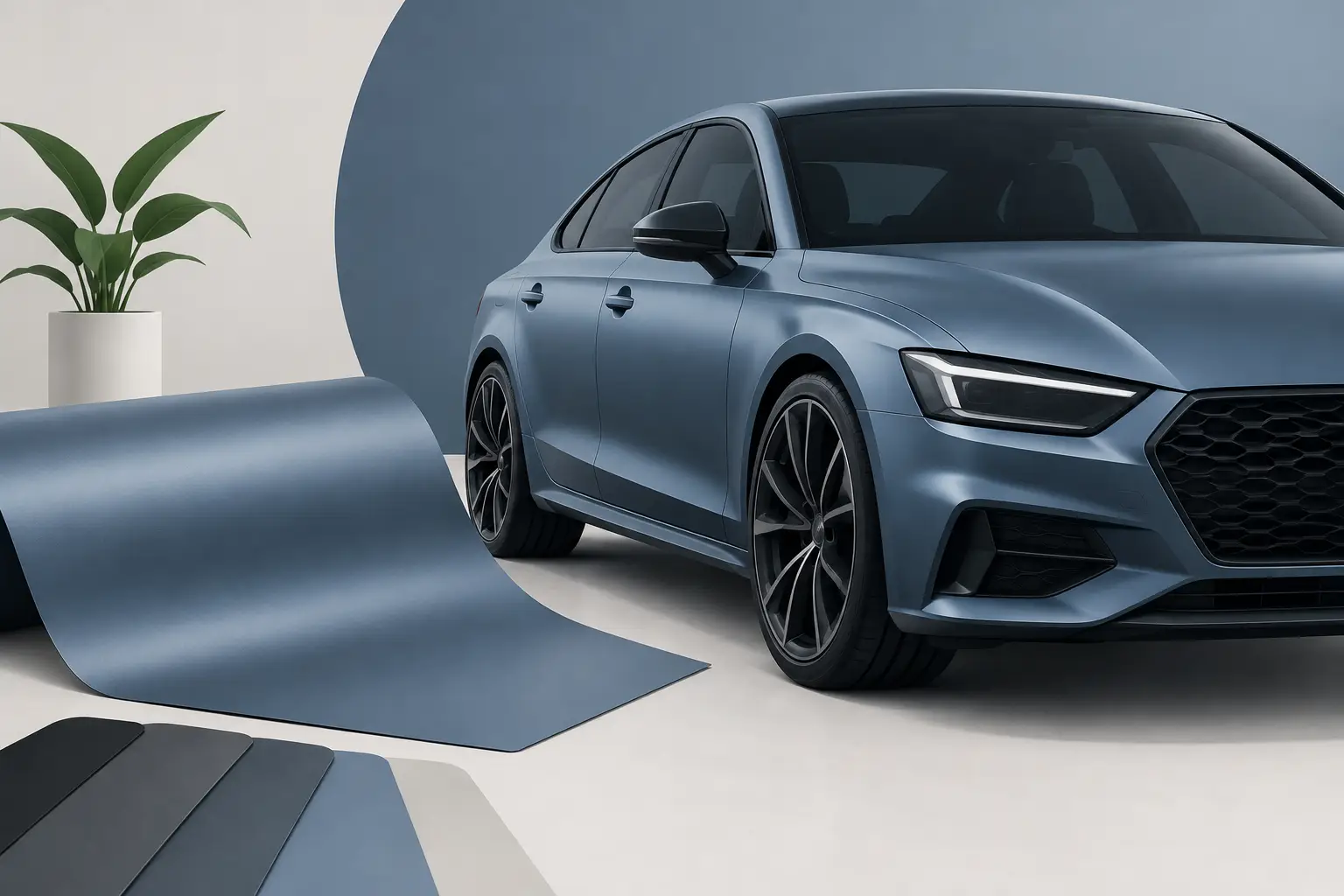
A satin finish can make a familiar car look instantly more considered. It softens harsh reflections, gives body lines more presence, and sits in the sweet spot between mirror-like gloss and fully muted matte. In this satin vinyl wrap review, we look at what the finish genuinely delivers, where it asks for more care, and who will love it most.
For drivers who want a car that turns heads without shouting for attention, satin is one of the strongest choices in modern vehicle styling. It feels premium on everything from a compact daily driver to a performance SUV or exotic coupe. But its appeal is not only visual. The right satin wrap also lets you transform the character of your vehicle while keeping the original paint underneath intact.
Satin Vinyl Wrap Review: What Does It Look Like?
Satin vinyl has a smooth, low-sheen surface. It reflects light, but not in the sharp, mirror-like way gloss paint does. Under sunlight, parking-lot lamps, or city night lighting, the finish creates a soft glow that makes curves, fenders, and sharp creases look more sculpted.
Think of gloss as polished glass and matte as velvet. Satin sits between them: clean, silky, and subtly reflective. That balance is why it works so well with modern automotive design. A satin black sedan can look stealthy without disappearing into a flat black silhouette. A satin gray SUV can look richer and more dimensional than standard factory silver. On brighter colors, satin can add a technical, almost concept-car feel.
The finish is especially effective on vehicles with strong body surfacing. It gives an aggressive bumper, wide rear haunches, or a coupe roofline enough visual definition without the glare that can sometimes hide those details on gloss paint.
Why Satin Feels More Premium Than a Basic Color Change
A quality color change is not simply about covering paint with a new shade. It is about choosing a finish that matches the personality of the car and the owner behind the wheel. Satin has that designer-led quality. It looks intentional, not accidental.
It also offers serious range. Satin charcoal, dark blue, white, metallic gray, olive, red, and color-shifting finishes can each tell a different story. Some owners want a restrained executive look; others want a weekend car that feels completely unlike anything else on the road. With more than 2,000 colors and finishes available at Project Unicorn, the final direction can be refined around the vehicle rather than forced into a limited menu.
A satin wrap is also reversible. If you decide to return to the original color later, professionally installed vinyl can be removed without the permanence of a repaint, provided the factory paint was in sound condition before wrapping. That matters to owners who value both self-expression and future flexibility.
The Real-World Benefits of Satin Vinyl
The visual result is the headline, but satin vinyl has practical appeal too. A professionally applied wrap forms a sacrificial layer over the painted surface. It helps reduce exposure to light scuffs, minor abrasions, road grime, and UV-related fading. For a daily-driven vehicle, that can help preserve the condition of the paint below.
There is an important distinction, though. Vinyl wrap is not a replacement for paint protection film. Standard color-change vinyl is thinner and primarily made for styling, with a useful level of surface protection as an added benefit. If your priority is defending high-impact areas from stone chips, deeper scratches, and harsh highway use, self-healing TPU paint protection film is the more appropriate solution.
For many owners, the ideal decision depends on how the car is used. A city commuter that needs a dramatic new look may be perfectly suited to satin vinyl. A low-slung sports car that regularly sees expressway driving may benefit from satin styling combined with targeted protection in vulnerable areas. The right recommendation should follow the vehicle, its condition, and your driving habits – not a one-size-fits-all package.
The Trade-Offs: Satin Is Not Maintenance-Free
Satin looks effortless when it is clean. Keeping it that way requires a little intention.
Because the surface has a low sheen, heavy rubbing can create uneven shiny patches. Traditional paint polishing is not suitable for satin vinyl, since it can alter the finish permanently. Harsh chemicals, abrasive compounds, and automated car washes with aggressive brushes are also poor choices. They may leave marks that are much more obvious on a uniform satin surface.
Water spots deserve attention in Malaysia’s heat as well. Rainwater, mineral-heavy water, and bird droppings should not be left sitting on the wrap for long periods. The goal is simple: clean contamination early, rinse thoroughly, and dry the vehicle with a soft, clean microfiber towel rather than scrubbing at one stubborn area.
That does not make satin impractical. It simply means it rewards better habits. Hand washing with products suitable for wrapped or matte-finish vehicles, avoiding strong petroleum-based cleaners, and parking under cover when possible will go a long way. Owners who already enjoy caring for their cars often find the routine easy. Those who want the most forgiving possible finish may prefer gloss, which is generally better at hiding wipe marks and can be polished in certain situations.
What Satin Hides and What It Reveals
Satin is good at reducing the visual impact of light dust compared with deep gloss black, especially in medium and lighter shades. It also avoids the obvious swirl marks that can make dark gloss paint look tired under strong lighting.
On the other hand, greasy fingerprints, water spotting, and careless wipe marks can stand out. Dark satin colors are dramatic, but they demand more disciplined washing than satin silver, gray, or lighter metallic tones. If the car is parked outdoors every day, color choice matters as much as finish choice.
Installation Quality Decides the Final Result
A satin vinyl wrap can look spectacular in a studio and disappointing on a real vehicle if installation is rushed. The material must be applied with controlled tension, clean panel preparation, thoughtful seam placement, and careful finishing around edges, trims, sensors, door handles, and complex bumpers.
This is where premium craftsmanship is visible. On a properly wrapped vehicle, the finish should look like it belongs there. Panels should flow consistently, exposed edges should be clean, and the material should not be overstretched around deep recesses. The installer also needs to assess the original paint before work begins. Existing chips, peeling clear coat, poorly repaired panels, or old repaint work can affect both the appearance and safe future removal of any vinyl.
A quality studio will discuss these details before recommending a direction. That conversation matters more than choosing a color from a swatch under showroom lighting. Look at the vehicle outdoors, consider your usual parking conditions, and imagine how the color will work with your wheels, window tint, trim, and interior accents.
Is Satin Vinyl Right for Your Car?
Choose satin if you want refinement with attitude. It is an excellent match for owners who feel standard factory paint is too predictable, but do not want an overly loud or fully matte aesthetic. It can make an executive sedan look more tailored, give an SUV a more athletic stance, or turn a weekend coupe into a genuine personal statement.
It is less ideal if you rely on quick automatic washes, rarely have time for basic aftercare, or expect the wrap to provide the same impact resistance as TPU paint protection film. Those are not faults in satin vinyl. They are simply part of choosing the right finish for the way you live with your car.
The best satin transformations do not chase a trend for the sake of it. They make the vehicle feel more like its owner: sharper, more distinctive, and impossible to mistake for stock. Choose the shade thoughtfully, protect it properly, and let your car carry a finish with real presence. Be unique. Be Unicorn.