
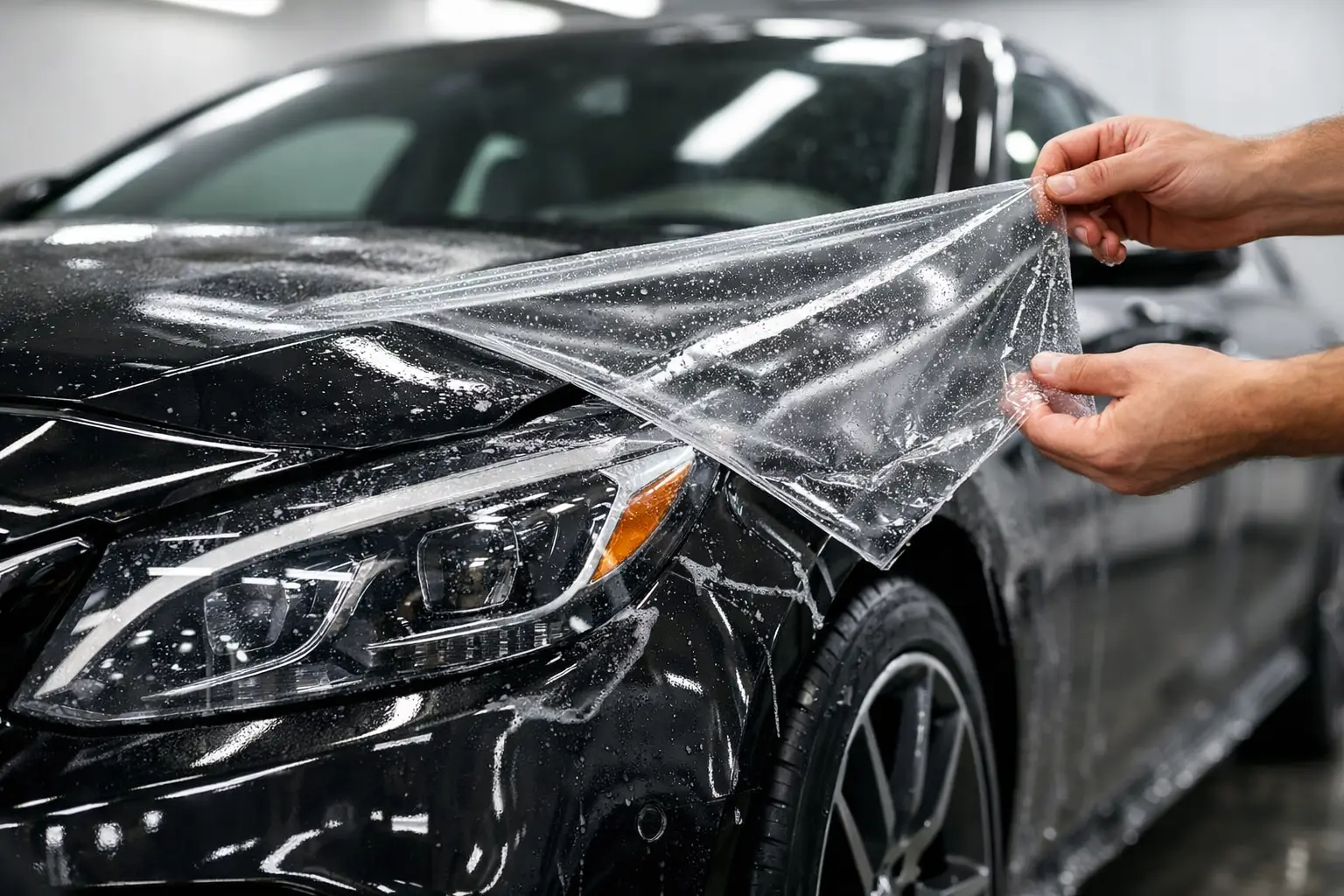
The first stone chip usually happens on a completely normal drive. Not a track day. Not a road trip. Just a regular run through traffic, a little loose debris, and suddenly that front bumper no longer looks as sharp as it did last week.
That is exactly why more car owners are asking the same question: what is paint protection film, and is it actually worth putting on a vehicle you care about?
The short answer is yes – if you want to preserve your paint, reduce daily wear, and keep your car looking fresher for longer. But the real value of PPF is not just that it protects. It protects in a way that still lets your car look like your car.
What Is Paint Protection Film?
Paint protection film, often called PPF or clear bra, is a transparent or colored urethane-based film applied over a vehicle’s painted surfaces. Its job is simple: take the abuse that would otherwise hit your paint.
Modern PPF is designed to defend against common damage like stone chips, light scratches, road debris, bug splatter, bird droppings, and UV exposure. Higher-end films are typically made from TPU, or thermoplastic polyurethane, which is prized for flexibility, clarity, durability, and self-healing performance.
That self-healing part is what gets a lot of attention. With quality TPU film, very fine swirl marks and surface scuffs can often disappear with heat from the sun or warm water. It is not magic, and it will not erase deep cuts, but it does help the film maintain a cleaner, glossier appearance over time.
If you love the finish your car already has, gloss PPF keeps that look while adding protection. If you want a different visual effect, matte PPF can change the final appearance while still serving the same protective role. Newer color-infused TPU films go a step further by combining styling and protection in one layer, which is a major shift for owners who want more than a standard clear finish.
How Paint Protection Film Actually Works
Think of PPF as a sacrificial layer. Instead of your factory clear coat absorbing every small hit from the road, the film takes the impact first.
When a small stone strikes the front end, or when grime sits on the paint too long under hot sun, the film becomes the barrier between the environment and the original finish. That matters because modern automotive paint looks great, but repairing it properly is never as simple as people hope. Matching paint, blending panels, and restoring that fresh factory look can get complicated fast.
A good PPF installation is precision-cut and carefully wrapped around high-impact areas such as the hood, front bumper, fenders, side mirrors, headlights, door edges, and rocker panels. Some owners protect just the front end. Others choose full-body coverage for maximum preservation, especially on darker paints, performance cars, luxury vehicles, or cars that see a lot of highway miles.
The film also has a topcoat that helps with stain resistance and hydrophobic behavior. That means water beads more easily, dirt has a harder time sticking, and washing the car usually becomes less of a chore. It does not mean the car stays clean forever. It just means the surface is easier to live with.
What Is Paint Protection Film Best For?
PPF makes sense for more people than many assume. You do not need to own a supercar to benefit from it.
If you drive daily in heavy traffic, park outdoors, use highways often, or care about resale and long-term presentation, PPF solves a very real problem. Malaysian weather is especially tough on exterior surfaces. Heat, UV, rain, grime, and everyday road debris can age paint faster than people expect. On darker cars, even small imperfections become obvious quickly.
This is why PPF is popular with two very different types of owners. The first is the enthusiast who wants their car to stay immaculate. The second is the practical owner who simply wants to avoid seeing the front end get peppered with chips after a year of normal use. Different mindset, same benefit.
It is also a strong choice for freshly delivered cars. Applying film early means the paint is protected before damage starts building up. Waiting too long does not make PPF useless, but it does mean the installer may be protecting paint that already has chips, swirls, or etched marks.
What PPF Does Well – And What It Does Not
This is where expectations matter.
PPF is excellent at reducing damage from light road impact, minor abrasions, and environmental contamination. It helps preserve gloss, limits wear on vulnerable areas, and gives owners more confidence when using the car as intended.
But it is not armor plating. A strong impact can still damage the film and the paint underneath. Deep scratches will not simply disappear. Poor maintenance can still leave the surface looking tired. And if the film is installed badly, even a premium material can look disappointing.
There is also the question of visibility. High-quality film is extremely clear, but no film is improved by poor installation. Lifted edges, trapped dust, stretch marks, and uneven alignment are not product issues as much as workmanship issues. That is why PPF is one of those services where the installer matters almost as much as the material itself.
For owners who expect perfection, that is worth understanding early. The best result is not just film on paint. It is the right film, applied with clean prep, precise patterns, and careful finishing.
PPF vs Ceramic Coating
These two are often confused, but they do different jobs.
PPF is about physical protection. It is the better choice for defending against chips, light scratches, and road debris. Ceramic coating is more about surface behavior. It enhances slickness, boosts water beading, and makes cleaning easier, but it does not offer the same impact resistance as film.
If your main fear is rock chips on the front bumper, ceramic coating alone is not the answer. If your main goal is easier washing and a glossier look, coating may help. Many owners combine both – PPF on vulnerable painted surfaces, with coating applied over the film or on the rest of the car for easier maintenance.
It depends on how you use the vehicle and how serious you are about preservation. For a weekend car, partial protection may be enough. For a prized daily driver, a more complete setup often makes more sense.
Is Paint Protection Film Worth It?
If you care about keeping your original paint in top condition, yes, it usually is.
Factory paint has value. It affects how the car looks, how it ages, and how it is perceived later. Once the front end starts collecting chips and scratches, that fresh, premium appearance fades faster than most owners expect. PPF helps slow that decline.
The value is not just financial. It is emotional too. A well-kept car simply feels better to own. It looks sharper in the sun, photographs better, and gives you that small but satisfying moment every time you walk back to it in a parking lot.
That matters whether you drive a performance coupe, a luxury SUV, or a well-loved daily commuter that you want to keep looking special. At a studio like Project Unicorn, that mindset is familiar – protection is not separate from style. It is part of building a car that stays worthy of attention.
Who Should Consider PPF First?
If you have a new car, a dark-colored paint finish, a high-mileage commute, or a vehicle you plan to keep for years, you are a strong candidate. The same goes for owners who are particular about details and do not want every tiny mark showing up after a few months.
It is also a smart move for custom builds and premium finishes. If you have invested in the look of the car, protecting that finish is the logical next step. There is no sense creating a head-turning exterior only to let road wear chip away at it.
The bigger point is simple: PPF is not about being precious with your car. It is about enjoying it without watching the paint slowly lose the battle.
A great vehicle should still feel great after real use. That is what paint protection film is really for.