That moment when you look at your car and feel like it no longer reflects you – or worse, the finish is starting to show age under harsh sun and daily road wear – is usually when the real question shows up: should you wrap it or repaint it?
For most owners, the answer is not as simple as “paint is permanent” and “wrap is temporary.” In a place where UV exposure, heat, rain, and daily driving can punish exterior surfaces, the smarter choice depends on what you want from the car. A new look? Better paint preservation? Easier reversibility? A factory-style restoration? Each path has a different payoff.
Car wrap vs paint: what is the real difference?
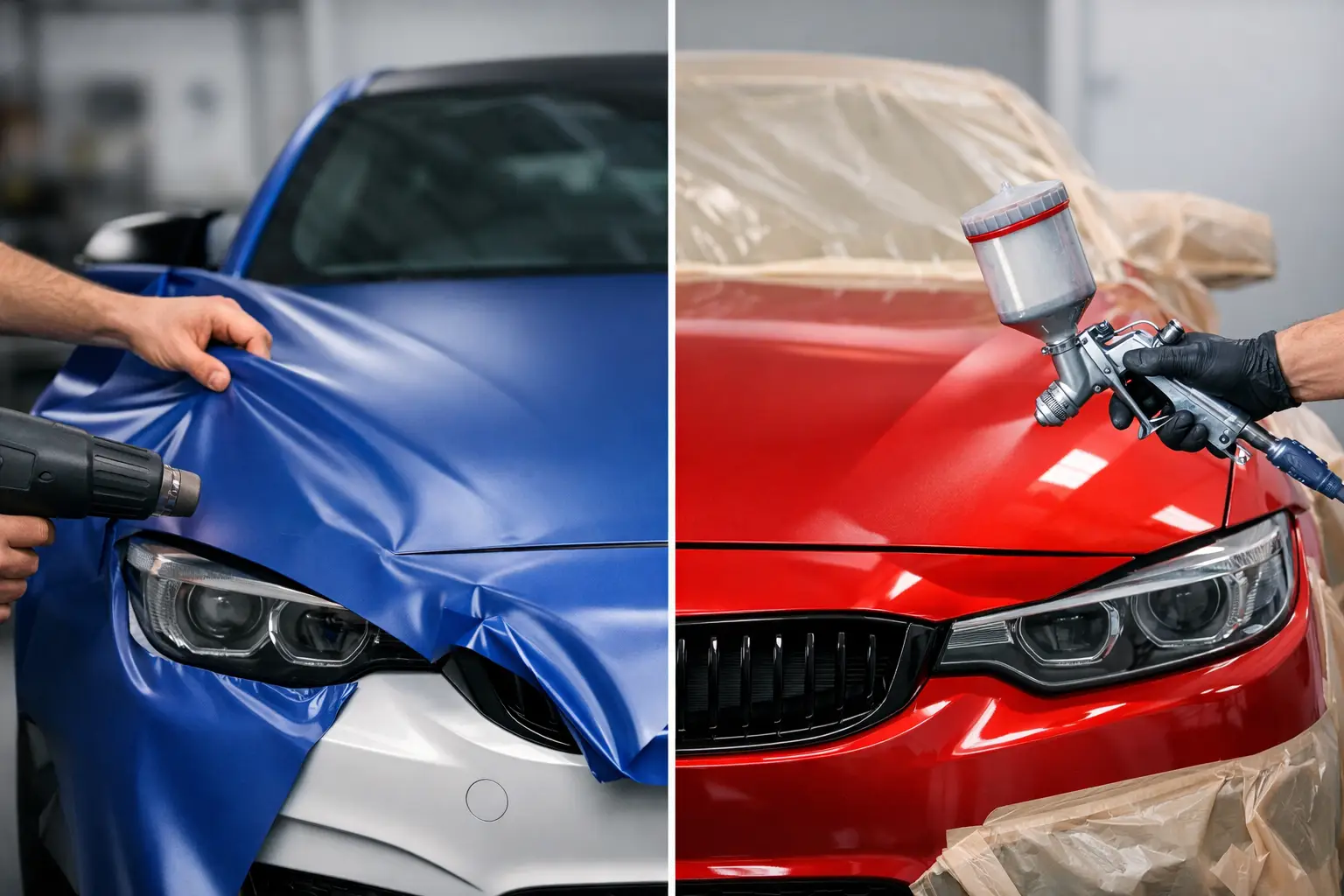
A repaint changes the car’s surface by spraying on new automotive paint and clear coat. A wrap changes the appearance by applying a vinyl film over the existing paint. Visually, both can transform a vehicle. The difference is in how they get there, how they age, and what they protect.
Paint becomes part of the car. Done properly, it can look incredible and feel truly original to the body. But it is also a bigger commitment. Once the car is repainted, going back is neither easy nor practical.
A wrap sits on top of the original finish. That gives it a different kind of value. You can dramatically change the look of the car while preserving the paint underneath. If your taste changes later, or you plan to sell the car and want to return it closer to stock appearance, that flexibility matters.
This is why the car wrap vs paint decision usually comes down to ownership goals, not just looks.
If you want freedom to change the look, wrap usually wins
For drivers who see their car as a personal statement, wraps open a much wider creative lane. Satin, matte, gloss, metallic, brushed, forged textures, subtle neutrals, loud statement shades – the range is massive compared to what most owners realistically pursue with repainting.
That matters because many people are not trying to “restore” a car. They are trying to make it feel more premium, more current, or more like their own. A wrap is often the cleaner answer for that. It delivers visual impact without asking you to permanently rewrite the car.
This is also where a proper studio approach matters. A premium wrap is not just about choosing a trendy color. It is about panel alignment, edge finishing, surface prep, and how natural the final result feels up close. A great wrap should not look like a shortcut. It should look intentional.
If the existing paint is badly damaged, paint may be the better move
Wrap is not magic. It needs a stable surface underneath.
If your vehicle has peeling clear coat, major paint failure, rust issues, deep body damage, or previous repair work in poor condition, a wrap may not be the right first step. Vinyl can highlight imperfections rather than hide them. In those cases, repainting or body restoration may make more sense because the actual surface needs correction.
This is one of the most common misunderstandings around car wrap vs paint. People assume a wrap can cover anything. In reality, the better the original paint condition, the better the wrap result.
If your paint is healthy but boring, wrapping is a strong option. If your paint is failing, paintwork may be necessary before style upgrades become worth doing.
Protection changes the conversation
A repaint improves appearance, but it does not automatically give you meaningful extra defense against chips, light scratches, and road wear beyond what quality paint and clear coat already provide. A vinyl wrap, on the other hand, adds a sacrificial layer over the original paint.
That does not make vinyl the same as dedicated paint protection film. They serve different purposes. But for many owners, a color change wrap offers an attractive two-in-one benefit: restyle the car and help shield the original finish from daily abuse.
This is especially appealing for newer vehicles, enthusiast cars, and premium models where preserving original paint can support long-term value and pride of ownership. If the factory paint is still in good shape, covering it instead of replacing it is often the more strategic move.
Paint still has strengths that wrap does not replace
There is a reason quality paintwork still commands respect. When done at a high level, paint has a depth and permanence that some owners specifically want. If your goal is a true restoration, factory color correction, or a finish meant to stay with the car for many years with no intention of reversal, paint can be the right call.
Paint also makes sense when the project is less about customization and more about repair. If a panel has suffered enough damage to require refinishing anyway, repainting becomes part of putting the car back into proper condition.
The trade-off is commitment. Color-changing a car with paint is a much bigger decision than color-changing it with vinyl. Door jambs, inner areas, and full-color conversion details make the process more involved if you want it done thoroughly. That can be worth it, but only if permanence is actually the goal.
Car wrap vs paint for resale and ownership flexibility
If you change cars every few years, flexibility matters more than many owners realize.
A wrap gives you options. You can enjoy a distinctive finish now, then remove it later to reveal the original paint underneath if it has been well maintained. That can be attractive to buyers who prefer factory paint or a less personalized look. It also lets you stand out now without forcing the next owner into your exact taste.
A repaint is harder to separate from the car’s story. Some buyers are perfectly happy with that, especially if the work is excellent and the color suits the model. Others may prefer original paint, particularly on enthusiast or luxury vehicles where originality carries weight.
So if your priorities include reversible styling and preserving what is underneath, wrap has a practical edge.
Maintenance is different, not necessarily harder
Neither option means you can ignore care. Both finishes need proper washing habits and attention to contamination, sun exposure, and general wear.
Wrapped cars benefit from careful maintenance because the finish layer is different from paint. The reward is that many owners are more comfortable enjoying bold finishes like matte or satin through wrap, rather than committing to those textures permanently through paint.
Paint can be polished and corrected in ways vinyl cannot always match, but that does not automatically make it easier to live with. Dark paint, for example, can show swirl marks quickly. Matte paint has its own maintenance limitations. The point is not that one is maintenance-free. It is that the type of maintenance changes with the material.
The best choice depends on what kind of owner you are
If you love the idea of refreshing your vehicle’s identity, protecting original paint, and keeping the option to change again later, wrap usually makes more sense. It suits modern owners who want premium styling without treating the decision as permanent.
If your car genuinely needs surface restoration, or you want a lasting refinishing solution with no intention of reversal, paint may be the better fit. It is less about trends and more about rebuilding the finish itself.
For many daily drivers and enthusiast cars, the sweet spot is clear: the paint underneath is still good, but the owner wants something more distinctive and more protective than leaving it stock. That is where a premium vinyl wrap feels less like a compromise and more like the modern answer.
At Project Unicorn, that is exactly how we see it. Not as a generic workshop choice, but as a design and preservation decision. Your car can stay protected, look sharper, and feel more like yours without locking you into one path forever.
The smartest upgrade is not the one that sounds more dramatic. It is the one that fits how you drive, how long you plan to keep the car, and how boldly you want it to speak for you.