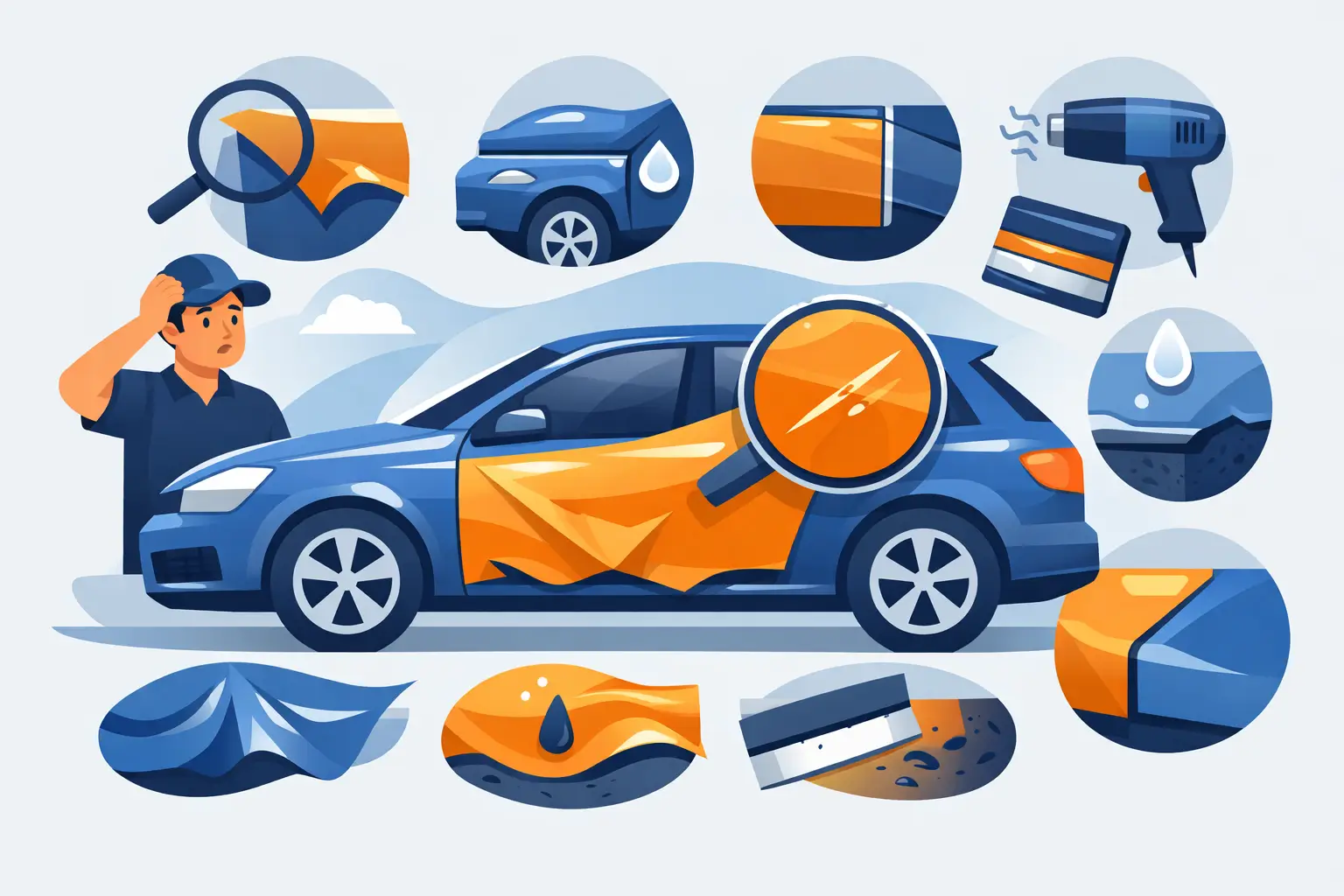
A fresh vehicle wrap should make your car look sharper, cleaner, and more intentional – not like something is already going wrong a week later. If the finish looks off under sunlight, starts lifting at the edges, or feels rough where it should feel smooth, those are classic signs of bad wrap installation. And on a premium car or even a well-kept daily driver, small flaws rarely stay small for long.
A poor install does more than hurt the look. It can trap moisture, collect dirt, fail early in Malaysia’s heat, and in some cases even put the original paint at risk during removal. If you invested in a wrap for style, protection, or both, it should feel like an upgrade, not a compromise.
Why bad wrap installation shows up quickly
Vinyl wrap and PPF are detail-driven materials. They do not forgive rushed prep, weak panel cleaning, sloppy stretching, or careless trimming. A vehicle can leave the studio looking acceptable under indoor lights, then reveal every shortcut once it hits direct sun, rain, traffic dust, and daily washing.
That is why the first few days and weeks matter. Some minor post-install behavior can be normal depending on the material, the panel shape, and the curing period. But repeated lifting, visible contamination, and poor finishing are not “settling in.” They are warning signs.
The most common signs of bad wrap installation
1. Bubbles that do not disappear
A smooth wrap surface should look intentional from every angle. If you see clusters of bubbles, especially larger ones or bubbles that stay after the wrap has had time to settle, that usually points to trapped air, poor squeegee technique, or contamination underneath the film.
Tiny microbubbles can sometimes happen on certain materials right after installation and may reduce as the adhesive cures. But if the bubbles are obvious, multiplying, or appearing around complex curves and edges, the install was likely rushed or handled without enough precision.
2. Edges that start lifting
This is one of the clearest signs of bad wrap installation, and one of the most frustrating. Door edges, side mirrors, bumpers, hood corners, and deep recesses are where weak workmanship gets exposed first. If the wrap is peeling back, curling, or collecting dust along the edge, the bond is failing.
Sometimes this happens because the installer overstretched the material. Sometimes the panel was not properly cleaned, or the edges were not finished and post-heated correctly. Either way, lifting edges almost never improve on their own.
3. Visible dirt, hair, or specks under the film
A premium wrap should not look like it was installed in a dusty room. If you can see small dark specks, fibers, or trapped debris under the surface, that is a prep and environment issue. The panel may not have been properly decontaminated, or the installation area may not have been controlled well enough.
On lighter colors, satin finishes, and glossy films, contamination is even more obvious. It breaks the clean visual flow and instantly cheapens the result.
4. Uneven seams and mismatched panel alignment
Good wrapping is about flow. Body lines should look consistent. Adjacent panels should feel cohesive. If one panel looks darker, glossier, more stretched, or slightly off in texture compared to the next, the installation may have been patched together instead of planned properly.
This is especially noticeable on full color change wraps and custom designs. A seam placed in the wrong area, a pattern that does not line up, or inconsistent direction on metallic film can make the whole car look unfinished.
5. Knife marks or cuts in the paint
This is where bad installation moves from cosmetic disappointment to actual damage. If trim lines are jagged, too deep, or suspiciously close to the paint edge, there is a chance the blade cut into the clear coat underneath. You may not notice it immediately while the wrap is still on, but it can become painfully obvious during removal.
A skilled installer knows how to trim with control and where to use safer techniques. Clean wrap lines should not come at the cost of your original paint.
6. Wrinkles and fingers around curves
Curved panels are where experience shows. Bumpers, mirror caps, door handle cups, and aggressive body contours need proper tension control. If you see lines that look pinched, folded, or raised like little fingers at the edge, the material was not laid and finished correctly.
This often happens when someone tries to force the film into place instead of reading the panel shape. It may hold for a short while, but those stressed areas tend to lift, shrink, or distort faster.
7. Silvering or cloudy adhesive marks
If the wrap looks slightly cloudy in spots, especially near edges or in recessed areas, it may be a sign the adhesive did not bond evenly. On some films, this creates a silvering effect where the adhesive appears hazy or textured under light.
Sometimes a little visual change during early curing can be temporary. But broad cloudy areas, especially if paired with lifting or poor surface contact, suggest poor application technique or excessive repositioning during installation.
8. Stretch marks and distorted finish
A high-end wrap finish should look rich and uniform. If the color looks faded in certain spots, the gloss level changes from one area to another, or the texture looks strained around sharp corners, the film may have been overstretched.
This is a major problem on matte, satin, metallic, and specialty finishes because it changes how the material reflects light. Instead of a clean designer finish, the car ends up looking inconsistent. Overstretching also shortens the life of the wrap.
9. Premature shrinking after installation
Wrap materials naturally react to heat over time, but they should not start shrinking back noticeably soon after installation. If edges begin exposing paint lines, gaps appear around trims, or recessed sections pull away, the film may not have been set properly.
This is common when installers rely on tension rather than technique. The wrap may look fine at handover, then retract once parked outdoors for a few hot afternoons.
When a flaw is minor and when it is a real problem
Not every imperfection means the whole job is a disaster. Some materials need a short curing period. A tiny isolated bubble may be fixable. A hidden seam in a difficult area may be a practical choice, not bad workmanship.
The difference is whether the issue looks controlled or careless. A professional install feels deliberate, even where compromises are necessary. A poor one shows inconsistency, rushed finishing, and flaws in all the places that matter most visually.
What to check before you accept a wrapped car
Walk around the vehicle outdoors if possible, not just under showroom lighting. Sunlight reveals texture, contamination, stretch marks, and mismatched panels much faster. Look closely at bumpers, mirror caps, door edges, hood corners, and around badges or sensors.
Run your eyes along the body lines. The wrap should look clean and intentional, with no random tension marks or untidy cuts. Open the doors and inspect the transitions. You are not looking for perfection in every hidden inch, but you are looking for craftsmanship.
It also helps to ask what is normal during the curing period and what is not. A confident studio will explain aftercare clearly and tell you what to monitor in the first week.
Why craftsmanship matters more on premium wraps
The better the material, the less room there is to hide poor workmanship. Premium vinyl and advanced films are designed to elevate the car, not mask bad prep or bad habits. If installation quality is weak, even a top-tier film will not save the outcome.
That matters even more for owners who care about finish quality, resale confidence, and long-term protection. Whether it is a refined daily driver, a custom show build, or an exotic weekend car, the install is what turns material into a result worth showing off.
At Project Unicorn, that is the difference we respect most. A wrap should feel designed, not merely applied.
If you already see the signs
Do not wait for the problem to spread. Lifting edges pull in dirt fast. Trapped contamination becomes more visible over time. Poorly cut sections can become much more expensive to deal with later, especially if paint has been scored underneath.
Have the vehicle inspected early, ideally before repeated washing, heavy sun exposure, or attempts at DIY fixes. Pulling, pressing, or heating problem areas yourself can make a repair harder than it needs to be.
A great wrap turns heads for the right reasons. If yours is catching attention because the finish looks uneven, peeling, or rushed, trust what your eyes are telling you – quality always leaves a signature, and so does bad work.