That dream spec in your head usually falls apart the moment you start browsing wraps. One satin gray looks too flat. One gloss blue feels too loud. One metallic finish looks stunning online, then overly flashy in daylight. Finding the best color change wrap is not really about chasing a trendy shade. It is about choosing a finish that suits your car, your lifestyle, and the way you want the car to feel every time you walk up to it.
For some owners, the goal is subtle elevation. For others, it is a full identity shift without committing to repainting the car. Either way, a color change wrap can deliver a dramatic transformation while preserving the original paint underneath. That is why more drivers are treating wraps as both a styling move and a smart protection decision.
What makes the best color change wrap?
The short answer is this: the best color change wrap is the one that looks intentional on your specific car and is installed with real precision. Material quality matters, of course, but design fit matters just as much.
A premium wrap should have consistent color depth, clean conformability around curves, stable adhesive behavior, and a surface finish that does not look fake under sun or indoor lighting. It should also suit how the car is used. A weekend coupe can wear a more expressive finish. A daily-driven SUV may look better in something refined and easier to maintain.
That is where many owners get stuck. They assume the best wrap is simply the boldest one. Not always. Some of the strongest transformations come from controlled choices – a satin black that sharpens body lines, a deep metallic green that shifts under sunlight, or a gloss sand tone that makes a familiar car suddenly look bespoke.
The best color change wrap depends on finish first
Before you obsess over the exact shade, start with the finish. Finish changes the personality of a car faster than color alone.
Gloss wraps
Gloss is the closest look to traditional paint, but that does not mean it is boring. A high-quality gloss wrap can make a car look cleaner, richer, and more modern, especially on sharp-bodied sedans, executive SUVs, and sports cars. If you want a factory-plus appearance, gloss is often the safest play.
The trade-off is expectation. Because gloss resembles paint, people also notice imperfections more easily. A poor install, bad panel alignment, or cheap material will show faster.
Matte wraps
Matte is more aggressive and more fashion-forward. It tones down reflections and gives the body a more sculpted look. On the right car, matte can feel stealthy and expensive.
But matte is not for everyone. It needs the right maintenance habits, and some owners eventually miss the depth and pop that gloss naturally gives. If you love drama with restraint, matte works. If you want maximum richness, maybe not.
Satin wraps
Satin sits in the sweet spot between gloss and matte. It has softness without looking chalky, and enough reflectivity to keep body lines alive. For many drivers, satin is where the best color change wrap conversation gets serious because it feels premium without being too loud.
Satin gray, satin white, satin olive, and satin blue tend to age well stylistically. They look current without screaming for attention.
Metallic and special-effect finishes
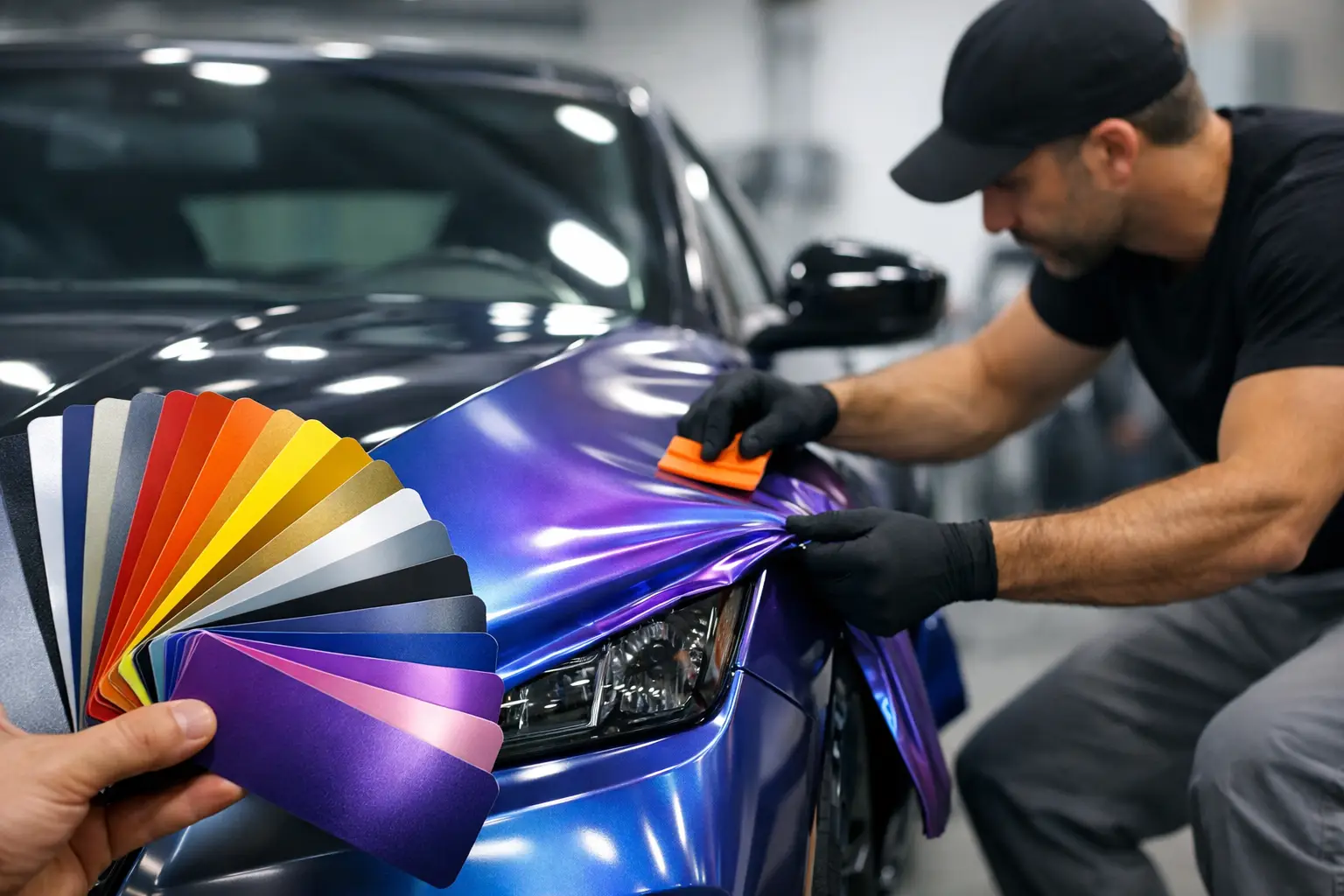
This is where the fun starts. Metallic, pearlescent, color-flip, brushed, and other special-effect films create movement and individuality that standard paint often cannot match without far more commitment.
Used well, these finishes make a car unforgettable. Used carelessly, they can overpower the shape of the vehicle. A special-effect wrap needs confidence, but also restraint. The best result feels curated, not random.
Your car type changes what works
A wrap that looks incredible on a Porsche coupe may feel completely off on a family SUV. Body shape matters.
Compact hatchbacks and sedans usually handle brighter or more playful shades well because their proportions are lighter. Larger SUVs often look better in richer, moodier tones or elegant neutrals that emphasize presence instead of trying too hard. Performance cars can carry stronger contrast, while luxury cars usually benefit from finishes that look expensive up close, not just loud from a distance.
Wheel color, trim, and lighting design also play a role. If the car already has black accents, a satin or gloss finish may tie everything together better than a wild color-shift film. If the car has chrome or polished details, some wraps will clash unless the whole look is rethought.
This is why choosing from a swatch book alone rarely tells the full story. The best color change wrap is one that complements the architecture of the car.
Material quality matters more than most people realize
Two wraps can look similar on day one and age very differently.
High-quality vinyl generally conforms better to edges and complex panels, maintains finish consistency longer, and reduces the risk of premature lifting, shrinking, or visual fatigue. That matters in a hot, humid environment where sun exposure, road grime, and daily washing all test the film over time.
Cheap material often gives itself away in the details. Corners start lifting. Recessed areas lose tension. The finish looks plasticky instead of premium. A color that seemed rich at first can start looking dull or uneven.
That does not mean every owner needs the most extreme finish on the market. It means the wrap should come from authenticated, proven material lines and be matched properly to the car and usage. Good film gives the installer more control, and that control shows in the final result.
Installation is what separates premium from regrettable
You can choose a beautiful film and still end up disappointed if the install is average.
The best color change wrap is not just about what goes on the car. It is about how the car is prepared, how panels are assessed, how edges are handled, and how clean the final presentation feels. Good wrapping is part technical discipline, part design sensitivity.
A premium install should feel tailored. Body lines should flow naturally. Visible seams should be minimized where appropriate. Difficult areas like mirrors, bumpers, handles, and tight channels should not look forced. On higher-end vehicles especially, poor execution stands out immediately.
This is one reason many owners prefer a specialist studio rather than treating wrapping like a basic accessory job. The difference is rarely loud in photos. It becomes obvious in person, and even more obvious months later.
Trendy is fine. Timeless is smarter.
There is nothing wrong with chasing a current look if that is what excites you. Cars are emotional. They should make you feel something.
But if you are trying to choose the best color change wrap for long-term satisfaction, ask a better question: will I still love this after the novelty wears off?
A good rule is to separate attention from taste. Some colors grab attention instantly but become tiring. Others feel understated at first, then grow on you every day. Rich neutrals, sophisticated greens, deep blues, silvers, warm grays, and refined satin tones tend to hold up better than very loud novelty finishes.
Of course, it depends on your personality. If your whole point is to stand out at every traffic light, subtle may not be your language. Just make sure the choice reflects you, not just the algorithm.
When a color change wrap is better than paint
For many owners, wrapping makes more sense than repainting because it is reversible and keeps the original paint protected underneath. That matters if you care about preserving the car’s finish or simply want freedom to change direction later.
Wraps also open up finish options that are harder to achieve practically with paint, especially when you want a distinct visual effect without turning the car into a long-term body shop project. And if the vehicle still has good original paint, covering it with a professionally installed wrap can be a very attractive way to personalize without permanently altering the car.
Paint still has its place, especially for major body restoration or when the surface condition is already compromised. But for style-led transformation with flexibility, wrap is often the sharper move.
How to tell you have found the right one
You have found the right wrap when the car stops looking modified and starts looking meant to be that way. That is the difference.
The finish should suit the body. The color should feel confident, not uncertain. The install should disappear into the design of the car instead of calling attention to itself. And every time you see the car under sun, shade, or city lights, it should still feel like your taste at its best.
That is the standard we believe in at Project Unicorn. Not just more options, but the right option for the car and the owner behind it.
If you are choosing a wrap soon, do not rush to the loudest swatch. The best transformation usually starts with a simpler question – what version of your car have you actually been wanting to see all along?