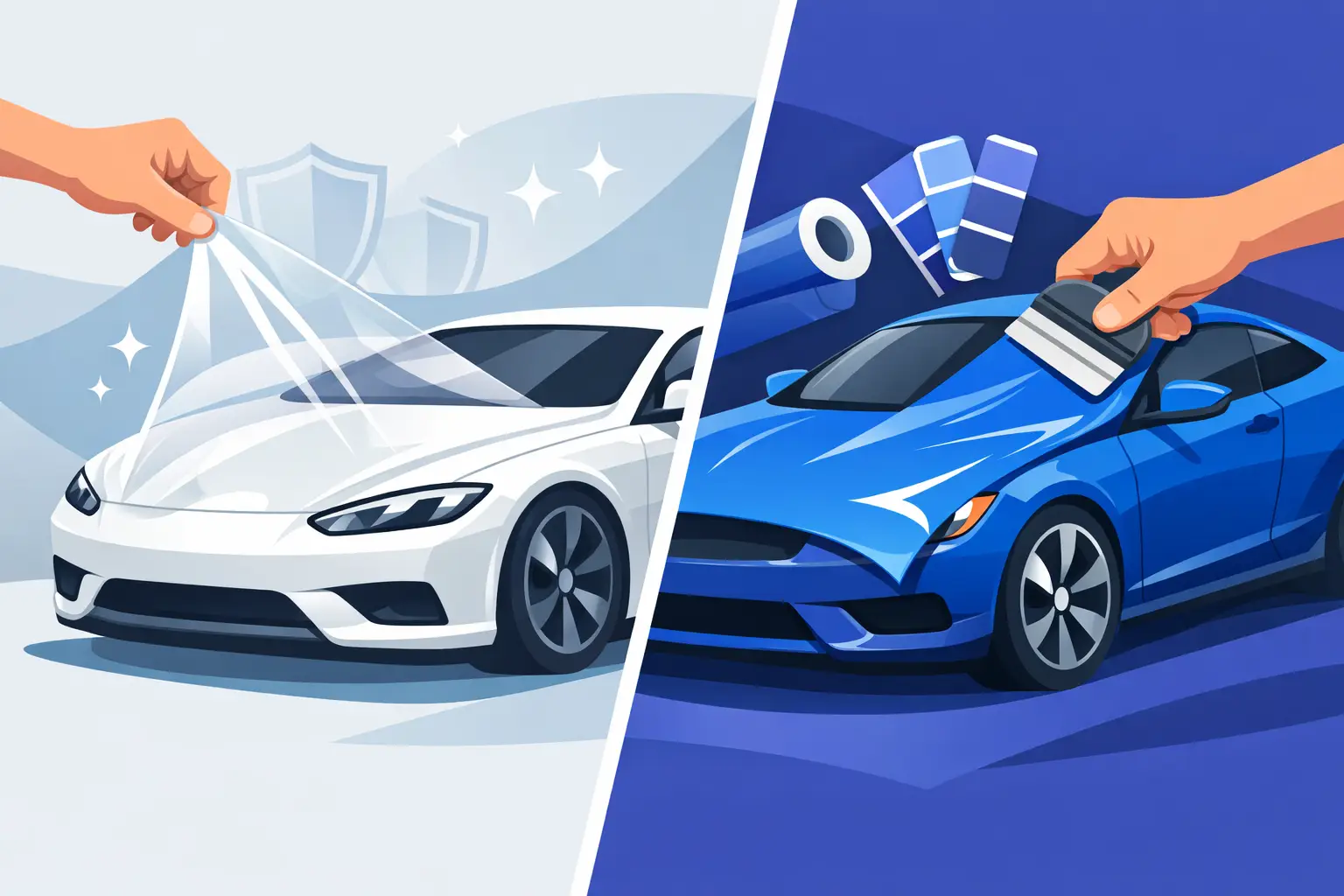
Your car can look stunning on delivery day and tired six months later if it faces daily sun, highway debris, careless parking, and regular washing. That is why the ppf vs vinyl wrap question comes up so often. Both can transform a vehicle, but they do very different jobs once your car hits real roads and real weather.
If you are choosing between them, the smart move is not asking which one is “better” in general. The better question is what you want your car to do for you. Do you want stronger paint defense, a full color change, a more exclusive finish, or the best balance between style and preservation?
PPF vs vinyl wrap: the real difference
At a glance, PPF and vinyl wrap can look similar because both are films applied over the paint. That is where the similarity ends.
Paint Protection Film, or PPF, is built primarily to defend your original paint. It is thicker, tougher, and designed to absorb the abuse that comes from stone chips, light scratches, road grime, and daily wear. Premium TPU-based PPF also brings self-healing properties, so fine swirls and surface marks can fade with heat.
Vinyl wrap is built primarily for appearance. It changes the look of your car without a repaint, which is why it is so popular with owners who want matte, satin, metallic, gloss, or more unique finishes. It protects the paint from light exposure and minor surface wear, but protection is not its main strength.
So the short version is simple. If your top priority is defense, PPF leads. If your top priority is visual transformation, vinyl wrap leads.
What PPF does best
PPF is for owners who care about keeping paint as fresh as possible. On Malaysian roads, where heat, UV, rain, debris, and traffic are part of daily driving, that matters more than many people expect.
A quality PPF installation creates a sacrificial layer over the paint. Instead of your factory finish taking the hit, the film does. That makes a noticeable difference on front bumpers, hoods, fenders, side mirrors, rocker panels, and door edges – areas that usually show damage first.
Another reason enthusiasts lean toward PPF is finish retention. Gloss PPF keeps the car looking deep and polished, while matte PPF can create a stealthier look while still focusing on protection. Newer color PPF options also blur the line between styling and defense, giving owners more design freedom than traditional clear film ever did.
What PPF does not do as well is offer the same sheer range of visual experimentation as vinyl. If your dream is a dramatic color shift or a highly expressive finish, vinyl still gives you more room to play.
What vinyl wrap does best
Vinyl wrap is for owners who want their car to look unmistakably theirs. It is one of the fastest ways to change a vehicle’s personality without committing to paint.
That flexibility is the reason wrap culture is so strong. You can go from factory white to satin gray, gloss racing red, brushed metal, or something much more attention-grabbing. For drivers who see their car as an extension of personal style, vinyl is not just a protective layer. It is a design move.
A good wrap also helps preserve the paint underneath from UV exposure, light contaminants, and small day-to-day contact. But it is important to stay realistic. Vinyl is not meant to take repeated stone hits like PPF. It can mark, tear, or wear faster in harsh use, especially on high-impact zones.
That does not make it the wrong choice. It just means the reason to choose vinyl should be visual impact first, protection second.
Protection: which one actually saves your paint?
This is where ppf vs vinyl wrap becomes much less subjective.
PPF is the stronger option for paint preservation. It has more thickness, more impact resistance, and better recovery from light surface damage. If your car sees highways often, spends time outdoors, or you simply hate seeing chips on your front end, PPF makes more sense.
Vinyl wrap offers a lighter layer of defense. It is useful against minor scuffs, bird droppings, sun exposure, and everyday handling, but it is not engineered to deal with the same level of abuse. On a garage-kept weekend car, that may be enough. On a daily-driven performance SUV or sedan, maybe not.
A lot comes down to your tolerance. Some owners can live with a few chips if the car looks incredible. Others want the finish kept as untouched as possible. That is the split.
Style and finish options
If style is the headline, vinyl is still the more expressive material.
The variety is massive. Gloss, matte, satin, chrome-style looks, metallic textures, and custom graphic treatments all sit naturally in the vinyl world. For owners who want to stand out in traffic or create a cleaner, more curated identity for the car, wrap gives you more creative freedom.
PPF is no longer limited to invisible protection, though. Clear gloss and matte remain popular, but modern color PPF has changed the conversation. It gives drivers a chance to combine aesthetic transformation with genuine paint defense. Still, the design palette is generally narrower than what vinyl can offer.
So if your main goal is turning your car into something visually different, vinyl has the edge. If you want a more refined blend of protection and upgraded finish, PPF deserves a closer look.
Durability and maintenance
Durability depends on material quality, installation skill, and how the car is used. But generally, PPF is built for the harder life.
It handles road abuse better, and premium film tends to age more gracefully when maintained correctly. Self-healing top coats are especially useful for owners who wash frequently and want the surface to stay cleaner-looking with less visible swirling.
Vinyl wrap can still look excellent for years, but it needs more care around edges, harsh chemicals, and prolonged environmental exposure. Matte and satin finishes, in particular, need proper maintenance because they can show staining or uneven appearance if treated carelessly.
The installation quality matters just as much as the material. A poorly installed premium film can disappoint faster than a properly installed mid-range one. Tight edges, clean relief cuts, good panel alignment, and experience around curves and trims make all the difference.
Which option fits your kind of car?
Your car type and driving habits should shape the decision.
For daily drivers, family SUVs, and highway commuters, PPF often makes more practical sense because these vehicles collect damage faster than owners expect. Front-end protection alone can save a lot of frustration over time.
For enthusiast builds, show cars, and owners chasing a very specific aesthetic, vinyl wrap usually feels more exciting. It lets you make a stronger statement without changing the factory paint permanently.
For luxury and exotic cars, the answer is often not either-or. Owners want the body protected, but they also want the car to feel personal. That is why mixed strategies have become more common.
The smartest answer might be both
One of the best solutions is combining the two based on what each material does best.
For example, you might use vinyl wrap for a full color transformation, then add PPF to high-impact areas or over selected sections where extra defense matters most. Another route is color PPF, which brings styling and stronger protection together in one package for owners who want less compromise.
This is where a proper consultation matters. The right setup depends on your car, your parking conditions, how often you drive, and how much visual change you actually want. Someone who commutes through busy city traffic has very different needs from someone who only brings the car out on weekends.
How to decide without regretting it later
Ask yourself three things.
First, what will bother you more – rock chips or a boring finish? Second, is this car a canvas, an investment, or both? Third, how do you really use it, not how you imagine using it?
If you want serious protection and cleaner long-term paint condition, choose PPF. If you want the biggest visual transformation and more finish choices, choose vinyl wrap. If you want your car to stand out and stay guarded, a tailored combination may be the strongest move.
At Project Unicorn, this is exactly how we look at it: not as a generic product decision, but as a vehicle identity and preservation strategy. The best finish is the one that fits your lifestyle as well as your taste.
Your car already makes a statement before you step out of it. The real goal is choosing a surface solution that still feels right after the first highway run, the first wash, and the first time sunlight hits it just right.