
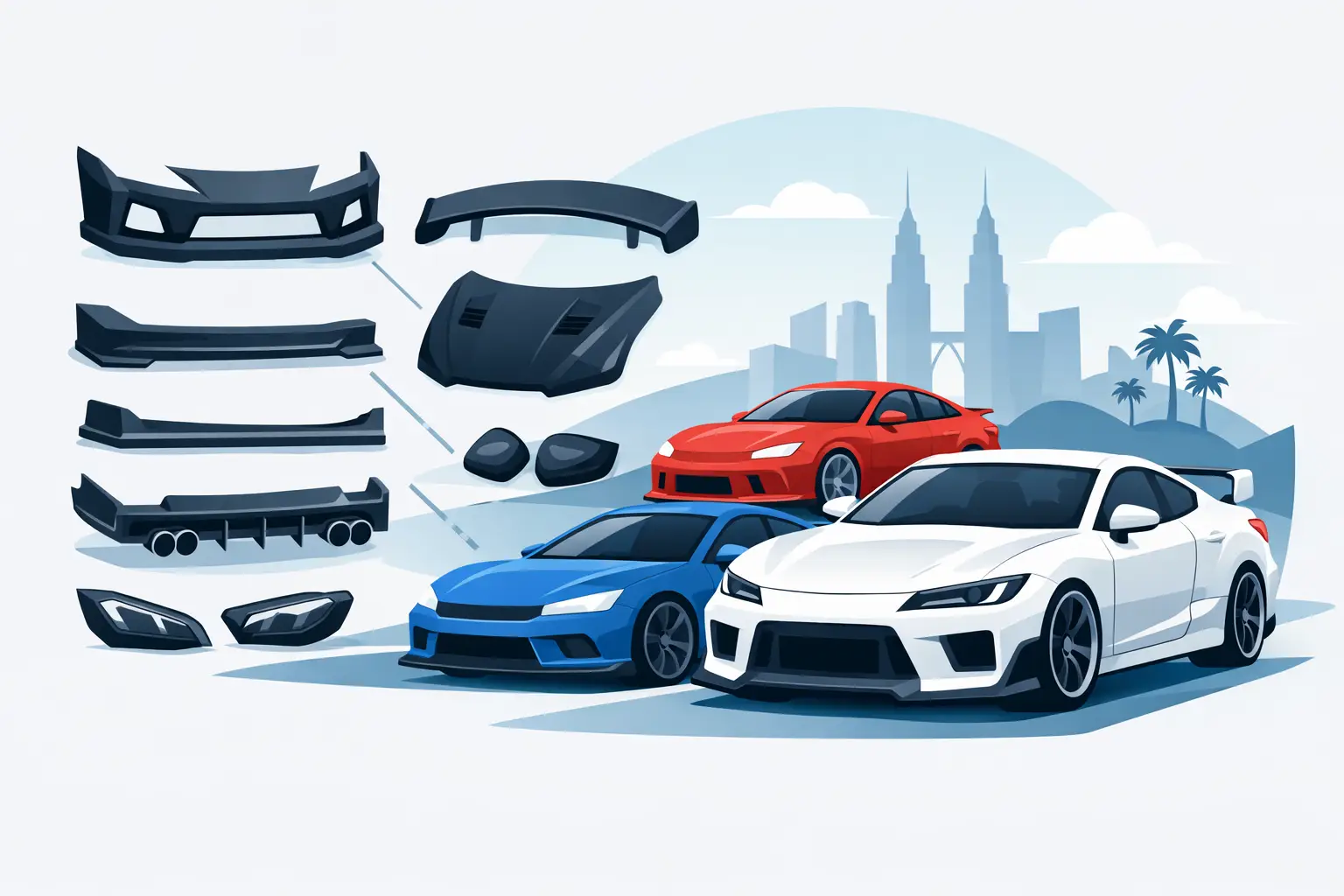
A bodykit can make a car look sharper in one day – or strangely overdone for years. That is why a car bodykit upgrade Malaysia owners choose should never start with parts alone. It should start with proportion, fitment, and how the car is actually used on real roads, in real weather, and in daily traffic.
For some drivers, the right upgrade is subtle – a front lip, side skirts, and a cleaner rear diffuser that tighten the factory design. For others, it is a full conversion that gives the car a more aggressive, premium, or motorsport-inspired identity. Both approaches can work beautifully. The difference is whether the kit suits the platform, the finish, and the owner behind the wheel.
Why a car bodykit upgrade in Malaysia needs a different mindset
Malaysia is not the place for styling decisions based only on photos from overseas builds. A kit that looks perfect in a studio or on smooth roads may become frustrating when it meets steep ramps, uneven parking entries, speed bumps, sudden rain, and daily heat.
That is where a smarter approach matters. Ground clearance is a real issue, especially for front lips and lower side profiles. Material choice matters too, because not every part handles daily use the same way. Even the visual finish matters more here. A glossy, high-contrast bodykit can look stunning, but on the wrong body shape or paint tone it may feel too busy under direct sunlight.
A great build is not just about making the car louder visually. It is about making it look complete.
Start with the design language of the car
The best bodykit upgrades feel like they were always meant to be there. That usually happens when the lines of the kit follow the original design language instead of fighting it.
A modern European sedan often suits cleaner, more sculpted additions. A Japanese performance platform can carry a more angular or aggressive look. SUVs usually need more restraint than owners expect, because large panels already create visual weight. Adding too much can make the vehicle look bulky rather than athletic.
This is where many builds go wrong. People choose parts one by one because each piece looks good alone. But once installed together, the front bumper, side profile, trunk spoiler, and rear treatment may tell four different stories.
The more premium route is cohesion. When the front, side, and rear all speak the same design language, the car looks intentional. That is what separates a styled car from a random modified one.
Full conversion or subtle enhancement?
There is no universal answer, because it depends on your car, your taste, and how much transformation you really want.
A subtle enhancement works well for owners who already like the factory silhouette but feel it needs more presence. In that case, a lip kit or plug-and-play upgrade can add edge without changing the identity of the car. This tends to suit daily drivers, executive sedans, premium SUVs, and owners who want a refined finish that still feels tasteful.
A full conversion makes sense when the goal is a dramatic visual shift. Maybe the stock bumpers feel too soft. Maybe the owner wants a more performance-driven stance. Maybe the car is already heading toward a complete styling direction with new wheels, wrap, tint, and surface protection. In those cases, a full bodykit can create the strongest visual payoff.
The trade-off is commitment. A bigger upgrade demands better planning, better fitment, and better finishing. The wrong full kit is hard to hide. The right one can completely elevate the car.
Material choice matters more than most owners expect
When people talk about bodykits, they often focus on shape first. But material affects durability, finish quality, and long-term satisfaction.
Carbon fiber has obvious appeal. It looks premium, feels special, and can instantly give a car a more performance-oriented image. On the right vehicle, exposed carbon details add contrast and visual depth. But carbon is not always the best answer for every panel or every owner. If the goal is daily use with less stress, some drivers may prefer plug-and-play components that offer easier practicality while still delivering a strong design upgrade.
Fitment is part of the material conversation too. A bodykit should not look like an afterthought, with uneven gaps or awkward alignment. Clean installation is what gives the whole car that boutique, high-end finish. Without that, even expensive parts can look cheap.
Car bodykit upgrade Malaysia owners should plan with the finish in mind
A bodykit never exists in isolation. Once installed, it changes how the paint, wrap, trim, wheels, and glass all work together.
That is why the finish should be part of the plan from the beginning. A newly installed kit on tired paint may highlight imperfections rather than improve the car. A strong bodykit paired with the wrong color can also feel disconnected. On the other hand, when the panels, color tone, and accents are coordinated properly, the entire car becomes more complete.
This is also why many premium builds pair bodykit work with vinyl wrapping, paint protection film, or carefully selected trim finishes. The shape creates impact, but the surface finish delivers the final expression. Matte, satin, gloss, metallic, or a carbon contrast all create different personalities.
A refined bodykit with a well-chosen color finish often turns more heads than an extreme kit with no visual discipline.
Daily drivability is not a boring concern
It is easy to get carried away with looks. But the best upgrades still respect how the car lives day to day.
If you drive through basement parking often, front clearance should be discussed honestly. If the car carries family, clients, or regular passengers, exaggerated side elements may be less practical. If the vehicle sees highway mileage, stability and secure mounting matter just as much as appearance.
None of this means you have to play it safe. It just means the smartest builds are realistic. A car can look aggressive and still remain usable. In fact, that balance often feels more premium than a setup that looks dramatic but creates stress every week.
What separates a premium result from a generic one
The answer is usually not the part itself. It is the execution.
A premium bodykit upgrade is measured in details – panel alignment, surface prep, mounting quality, finishing consistency, and how naturally the parts integrate with the vehicle. The result should feel tailored, not forced.
It also helps when the workshop sees the car as a whole design project rather than a simple parts installation. If the kit is right but the stance, finish, and protection are ignored, the build can still feel incomplete. The strongest transformations happen when styling and preservation are considered together.
That is the difference between chasing attention and building presence.
How to choose the right direction for your car
Before committing, ask yourself three things. Do you want the car to look sportier, more premium, or more exclusive? Do you want a visual upgrade that still feels close to factory, or are you aiming for a clear identity shift? And are you building for daily enjoyment, weekend presence, or both?
Your answers will shape everything – the kit style, the material, the finish, and how far the transformation should go.
For many owners in Klang Valley, the sweet spot is not the wildest option. It is the setup that makes people look twice because the car feels sharper, cleaner, and more complete than stock. That is usually where the real confidence lives.
At a studio like Project Unicorn, that philosophy matters. The goal is not to throw parts at a car. It is to create a result that fits the owner, the platform, and the lifestyle behind it.
A bodykit should do more than make your car look modified. It should make the whole vehicle feel more like yours – distinctive, well judged, and ready to wear that identity every time it rolls out into the sun.