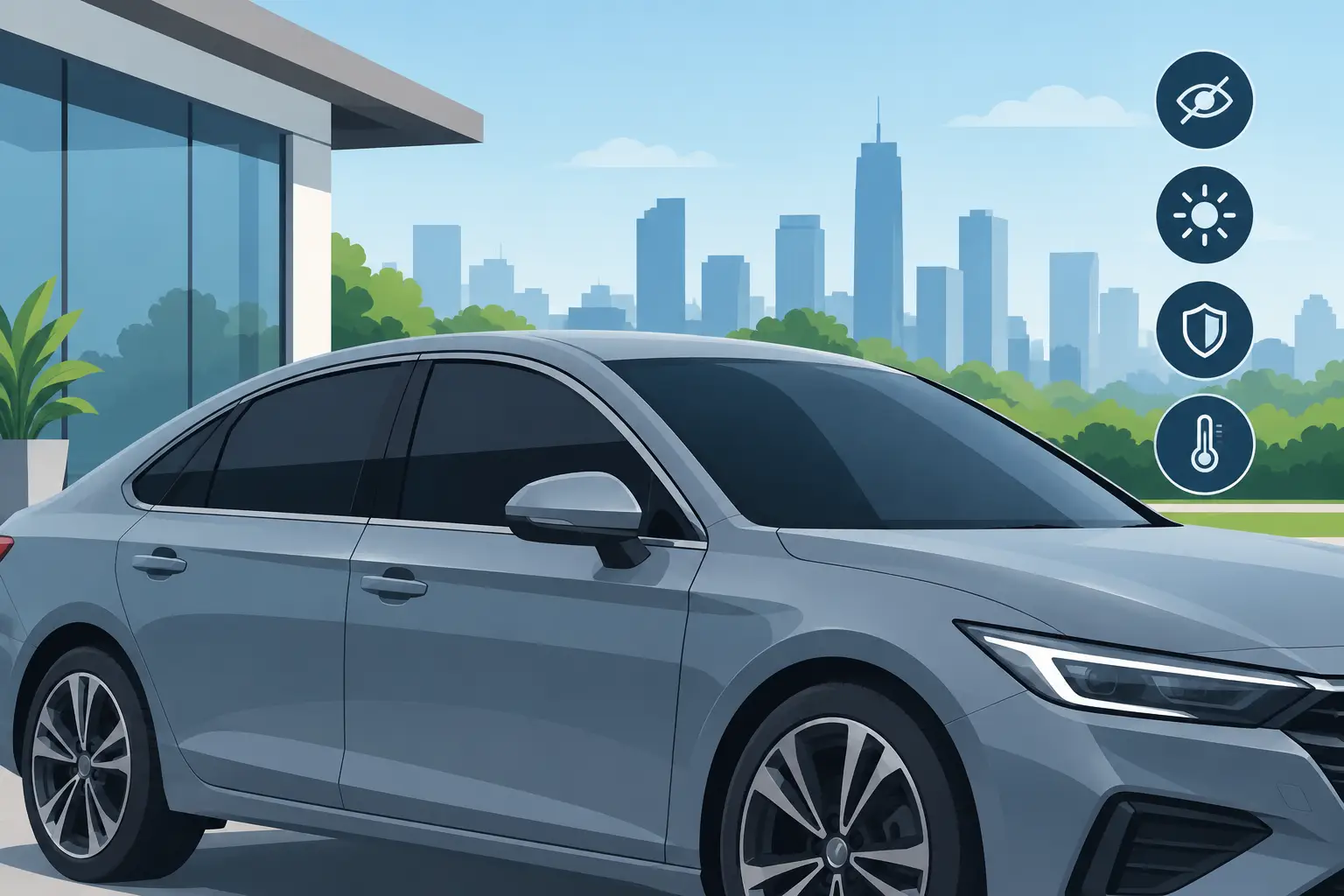
A great tint job changes more than what people can see through your windows. Privacy tinting gives your vehicle a cleaner, more composed presence on the road while making the cabin feel like your own space. For drivers in the Klang Valley, it also has to work through punishing sun, sudden downpours, traffic heat, and long hours behind the wheel.
The right film should look intentional from the curb, feel comfortable from the driver’s seat, and remain practical when the sky turns dark. That balance is where premium window tinting separates itself from a quick, generic installation.
What Privacy Tinting Actually Does
Privacy tinting reduces visibility into your cabin from outside, especially in daylight. It is popular for obvious reasons: it helps keep bags, gadgets, and personal items less exposed, gives rear passengers more discretion, and creates a more refined exterior profile.
But privacy is only one part of the decision. Quality window film can also reduce solar heat, block ultraviolet exposure, and manage glare. In a hot, humid climate, those benefits affect the drive every day. Your air-conditioning does not have to fight as hard, leather and interior trim face less UV stress, and the cabin feels less like a greenhouse after a parking-lot stop.
The common mistake is assuming that darker always means better. A very dark film may offer a dramatic look and strong daytime privacy, but darkness alone does not tell you how well a film rejects heat. High-performance sputter and nano ceramic films are engineered to manage solar energy, not simply reduce visible light. That distinction matters when you want a cabin that feels cooler without sacrificing a clean view of the road.
Privacy Tinting Is a Balance, Not a Single Number
Every vehicle and driver has a different sweet spot. A family SUV carrying children, a sedan parked outdoors every day, and a weekend sports car will not necessarily need the same setup. The best choice considers your style, driving routine, glass area, interior color, and comfort expectations.
A lighter film can still provide meaningful heat rejection and a polished factory-plus appearance. It is often a smart fit for drivers who travel frequently at night or want maximum outward visibility. A darker rear section can provide more privacy for passengers and belongings, while a more moderate front setup keeps the cockpit confident and easy to use after sunset.
This is also why judging tint from a small sample can be misleading. Film appearance changes with the vehicle’s paint color, cabin trim, factory glass tint, weather, and surrounding light. A charcoal film can look subtle and executive on one car, then look far more aggressive on another. The goal is not to make every window equally dark. The goal is to make the finished vehicle look considered from every angle.
Think About Day and Night Driving
Daytime is where privacy tinting performs at its most obvious. Outside visibility into the cabin is reduced, while the view outward can remain comfortable with the right film selection. At night, however, outside lighting is lower and visual contrast changes. A shade that looks perfect at noon may feel more demanding on dark roads, in heavy rain, or when reversing into a poorly lit space.
Drivers who regularly commute late, travel through parking structures, or take highway trips during storms should prioritize clear optical quality. Poor film can create haze, distortion, or distracting reflections around headlights and streetlights. Premium film is not just about the shade. It is about seeing clearly through the shade.
Match the Tint to Your Vehicle’s Character
Tint is one of the few upgrades that can make a car feel more premium without changing its original design language. On a black, gray, or deep metallic vehicle, a balanced dark tint can create a sleek, unified silhouette. On white, silver, or bright-colored paint, it can add contrast and make the glasshouse look sharper.
For a more expressive build, tint works especially well alongside a satin wrap, a color change vinyl, or a matte paint protection film finish. The windows become part of the overall composition rather than an afterthought. On a luxury sedan, the effect can be discreet and executive. On an SUV or performance car, it can create the bolder, planted look many owners want.
The key is restraint. If every styling element is competing for attention, the vehicle can lose its elegance. A well-chosen tint should support the design, not overpower it.
What Makes a Premium Tint Installation Different
Even excellent film can look average if it is installed carelessly. The difference is visible in the details: clean edges, consistent coverage, smooth shrink work around curved glass, and no trapped dust, bubbles, or unnecessary gaps.
Window tinting requires precision because glass is not flat, frames vary by vehicle, and rear windshields can be especially complex. A skilled installer shapes the film carefully so it follows the glass naturally. The finish should look integrated, not like an accessory added in a hurry.
Material authenticity matters, too. Reputable high-performance films provide dependable heat rejection, UV protection, color stability, and optical clarity over time. Cheap dyed films may look dark at first but can fade, turn purple, or lose their visual quality. That is not the kind of transformation that belongs on a vehicle you take pride in.
At Project Unicorn, the approach is to recommend a tint configuration around the car and the owner, rather than treating every vehicle like the same job. A daily-driven SUV under open-sky parking has different needs than a low-slung weekend coupe. Good advice starts with how you actually use the vehicle.
Questions to Ask Before Choosing Your Tint
Before committing to a shade, consider where you park, when you drive, and what you want the vehicle to communicate. If privacy is your main priority, focus on rear-cabin discretion while keeping visibility practical for your habits. If heat is the bigger issue, ask about the film’s solar and infrared performance rather than selecting based on darkness alone.
It also helps to look at your current cabin. Dark interiors naturally absorb more heat and can make a moderately tinted vehicle feel more enclosed. Light interiors reflect more light, which may influence how much privacy you feel you need. If you regularly carry valuables, use a child seat, or transport family members, rear-window privacy may deserve extra weight in the decision.
Most importantly, make sure the proposed configuration aligns with applicable local requirements. Tint should enhance the ownership experience, not create avoidable concerns later. A professional studio can help you make a style-led choice that remains sensible for real-world use.
Caring for Tinted Windows After Installation
Fresh tint needs time to settle. Depending on weather conditions and the glass involved, light moisture or a slightly hazy appearance can be part of the curing process. Avoid rolling windows down immediately after installation, and follow the aftercare timing provided by your installer.
Once cured, use a soft microfiber towel and ammonia-free glass cleaner. Avoid abrasive pads, harsh chemicals, and scraping tools that can mark the film. Simple care preserves clarity and keeps the finish looking premium.
Privacy tinting is at its best when it feels effortless: the cabin stays more personal, the drive feels more comfortable, and the vehicle carries a sharper identity wherever it goes. Choose the film that supports the way you drive, then let your car make the statement.