A dark-looking window is not automatically a cool window. That distinction matters the first time your steering wheel feels too hot to touch after a Klang Valley afternoon. In the dyed tint versus ceramic decision, the real question is not which film makes your car look better from the outside. It is which one can keep your cabin more comfortable, protect the interior, and still give you the visibility and finish you expect from a premium build.
For drivers who treat their vehicle as a personal statement, window tint should feel considered, not like a last-minute add-on. The right film supports the whole transformation – whether your car wears a satin wrap, glossy paint, color-infused PPF, or an understated factory finish.
Dyed Tint Versus Ceramic: The Core Difference
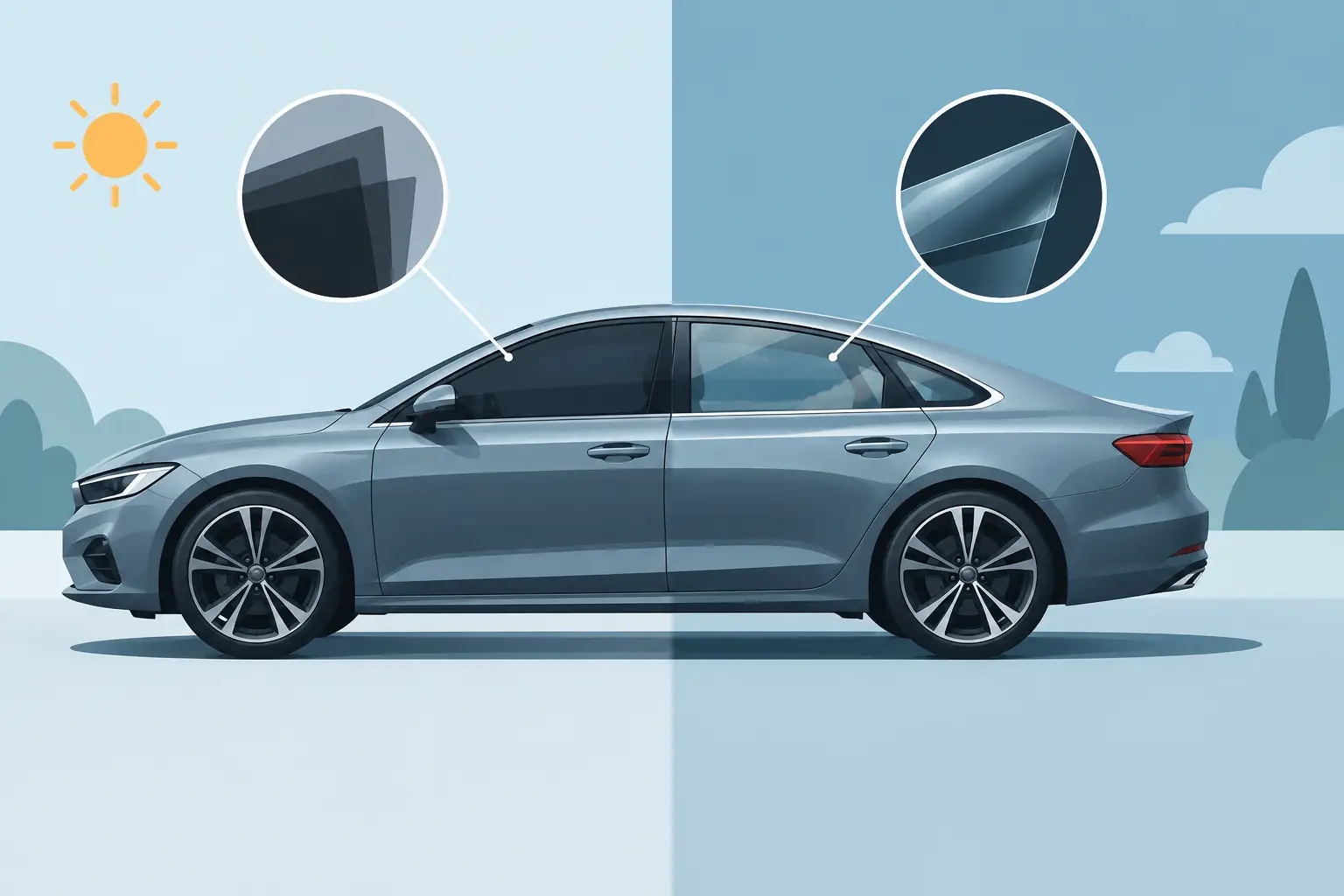
Dyed tint is the traditional, more basic type of window film. It uses dye within the film to absorb sunlight, creating a darker appearance and improving privacy. It can reduce glare and make a cabin feel less exposed, especially on a daily commute or when parked in busy areas.
Ceramic tint uses non-metallic ceramic particles engineered to reject heat, including a meaningful amount of infrared energy. Infrared heat is a major reason a cabin feels like an oven even when the film looks relatively light. Quality ceramic film also blocks UV rays that contribute to fading, drying, and premature aging across leather, trim, dashboards, and other interior surfaces.
The important distinction is this: dyed tint primarily absorbs heat, while ceramic tint is designed to reject more of it before it builds up inside the vehicle. Both can add privacy. Only one is purpose-built for drivers who want stronger thermal performance without needing the darkest possible windows.
Why Heat Rejection Matters More Than Darkness
Many owners choose a tint shade by looking at how dark it appears on a display board. Darkness is visible. Heat rejection is felt. They are related, but they are not the same thing.
A very dark dyed film may offer the privacy you want, yet still allow substantial heat to enter and linger in the cabin. A lighter ceramic film can often feel noticeably more comfortable because it targets solar heat more effectively. That makes a difference when you are caught in traffic, parking outdoors, or driving with passengers who spend time in the rear seats.
Ceramic tint can also reduce the workload on your air conditioning. It will not turn a car parked under direct sun into an icebox, and any installer claiming otherwise is overselling it. But it can help the cabin cool down faster and remain more stable once the air conditioning is running. Over time, that is a luxury you notice every day, not just on long highway drives.
For a light-colored interior, panoramic roof, large windshield area, or all-glass-heavy modern SUV, the benefit becomes even more obvious. More glass means more opportunity for heat to enter. A high-performing film is part of making that beautiful cabin genuinely usable in Malaysia’s climate.
Privacy, Appearance, and the Look of Your Build
Dyed film has long been popular because it can create a deep, uniform dark look at a straightforward level of performance. For an owner focused mainly on privacy and appearance, it can be a sensible option. A black sedan with dark windows has a certain clean, executive presence. A wrapped hatchback can gain a more aggressive profile with the right shade.
The trade-off is that dyed films can be more vulnerable to fading over time, particularly under intense sun. As the dye degrades, the tone may shift or lose its original richness. Lower-grade films may also be more prone to bubbling, peeling, or a purple cast as they age. That cheap-looking failure can undermine an otherwise immaculate car.
Ceramic tint gives you more freedom to choose based on design rather than trying to force darkness to do the job of heat rejection. Want a refined, medium shade that keeps a premium cabin visible but protected? Ceramic makes more sense. Want a dark, private look without sacrificing the view through the glass more than necessary? Ceramic gives you a stronger starting point.
A good tint installation should complement the vehicle’s lines. The film should sit cleanly at the edges, avoid contamination and light gaps, and look deliberate from every angle. On a high-end wrap or PPF project, those finishing details are not minor. They are what separate a completed look from a compromised one.
Daytime and Nighttime Visibility
The best tint is one you can live with after sunset, in heavy rain, and on an unfamiliar road. This is where choosing the darkest shade simply because it looks dramatic can become a regret.
Dyed tint can reduce visible light more aggressively as you go darker, and that can make low-light driving harder. Ceramic tint does not magically eliminate the visibility trade-off – a dark ceramic film is still dark. Its advantage is that you may be able to select a lighter, more usable shade while retaining stronger heat rejection than a similarly light dyed film.
Consider how and where you drive. If your routine includes basement parking, poorly lit residential streets, frequent night drives, or rainy evenings, prioritize clear outward visibility. If you have young children or often carry family, rear-cabin comfort may justify investing more in high-performance film, but the driver’s view must still come first.
Also remember that a windshield, front side glass, rear glass, and sunroof do not always need the same solution. A tailored setup can balance visibility in front with privacy and heat management in the rear. That is more thoughtful than treating every piece of glass as a single, identical surface.
Signal Performance and Modern Car Technology
Older metallic window films can sometimes interfere with radio reception, GPS, mobile signals, toll systems, and other electronics. Ceramic tint is non-metallic, which is one reason it is a natural fit for modern vehicles packed with connected features and antennas.
This is especially relevant for newer SUVs, EVs, luxury sedans, and performance cars, where technology is part of the ownership experience. You should not have to choose between a cooler cabin and dependable signal performance.
Dyed tint is also typically non-metallic, so it generally does not create the same interference concerns. The larger point is that ceramic combines signal friendliness with better heat management. If the car is a long-term keeper or a high-spec vehicle, that combination is hard to ignore.
Durability Is About the Film and the Installation
Ceramic technology does not excuse poor workmanship, and dyed tint is not automatically bad because it is more basic. The quality of the film, the preparation of the glass, the fitting process, and the aftercare all shape the final result.
A professionally installed film should cure evenly and sit cleanly along the glass. Small moisture pockets can appear during the initial curing period, depending on weather conditions, but they should resolve as the film settles. Deep scratches, obvious debris, lifting edges, or uneven cuts are not signs of a premium installation.
Ask about product authenticity and warranty coverage, but look beyond a long warranty statement. It is more useful to understand what the film is designed to do: UV protection, infrared heat rejection, glare reduction, visible light transmission, and color stability. The best choice is the one that matches your priorities honestly.
Which Tint Should You Choose?
Choose dyed tint when your priorities are a darker visual finish, basic glare reduction, and added privacy, and you are comfortable with more modest heat-control performance. It can work well on a budget-conscious daily driver when selected and installed carefully.
Choose ceramic tint when cabin comfort, strong UV protection, lasting appearance, and heat rejection matter as much as the look. It is particularly worthwhile for cars that spend long hours outdoors, have large glass areas, carry passengers regularly, or feature interiors you want to preserve.
Before choosing either, confirm that the final installed tint complies with applicable local visible light transmission requirements. Factory glass already has its own tint, and the film changes the final reading. A professional studio should guide you toward a setup that suits your driving needs without creating avoidable compliance problems.
At Project Unicorn, tint is considered part of the vehicle’s complete visual and protection story. A clean ceramic installation can make a daily driver feel more composed in traffic, keep a premium cabin more enjoyable, and sharpen the presence of a car that already stands apart.
Your windows are one of the largest surfaces on the vehicle. Treat them as more than dark glass. Choose the film that lets your car look like your style, feel better in the heat, and stay enjoyable every time you get behind the wheel.