
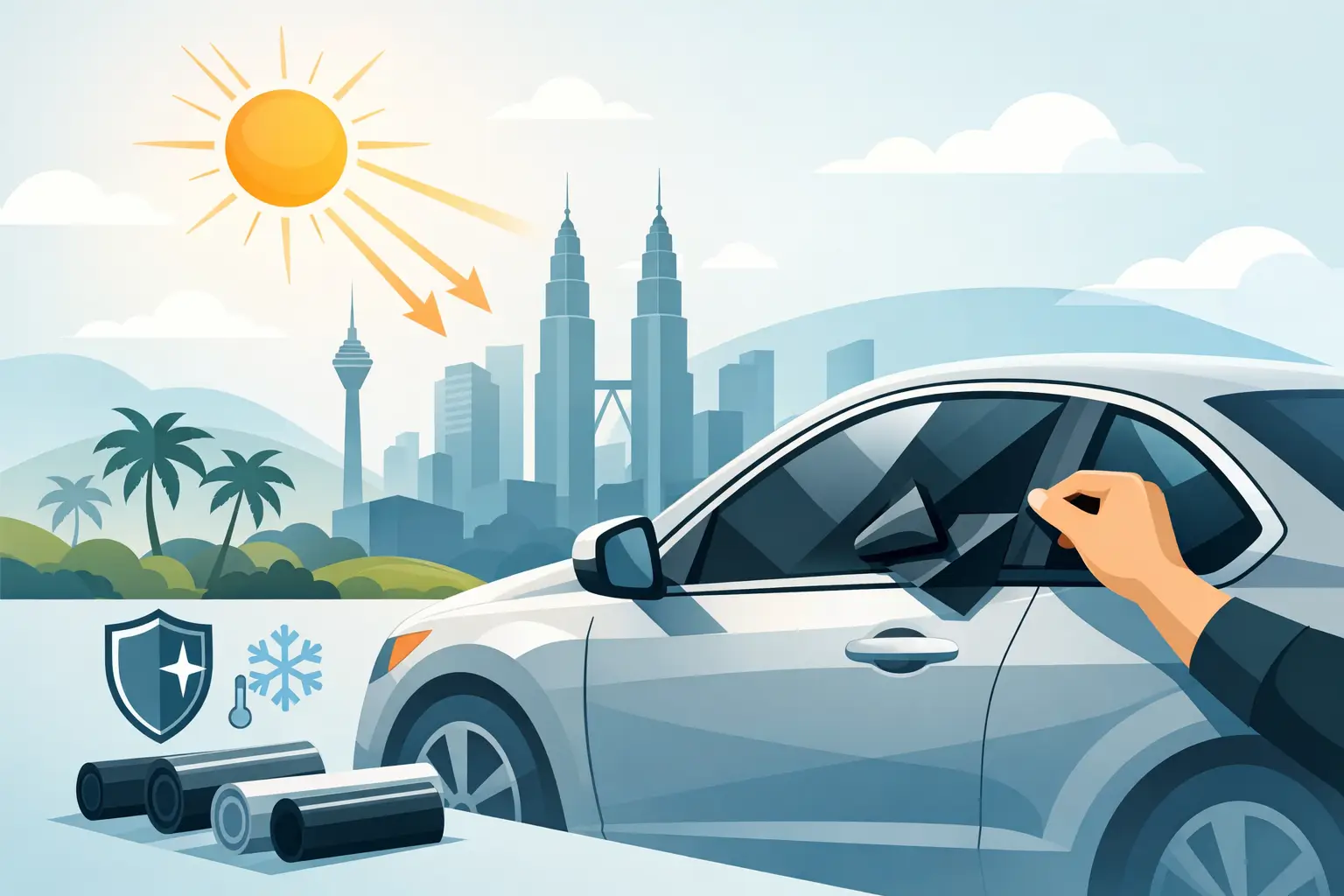
Park your car under the afternoon sun in Malaysia for twenty minutes and you feel it immediately – the steering wheel gets harsh, the seats trap heat, and the cabin turns into a test of patience. That is why window tinting is not just a cosmetic add-on here. Done properly, it changes how your car feels every single day, from the first start-up in the morning to the evening crawl home through traffic.
For many owners, tint starts as a comfort upgrade and quickly becomes something more. It gives the cabin a more finished, premium look. It adds privacy without making the car feel closed off. Most importantly, it helps your vehicle work better for the climate you actually drive in, not some ideal weather brochure version of it.
Why window tinting matters more in a hot climate
In a place where sun exposure is constant, glass becomes one of the biggest weak points in the cabin. Untinted or poorly tinted windows allow heat buildup, glare, and UV exposure to do their work every day. You feel the heat first, but over time the damage shows up elsewhere too – faded trim, stressed leather, a cabin that never quite stays comfortable, and an air-conditioning system that has to work harder than it should.
Good tint helps reduce solar heat transfer and filters harmful UV rays. That sounds technical, but the result is simple. The car gets more livable. You spend less time blasting the AC at full power. Passengers stop squinting. Long drives feel less draining.
There is also the privacy factor, which matters more than people admit. A cleaner, darker glass finish gives the car a more composed presence. On daily drivers, it makes the whole vehicle look sharper. On higher-end builds, it completes the styling rather than leaving the greenhouse looking bare.
What good window tinting should actually do
A lot of drivers choose tint based on darkness alone, and that is where disappointment usually starts. Darker film does not automatically mean better heat rejection. Some films look the part but underperform when the cabin is baking under direct sun.
What you want is balance. A quality tint should reduce infrared heat, block UV effectively, control glare, and still maintain clear outward visibility. That last point matters. You want the cabin protected, not your night driving compromised.
The best installations also look invisible in the right way. No dust, no bubbling, no uneven edges, no purple fade after a few months. Premium tint should feel integrated into the car, not pasted onto it.
Sputter vs nano ceramic window tinting
If you are comparing premium film types, sputter and nano ceramic are two of the most relevant choices.
Sputter film uses a metal-based construction that can offer strong heat rejection and a refined finish. It is often chosen by drivers who want proven thermal performance and a premium result. Depending on the film and vehicle, it can be a very smart option for daily use in harsh sunlight.
Nano ceramic film takes a different route. It is designed to reject heat without relying on heavy metallic content, which makes it popular among owners who want excellent clarity, strong performance, and a modern high-spec solution. For many newer vehicles filled with electronics, smart features, and driver-assist systems, that can be an appealing direction.
The right answer depends on your car and how you use it. A city commuter, a family SUV, and a weekend performance car do not all have the same priorities. One owner may care most about keeping the cabin cooler during school runs. Another may prioritize optical clarity and a clean, refined look on a premium build. This is where real consultation matters more than sales talk.
Window tinting is part comfort, part design
The visual side of tint often gets treated like a bonus, but for style-conscious owners, it is part of the whole build. Glass takes up a huge portion of the car’s profile. If the tint shade is wrong, even a well-designed vehicle can look slightly unfinished.
Done well, tint sharpens lines, balances proportions, and gives the exterior a more intentional look. It works especially well when paired with styling upgrades such as a vinyl color change, satin finishes, gloss black accents, or a more aggressive bodykit setup. The key is subtlety. The goal is not to make the car look hidden. The goal is to make it look complete.
That said, style should never come at the expense of functionality. A super dark film may look dramatic in photos, but if it makes night driving stressful or creates visibility issues in bad weather, it stops being a premium choice. Great styling is always backed by practical judgment.
What separates premium installation from generic work
Tint quality is only half the story. Installation quality is where the experience either stays premium or falls apart.
Poor prep leads to contamination trapped under the film. Weak cutting technique can damage trim or leave rough edges. Inconsistent shrinking on curved rear glass can create visible distortion. These are not minor details. They are the difference between a finish that looks factory-level and one that starts irritating you every time the light hits it.
A premium studio treats tint installation like precision work. The process should account for glass shape, vehicle electronics, edge finishing, and long-term durability. Exotic cars, frameless windows, and larger SUVs each bring different challenges. A one-size-fits-all approach usually shows itself fast.
This is especially true for owners who already care deeply about the condition and appearance of their vehicles. If you are particular about panel fitment, paint finish, or interior cleanliness, you will notice careless tint work immediately.
How to choose the right tint for your car
Start with how the car is used. If it is your daily driver, cabin comfort and glare reduction may matter more than making a styling statement. If it is a premium weekend car, optical clarity and finish quality may become the priority. If it is a family SUV, rear-seat comfort and UV protection may lead the conversation.
Then think about your tolerance for trade-offs. Some drivers want maximum privacy. Others want a brighter, more open cabin feel while still cutting heat. Some are highly sensitive to glare. Others care more about preserving interior materials over the long run.
It also helps to be realistic about your expectations. Tint helps a lot, but it does not turn a car parked under open sun into an icebox. It reduces heat load, improves comfort, and makes the AC’s job easier. That is a meaningful difference, but not magic. The best results come when expectations match the purpose of the film.
Why aftercare and film quality matter
A premium tint job should still look right months and years later, not just on delivery day. That means stable color, dependable adhesion, and a finish that resists the common problems people associate with cheap films – peeling corners, bubbling, haze, and discoloration.
Aftercare also matters more than people think. Newly installed film needs time to cure, and proper handling during that period helps preserve the final result. A good studio will explain this clearly instead of sending you off with vague advice.
For owners who view their vehicles as long-term investments, this matters. Window tinting may not have the drama of a full visual transformation, but it affects daily comfort, cabin preservation, and the overall impression of the car every time you walk up to it.
The best tint is the one that fits your life
There is no single best window tinting setup for every owner. The right film depends on your vehicle, your driving habits, your style preferences, and how much importance you place on visibility, privacy, and thermal comfort.
That is why the best results usually come from choosing a specialist who understands both performance and aesthetics. In a studio environment like Project Unicorn, tint is not treated as a generic add-on. It is part of how a car is refined, protected, and tailored to the person behind the wheel.
Your car should look sharp when it is parked, feel better when you are driving, and hold up well in the climate it lives in. If your current cabin still feels like a greenhouse by noon, that is usually your sign that better tint is not an extra. It is just good judgment.