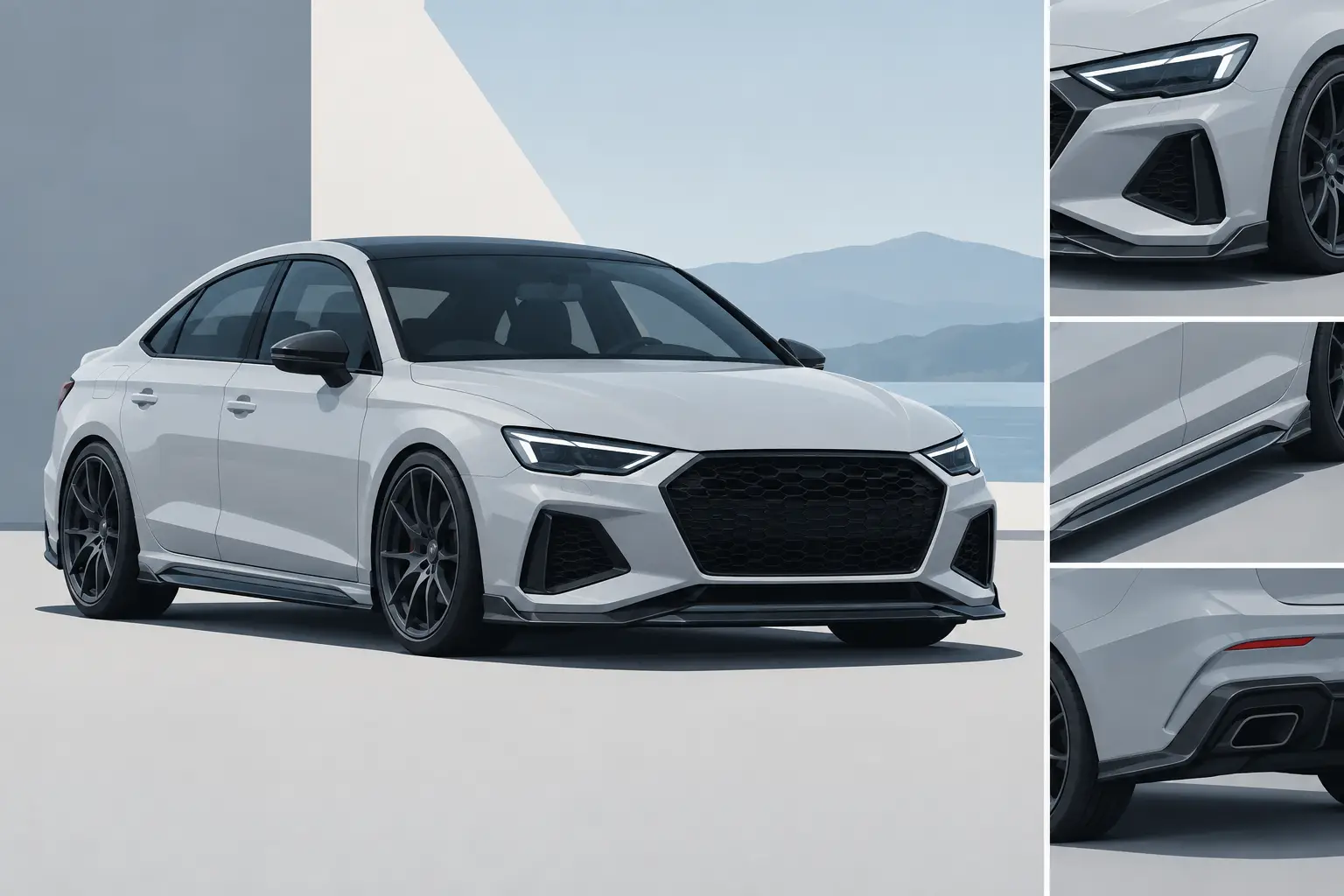
A new body kit can make a familiar daily driver look lower, wider, sharper, and unmistakably yours. But bodykit fitment is the line between a transformation that feels factory-level and one that looks like it was added in a hurry. The part may be beautifully designed, but the final result depends on how it meets the car: at the bumper edges, along the fenders, around lights, beneath the doors, and through every changing temperature of real-world driving.
For owners who care about detail, fitment is not a small technical footnote. It is the foundation of the entire look. A clean conversion gives your car presence without sacrificing the refined feel that made you choose it in the first place.
What Bodykit Fitment Actually Means
Bodykit fitment is the accuracy of how an aftermarket component follows and attaches to your vehicle’s original body lines. This includes the consistency of panel gaps, alignment with headlights and taillights, clearance from wheels and tires, mounting security, and the way the part sits against painted surfaces.
A well-fitted front lip should look intentional from every angle, not sag at the corners or sit unevenly under the bumper. Side skirts should flow with the rocker panels rather than look separate from the car. A rear diffuser should frame the exhaust correctly and leave enough room for heat, movement, and everyday road use.
There is also a difference between a part that can be mounted and a part that truly fits. Many kits are described as plug-and-play, but that does not mean every piece will install perfectly straight out of the box. Manufacturing variations, shipping, prior accident repairs, worn factory clips, and even differences between model years can affect the final alignment.
Why Great Fitment Changes the Whole Car
Poor fitment catches the eye immediately, even when someone cannot explain why. Uneven gaps, exposed fasteners, wavy surfaces, and corners that lift away from the bumper create visual noise. On a premium vehicle, those details can make an otherwise aggressive design feel less convincing.
Precision fitment does the opposite. It allows the kit to work with the car’s original design language. The lines appear continuous. Reflections across the painted, wrapped, or protected surface remain clean. The vehicle looks like it left the factory with a more expressive personality.
There is a practical side, too. Components that are mounted under tension may crack, rub against adjacent panels, or loosen over time. A lip that sits too low can become a daily headache at ramps and speed bumps. Skirts with poor drainage can trap dirt and moisture behind them. Fitment is therefore about appearance, durability, and avoiding unnecessary wear on your vehicle.
The Materials Matter, but They Do Not Decide Everything
Body kits are commonly available in materials such as ABS plastic, polyurethane, fiberglass, and carbon fiber. Each offers a different balance of weight, flexibility, surface finish, and cost. No single material is automatically right for every owner or every car.
ABS and polyurethane components are often better suited to daily-driven vehicles because they have some flexibility when meeting minor road imperfections. Fiberglass can create dramatic shapes and is widely used for custom styling, but it demands careful preparation because its rigidity makes imperfect mounting more obvious. Carbon fiber delivers a premium motorsport-inspired finish, yet its weave and clear-coated surface leave very little room to hide inconsistent alignment.
The key point is simple: an excellent material still needs excellent preparation. A carbon fiber lip that sits crooked will not look premium. A properly installed, well-finished kit in a more practical material can look far more convincing on a car that sees Malaysian roads, steep parking ramps, rain, heat, and daily traffic.
Where Professional Bodykit Fitment Begins
The best installation work starts before a single fastener is tightened. Each component should be inspected for shipping damage, surface inconsistencies, mounting-point condition, and compatibility with the exact vehicle. The car itself also needs attention, especially if it has previously been repaired, repainted, wrapped, or modified.
A professional installer dry-fits the parts first. This means positioning them without committing to final mounting, then checking the panel lines from multiple angles. It is where small adjustments are made to ensure the kit follows the body properly instead of forcing the vehicle to accept it.
This process takes patience because the visible details are often millimeters apart. A corner that appears acceptable from standing height may reveal an uneven gap when viewed near the headlight. A diffuser can look centered until the exhaust outlets are compared. Precision is built through repeated checking, not guesswork.
Mounting Must Be Secure and Serviceable
A clean exterior does not mean relying on adhesive alone where proper mounting hardware is required. Depending on the component and vehicle, secure installation may involve factory mounting points, hidden brackets, clips, screws, bolts, or carefully selected automotive-grade adhesive.
The right method depends on the part. A lightweight spoiler and a front splitter face different forces at speed. Underbody components deal with water, debris, vibration, and airflow. The goal is a secure installation that remains neat, minimizes stress on the part, and can be inspected or serviced if needed.
Visible screws are not always a sign of poor work, especially on certain motorsport-inspired designs. What matters is whether they are intentional, symmetrical, properly finished, and appropriate for the kit. Randomly placed hardware, however, can distract from an otherwise strong build.
Clearance Is Part of the Design
A body kit is only as enjoyable as it is usable. Before choosing a deeper front lip or lower side skirts, think honestly about where and how you drive. A weekend car that travels mostly between home, events, and controlled parking can carry a more aggressive setup than a daily driver navigating uneven roads and basement ramps.
Wheel and tire setup also matters. Wider wheels, lower suspension, and aggressive offsets can transform the stance of a car, but they can also create rubbing during turns, compression, or full passenger load. The body kit should complement the stance, not create a chain of clearance problems.
This is where a styling plan beats impulse buying. Sometimes a subtly shaped lip, properly aligned skirts, and a rear diffuser are more effective than a full extreme conversion. The strongest builds are not necessarily the loudest. They are the ones where every modification speaks the same visual language.
Plan the Finish Before Final Installation
The finishing sequence deserves as much attention as the kit itself. If your vehicle is receiving a color change wrap, custom graphics, paint protection film, or a combination of these, the order of work should be planned around access, edges, and long-term protection.
For example, installing certain components before wrapping can make it harder to achieve clean material coverage around tight mounting areas. On the other hand, some pieces are better fitted first so their final position is established before protective film is cut and applied. There is no universal answer because the right sequence depends on the kit design and the level of finish you expect.
For exposed carbon fiber, protecting the finish from road debris and UV exposure can help preserve the depth of the weave. For painted or wrapped components, clean alignment prevents edges from rubbing and prematurely wearing the surface. A body kit should enhance the vehicle’s finish, not compromise it.
Questions Worth Asking Before You Commit
Before approving a conversion, ask whether the kit is designed for your exact vehicle variant, whether dry-fitting is included, and how the installer will address uneven gaps or mounting adjustments. Ask how sensors, cameras, parking aids, active grille shutters, exhaust clearance, and towing points will be handled if they apply to your car.
It is also worth discussing your real driving routine. Be clear about steep ramps, speed bumps, road conditions, lowered suspension, and how often the vehicle carries passengers. A good styling specialist will not simply agree with every aggressive idea. They will help you choose a look that remains satisfying after the first photos, the first rainstorm, and the hundredth commute.
At Project Unicorn, a conversion is approached as part of the vehicle’s complete visual identity, not as a collection of parts. The objective is a build that turns heads while still feeling considered, protected, and built for ownership.
Your car does not need the biggest kit on the road to make a statement. It needs the right design, the right proportions, and fitment precise enough that people notice the transformation before they notice the parts. Be unique with the details that last.