A dark-looking window is not automatically a cool cabin. On a Malaysian afternoon, the difference between a tint that merely looks good and one that genuinely controls heat becomes obvious the moment you touch the steering wheel. That is why the nano ceramic tint vs sputter tint decision deserves more than choosing the darkest shade on a display board.
Both are premium tint technologies built for drivers who want better comfort, UV protection, privacy, and a sharper finish. But they control solar energy in different ways. The right choice depends on your car, your driving routine, your expectations for signal performance, and how much heat you want to keep outside where it belongs.
Nano Ceramic Tint vs Sputter Tint: The Core Difference
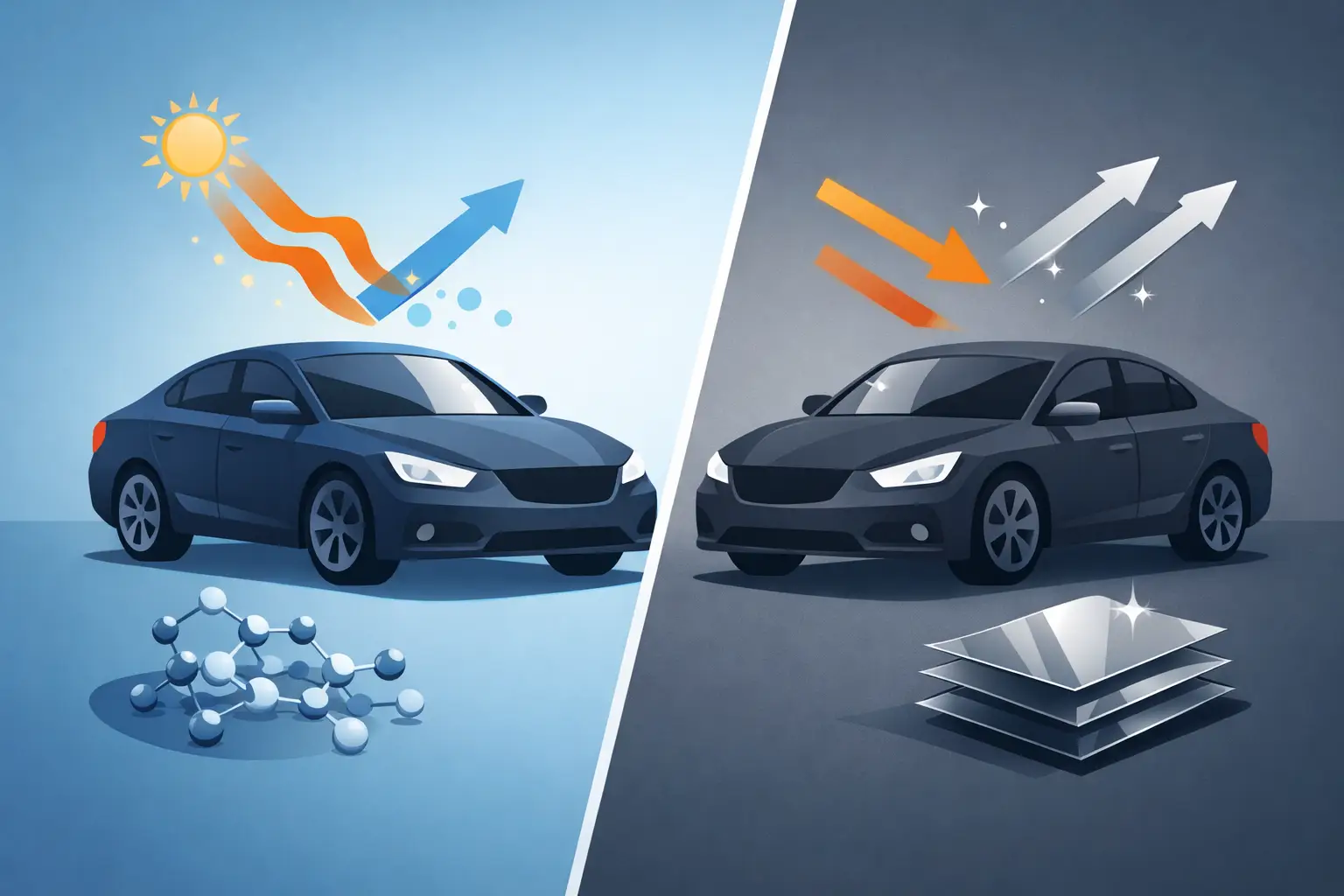
Nano ceramic tint uses microscopic ceramic particles embedded in the film. These non-metallic particles are engineered to reject infrared heat and block harmful UV rays without relying on metal. The result is a clear, refined film that can deliver strong heat performance while remaining friendly to GPS, mobile signals, SmartTAG-style devices, and other in-car electronics.
Sputter tint is made by depositing an ultra-thin layer of metal particles onto the film in a controlled manufacturing process. It is not the same as old-school metallic tint. Quality sputter films are designed to reject heat efficiently, maintain a clean appearance, and offer a premium step up from basic dyed films.
In simple terms, nano ceramic is the high-tech, non-metal route. Sputter tint uses precisely applied metal layers to reflect and reject solar heat. Both can be excellent choices. The better option is not always the one with the most dramatic marketing number – it is the one that suits your car and the way you use it.
Heat Rejection: Where the Cabin Comfort Comes From
Heat rejection is usually the first concern for Klang Valley drivers, and rightly so. Park in open sun at lunch, crawl through traffic, then drive home in late-afternoon glare – your tint has real work to do.
Nano ceramic tint is often favored for its ability to target infrared heat, the part of solar energy strongly associated with the heat you feel on your skin and inside the cabin. A good ceramic film can help the air conditioning cool the cabin more comfortably and reduce the harsh radiant heat coming through the glass. This makes it especially attractive for daily drivers, family SUVs, EVs, and luxury cars with large glass areas.
Sputter tint also performs strongly because its metallic layer helps reflect solar energy away from the vehicle. Depending on the film specification, it can provide impressive total solar energy rejection and noticeable cabin comfort. Drivers who want a premium, heat-rejecting tint with a rich, polished appearance may find sputter tint a very compelling fit.
Do not judge either film by infrared rejection alone. A quoted IR figure may be measured at a specific wavelength, which can make the number look exceptional without telling the full cabin-comfort story. Ask about total solar energy rejection, visible light transmission, UV rejection, and the exact shade being installed. The full specification matters more than one headline percentage.
Shade Is Not the Same as Performance
A darker film provides more privacy and reduces visible glare, but darkness alone does not guarantee better heat control. A lighter premium ceramic film may outperform a much darker basic tint in heat rejection. This is useful for drivers who prefer a clean, factory-plus look rather than heavily blacked-out glass.
For windshields, clarity and legal compliance should lead the conversation. The best windshield film is not simply the darkest option available. It should reduce glare and heat while preserving visibility in rain, at night, and around pedestrians, motorcycles, and road hazards.
Signal Performance and Everyday Technology
This is one of the clearest practical differences between the two options. Nano ceramic tint is non-metallic, so it is generally the safer choice when uninterrupted electronic signals are a top priority. If you rely heavily on GPS navigation, mobile data, toll devices, dash cameras with cloud connectivity, or keyless access functions, ceramic film offers welcome peace of mind.
Because sputter tint contains metal, certain installations can have a greater chance of affecting signal reception. That does not mean every sputter film causes an issue, or that every vehicle will react the same way. Film construction, antenna placement, glass design, and the installation area all matter. Still, vehicles with antennas embedded in the glass or owners who demand the least possible signal risk often lean toward nano ceramic.
A professional tint consultation should account for your vehicle, not just the film roll. A sedan, a panoramic-roof SUV, and a performance coupe can each have different glass layouts, antenna locations, and cabin heat challenges.
Appearance: Subtle Luxury or Reflective Character?
Tint is part of the vehicle’s overall design, especially when the paint, wheels, trim, vinyl wrap, or PPF have been carefully chosen. The wrong finish can make a sophisticated build feel mismatched. The right one makes the entire car look intentional.
Nano ceramic tint typically delivers a neutral, understated look with excellent optical clarity. It suits owners who want their vehicle to appear crisp and premium without an obvious reflective effect. On a satin wrapped sedan, a gloss-black SUV, or a modern luxury car, this restrained finish can look exceptionally clean.
Sputter tint can carry a slightly more reflective or metallic character depending on the film and shade. That can be a design advantage. It pairs beautifully with vehicles that have chrome accents, metallic paint, polished wheels, or a more assertive street presence. The key is choosing a film that complements the car’s existing visual language rather than fighting it.
Neither finish is universally better. If your goal is near-OEM elegance, ceramic often feels more invisible. If you appreciate a richer, more reflective premium look, sputter may be exactly the statement your build needs.
Durability, Clarity, and Installation Quality
High-performance tint is an investment in comfort, but its final result depends heavily on installation. Even the best film can look poor if it is cut carelessly, contaminated during application, or rushed around dot-matrix areas and tight window edges.
Quality nano ceramic and sputter films are designed for long-term use, with stable color, UV filtering, and resistance to fading when properly installed and maintained. Their real-world lifespan will still depend on the film’s construction, the vehicle’s exposure to sun, and how the windows are cleaned. Abrasive cleaners and rough towels can damage film surfaces over time, so a gentle automotive glass cleaner and soft microfiber are the smarter choice.
Optical clarity is another detail that separates premium film from a generic dark layer. You should be able to look through the tint without haze, distortion, or a distracting rainbow effect. This matters most at night and in wet weather, when clear vision is not a luxury – it is a safety requirement.
At Project Unicorn, tint selection is treated as part of the vehicle’s complete transformation, not a quick add-on. The aim is a finish that looks sharp from outside, feels cooler inside, and still works properly with the way you drive.
Which Tint Should You Choose?
Choose nano ceramic tint if you want strong infrared heat rejection, a neutral premium look, excellent optical clarity, and minimal concern around electronic signal interference. It is particularly well suited to technology-heavy vehicles, panoramic-roof SUVs, EVs, and drivers who spend long hours in traffic or park outdoors frequently.
Choose sputter tint if you value high heat rejection, a premium metallic-film construction, and a more distinctive reflective character. It can be an excellent match for owners who want elevated performance and appearance without necessarily prioritizing the non-metallic advantage of ceramic.
There is also a practical middle ground: different windows have different jobs. The windshield demands clear, legal, low-glare visibility. Side and rear glass may prioritize privacy and solar control. A thoughtful setup considers the full cabin instead of applying one shade everywhere by default.
Before choosing, sit in the driver’s seat and think about the drives you actually make. Morning school runs, weekend highway trips, basement parking, open-air office lots, and late-night rain all reveal different priorities. The right tint should make every one of those moments feel more comfortable while preserving the character that makes your car yours.