
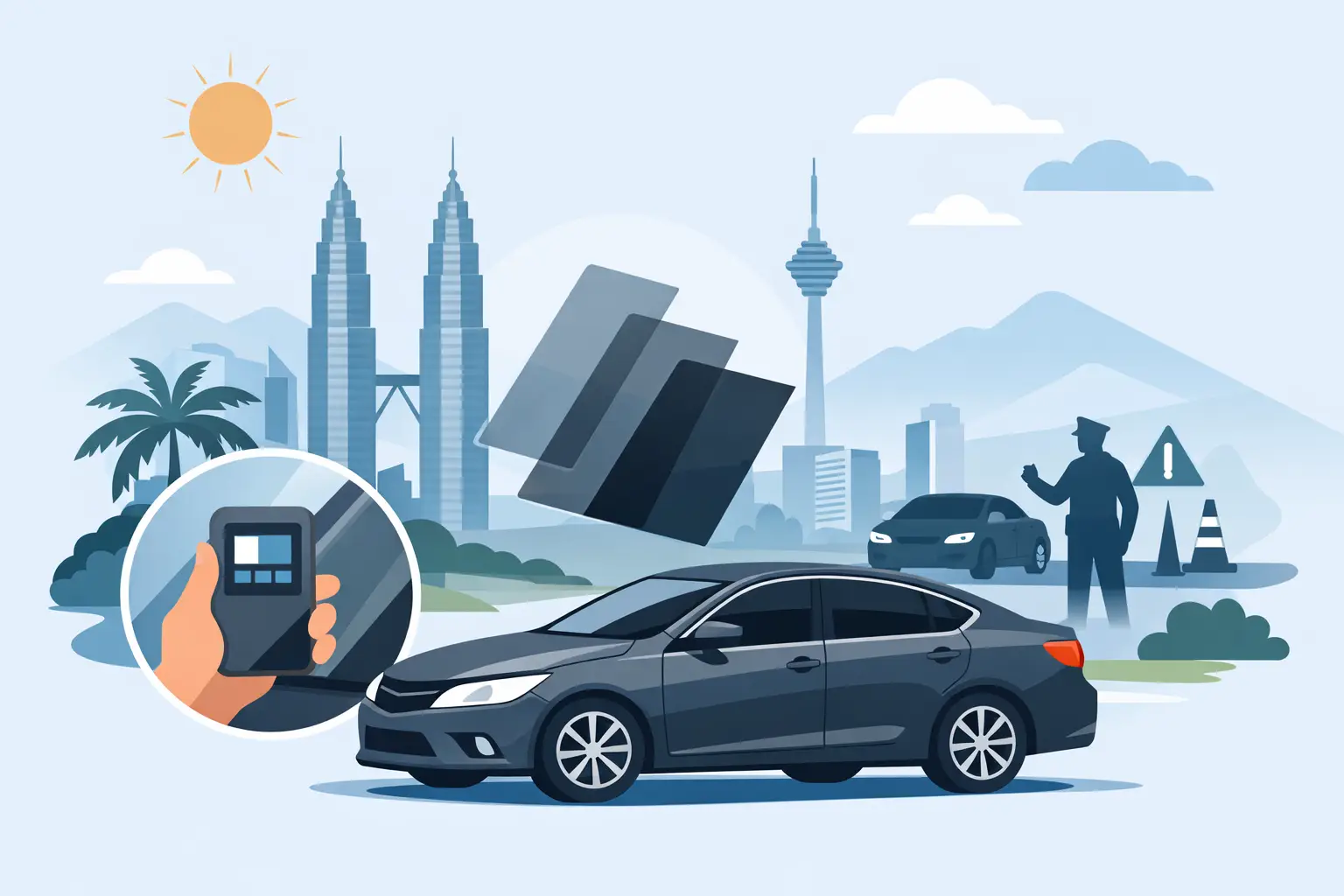
You can have a cabin that feels cooler, looks sharper, and gives you more privacy – and still fail inspection if the tint is not within spec. That is why a proper window tint laws Malaysia guide matters. For Malaysian drivers, tint is not just a styling choice. It sits right at the intersection of comfort, visibility, safety, and road legality.
The problem is that many owners only ask one question: “Can it look dark?” The better question is: “Can it perform well while staying legal?” Those are not always the same thing. A premium film can reject a lot of heat without needing to look extremely dark, and that distinction matters more than most people realize.
Window tint laws Malaysia guide: what the law actually checks
When people talk about legal tint, they usually focus on darkness. In practice, the key benchmark is Visible Light Transmission, or VLT. This refers to how much visible light passes through the glass and film combined. The lower the VLT, the darker the result looks.
In Malaysia, the commonly referenced rules are straightforward. The front windshield must allow 70% visible light through. The front side windows must allow 50%. The rear side windows and rear windshield are more flexible, with no minimum VLT requirement under the current general rules for private vehicles.
That sounds simple on paper, but real-world execution is where owners get caught out. Factory glass already has its own light transmission value. Once tint film is added, the final number is based on the combination of both. So even if a film is marketed as “light” or “JPJ-friendly,” it still needs to be matched properly to the vehicle’s existing glass.
Why legal does not mean basic
A lot of drivers assume that staying within the law means settling for average performance. That is outdated thinking. Modern high-performance tint, especially sputter and nano ceramic options, can deliver strong infrared heat rejection and UV protection without forcing the glass to look heavily smoked.
This is especially relevant in Malaysia’s climate. Daily traffic, open parking, and long afternoon drives can turn any cabin into a greenhouse. The right film helps reduce heat load, improve comfort, and take pressure off the air conditioning. A better install can also preserve interior materials by reducing UV exposure over time.
So yes, aesthetics matter. A clean, refined tint finish absolutely upgrades the look of the car. But the smarter play is choosing film that works hard without pushing you into a legal gray area.
The biggest mistake drivers make
The most common mistake is shopping by appearance first and specification second. A car owner sees a darker, sleeker finish on another vehicle and wants the same look. What they do not always see is whether that car is actually compliant, whether the reading changes under different glass types, or whether the installer measured the final VLT correctly.
Another issue is relying on vague claims. “Good heat rejection” means nothing without actual performance data. “Looks legal” is even worse. If the installer cannot explain how the final VLT is calculated across your specific windows, you are taking a gamble.
For daily drivers in places like Petaling Jaya, Subang, and the wider Klang Valley, that gamble gets old fast. Nobody wants the hassle of being stopped, tested, or told to remove film that was supposed to be done right the first time.
How to choose a legal tint without ruining the look
The sweet spot is balance. You want a film package that respects the front windshield and front side window VLT requirements while still delivering a premium finish across the whole vehicle. That usually means being more strategic with the front half of the car and using the rear section to create a more private, tailored feel if that suits your preference.
This is where product quality matters. Better films can remain lighter in visible appearance while blocking more heat. Cheaper films often chase a darker look because they cannot achieve strong thermal performance any other way. That trade-off may seem attractive at first, but it usually shows up later as poor clarity, hazing, purple fading, or disappointing cabin comfort.
Clarity is another factor that deserves more attention. Especially on the front windshield, you want excellent outward visibility during rain, at night, and in harsh glare. A film that technically passes VLT but compromises optical clarity is still the wrong choice for a car you actually enjoy driving.
Window tint laws Malaysia guide for special cases and exemptions
There is another layer to this conversation: exemptions. In Malaysia, certain medical or security-related cases may qualify for approval to use darker tint than the standard limits. That does not mean anyone can simply install darker film and explain later. Exemptions typically require formal application and approval through the proper channels.
This is where nuance matters. If you genuinely have a reason to pursue exemption, treat it as a documented process, not a verbal assumption. Install decisions should align with approved terms, not hearsay from social media or workshop chatter.
For most drivers, the safer route is still a fully compliant setup with premium heat rejection. That gives you comfort, style, and peace of mind without building your ownership experience around exceptions.
What good installers do differently
A premium tint experience is not just about the film brand or the marketing terms on a brochure. It comes down to how the installer approaches the vehicle. Good installers account for the glass itself, confirm target VLT ranges, explain realistic outcomes, and prioritize finish quality just as much as compliance.
That means cleaner edges, better fitment, and no careless shortcuts around sensors, dot matrix areas, or curved glass sections. On higher-end cars especially, the margin for sloppy work is small. The tint has to look intentional, not aftermarket in the worst sense of the word.
An experienced studio will also talk to you about your use case. A daily commuter, a family SUV, and a weekend performance car do not always need the exact same film strategy. The right recommendation depends on how the car is parked, when it is driven, how much cabin privacy you want, and how sensitive you are to heat and glare.
Legal tint, premium result
This is where many owners change their mindset. They stop asking for “the darkest legal tint” and start asking for “the best legal setup for my car.” That is a better question because it opens the door to a smarter finish.
For example, a refined luxury sedan may suit a crystal-clear, high-performance windshield film paired with front side windows that stay compliant but still look elegant and cohesive. An SUV might benefit from stronger privacy and shading at the rear while keeping the front section safely within limits. A sports car may need extra attention to visibility and cabin glare because driving feel is part of the ownership experience.
The legal framework stays the same, but the design response can still feel personal. That is the difference between generic tinting and a considered automotive styling approach.
Before you tint, ask these questions
You do not need a long checklist, but you do need clear answers. Ask what the final VLT will be on your windshield and front side windows after installation. Ask how the installer accounts for your existing factory glass. Ask what kind of heat rejection performance you are actually getting, not just whether the film looks dark. And ask how the film performs at night and in wet weather, because comfort means very little if visibility suffers.
If those answers sound vague, keep looking. The best tint choice is not the one that sounds dramatic on day one. It is the one that still feels smart six months later when the cabin stays cooler, the finish still looks clean, and you are not second-guessing whether your car is road-legal.
For drivers who care about both style and substance, that balance is the whole point. A great tint job should complement the design of the car, make everyday driving more comfortable, and respect the rules without looking compromise-heavy. That is the kind of upgrade that actually belongs on a well-kept vehicle.
If you are planning your next tint setup, think beyond darkness. Aim for clarity, heat control, finish quality, and legal confidence – because the best-looking car is the one you can enjoy every day without excuses.