
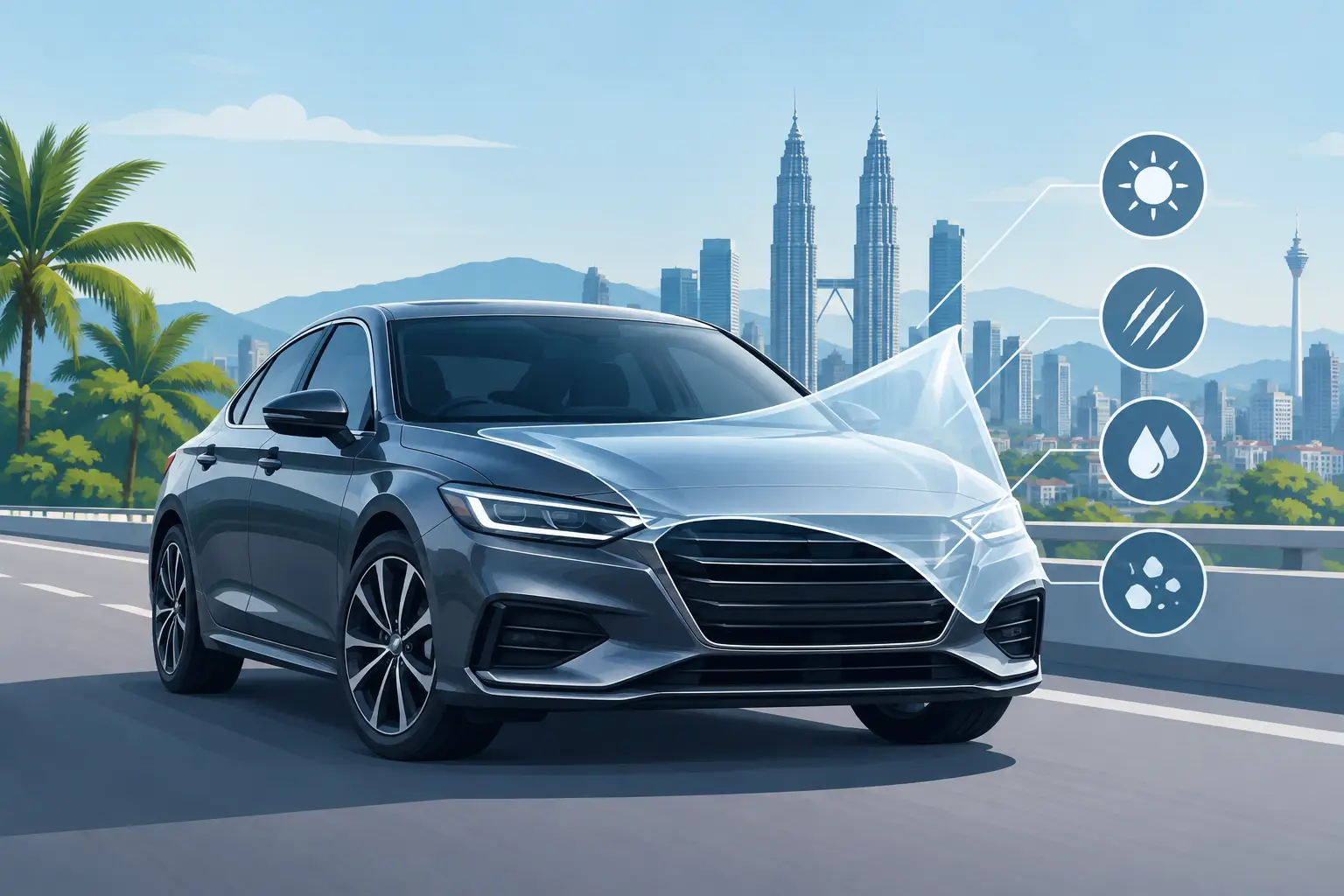
A fresh PPF install can look almost invisible. That is the point. But what makes premium PPF different is not simply a glossy surface on delivery day. The real difference shows up after highway debris, tight parking bays, tropical heat, repeated washes, and months of daily driving. A quality film should keep protecting the paint while preserving the clean, intentional look that made you fall for your car in the first place.
For owners who see their vehicle as more than transport, paint protection film is not a cosmetic shortcut. It is a way to preserve a factory finish, protect resale appeal, and drive with more confidence. Still, not every film, installation, or package delivers the same result.
What Makes Premium PPF Different?
Premium paint protection film is a layered urethane film engineered to absorb the everyday abuse that would otherwise reach your clear coat. Stone chips, light scuffs, road grit, fingernail marks around door handles, and minor rubbing from bags or clothing can all leave their mark on unprotected paint.
The key word is engineered. Premium PPF is built from high-quality TPU, or thermoplastic polyurethane, rather than lower-grade materials that can feel stiff, discolor faster, or struggle to conform around complex panels. TPU gives the film its flexibility and impact resistance. It allows the installer to wrap curves, bumpers, mirrors, and intricate body lines with cleaner coverage, while helping the film take a hit before your paint does.
That does not mean PPF makes a car invincible. A sharp impact can still damage the film and, in severe cases, the surface underneath. Premium protection is about reducing risk and preserving the original finish, not promising immunity from every road hazard.
TPU Quality Is the Foundation
A premium film starts with a stable TPU base. It needs enough elasticity to stretch around a Porsche bumper or the sharp contour of a performance SUV without becoming overly stressed. At the same time, it needs the strength to resist punctures and the abrasion caused by dust, grit, and frequent use.
Cheaper films may appear similar when viewed from a distance, especially on a flat hood. The gap becomes obvious over time. Poor material can lose clarity, develop a tired texture, lift at stressed edges, or show unwanted yellowing. On white, silver, and lighter-colored vehicles, that change is especially noticeable.
Clarity matters just as much as toughness. A good gloss PPF should let the original paint color and metallic flake speak for themselves rather than making the panel look cloudy or overly plastic. Matte PPF should create an even satin-like transformation, not a patchy finish that clashes with painted panels.
The Top Coat Does More Than Add Shine
The surface layer of premium PPF is where daily ownership becomes easier. A quality top coat is designed to resist staining and make contaminants less likely to cling to the film. In Malaysia, that matters. Rainwater residue, bird droppings, tree sap, traffic film, and harsh sunlight are part of normal driving life, not rare events.
Hydrophobic properties help water bead and roll away more readily, which can make routine washing more satisfying and reduce the time grime spends sitting on the surface. It does not eliminate washing, and it does not mean bird droppings should be ignored for days. Prompt cleaning remains the smart move. The advantage is that the film is less demanding and stays cleaner-looking between washes.
Self-healing is another feature often misunderstood. Premium PPF can use heat from sunlight, warm water, or controlled warmth to recover from many light surface swirls and fine scratches. It is particularly useful for the marks created during normal washing or everyday contact. It will not heal a deep cut through the film. Think of it as a finish that is better prepared for real life, not a magic eraser.
UV Stability Protects the Look You Chose
Malaysia’s heat and UV exposure are unforgiving to exterior materials. Premium PPF is formulated for long-term clarity and color stability, helping the protected paint age more evenly than exposed areas. This is valuable on factory paint, but it is also relevant when protecting a color-infused TPU film or preserving a special finish.
The film itself should remain visually stable. A protection layer that turns yellow, hazy, or dull defeats the purpose of having it on a premium vehicle. Authenticated, world-class materials and proper product handling matter because the chemistry of the film is only as reliable as the product actually being installed.
Precision Fitment Is Where Premium Becomes Visible
Even excellent PPF can look average in the wrong hands. Installation is not a minor detail. It is a major part of the product.
A premium result begins before any film touches the vehicle. The paint needs to be carefully inspected, cleaned, and prepared. Existing contamination, roughness, or defects can remain visible beneath a clear film, so the installer needs to understand what should be corrected first and what the film can realistically conceal.
Pattern accuracy also matters. High-quality pre-cut patterns help create consistent coverage without unnecessary cutting on the vehicle. For certain areas, skilled custom trimming and thoughtful panel wrapping can improve coverage and reduce visible edges. The right approach depends on the panel design, paint condition, and vehicle type.
Clean edge work is one of the clearest signs of craftsmanship. Edges should be tucked or wrapped appropriately where possible, aligned cleanly, and finished with care. On a dark-colored car, a sloppy line around a door edge or headlight can catch the eye every time you approach the vehicle. On an exotic or sharply styled model, poor installation can interrupt the design language completely.
There are practical limits. Some seams and edges are unavoidable because of panel shape, access, sensor placement, or the need to prevent excessive material stress. A trustworthy studio explains those decisions rather than pretending every vehicle can be covered in one impossible piece of film.
Coverage Should Match How You Drive
Premium PPF is not automatically synonymous with covering every painted inch. The smarter question is where your vehicle faces the most risk.
For a daily driver, the front bumper, hood, fenders, side mirrors, headlights, rocker panels, and door cups are high-impact areas. These are the zones that meet highway debris, gravel, tight parking situations, and frequent contact. A focused protection package can be a sensible choice when the priority is preserving the areas that take the most abuse.
Full-body PPF makes more sense for owners who want complete finish consistency, own a high-value vehicle, drive often, or simply want the confidence of knowing every painted panel has a protective layer. It is also a strong option for matte factory paint, where touch-up and paint correction can be more complicated than on conventional gloss finishes.
The trade-off is straightforward: broader coverage gives broader protection, but the decision should reflect how you use the car, where it is parked, how often it travels at speed, and how long you plan to keep it. Protection should feel tailored, not pushed.
Premium PPF Must Be Supported by Proper Care
A film can only perform at its best when it is treated properly. Avoid harsh chemicals, aggressive abrasive polishing, and washing methods that drag dirty grit across the surface. Use a pH-balanced wash routine, soft wash media, and sensible drying habits. If contaminants land on the vehicle, remove them promptly rather than letting heat bake them into the surface.
After installation, allow the film time to settle according to the installer’s advice. Minor moisture pockets or a slight haze can sometimes be part of the normal curing process, particularly around complex areas. What matters is how the work is inspected, explained, and supported afterward.
That after-sales confidence is part of the premium equation. A quality studio should stand behind the workmanship, communicate realistic expectations, and help owners understand how to maintain their finish. At Project Unicorn, protection is approached with the same eye for detail as a visual transformation: the vehicle should look exceptional now and stay that way for the road ahead.
Your car does not need to be a supercar to deserve serious protection. Whether it is a refined daily driver or a weekend statement piece, choose PPF that respects the paint underneath, the lines of the bodywork, and the way you want to feel every time you walk back to it.