A factory paint color should not decide how your car looks for the next decade. Color changing films give you the freedom to create a finish that feels personal, whether that means a deep satin black SUV, a refined metallic gray sedan, or a color-infused protective film that looks as good as it works. The right film does more than turn heads at a traffic light. It can preserve the original paint underneath, helping your car stay distinctive without committing to a permanent repaint.
What Are Color Changing Films?
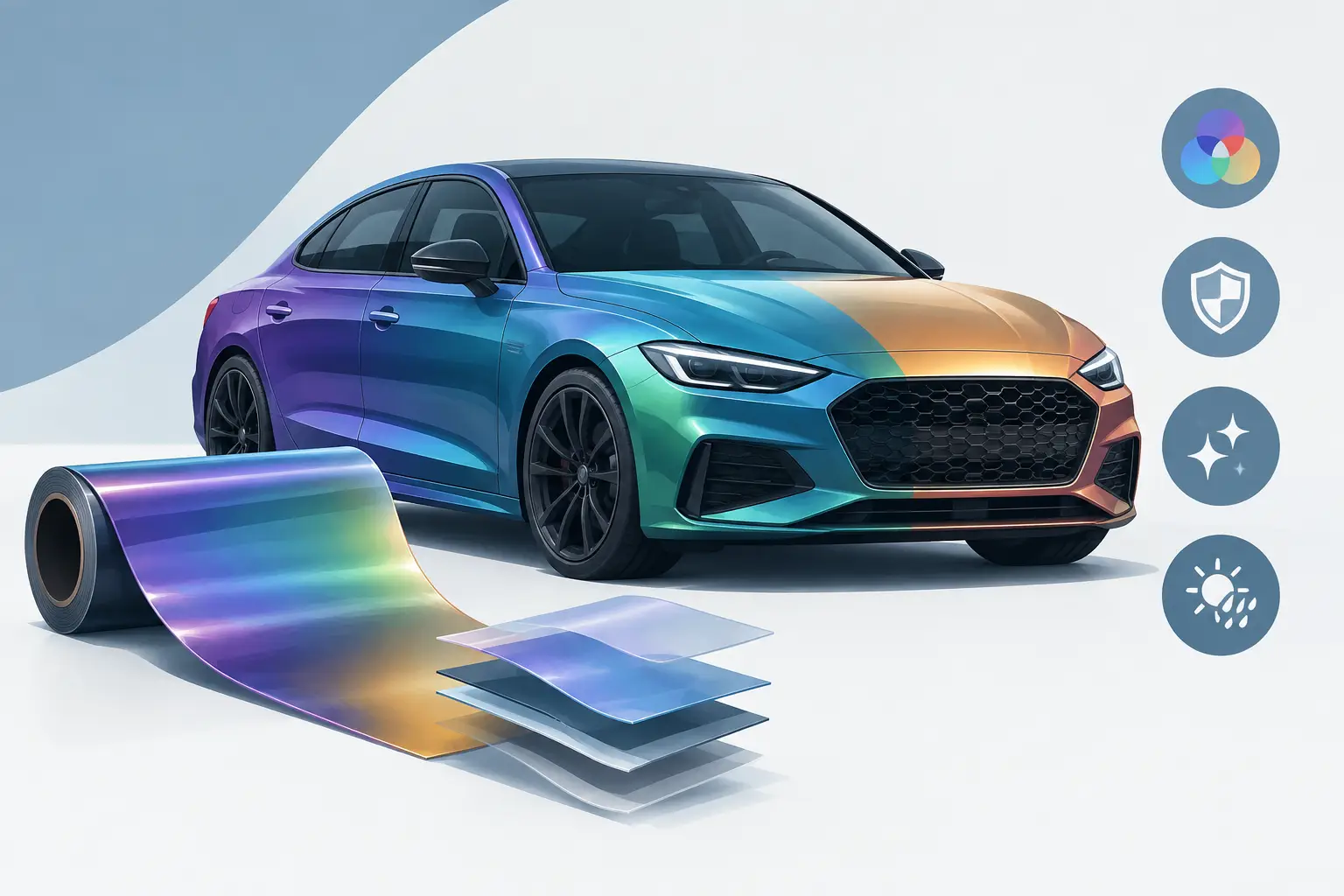
Color changing films are automotive-grade films applied over a vehicle’s painted surfaces to alter its appearance. In premium automotive styling, the two main categories are color change vinyl wrap and colored paint protection film, often called colored PPF. They may create a similar visual transformation from a distance, but they are built for different priorities.
Vinyl wrap is primarily a styling material. It comes in an enormous range of colors, textures, and finishes, from gloss, matte, satin, and metallic to more expressive effects such as color shift, forged carbon, or brushed metal. It is ideal for owners who want maximum creative choice and a dramatic transformation without repainting.
Colored PPF takes a different approach. It combines a new color with the protective characteristics associated with modern TPU paint protection film. A quality colored PPF can help defend painted panels against minor scratches, road debris, and everyday wear while delivering a rich, uniform finish. Many premium TPU films also feature self-healing top layers and hydrophobic properties, so light surface marks can recover with heat and cleaning becomes easier.
The shared idea is simple: change the visual identity of the car while keeping the original paint covered. The better question is not which film is universally best. It is which film suits the way you drive, park, and enjoy your car.
Vinyl Wrap vs. Colored PPF: Choose by Priority
If visual expression is the main goal, vinyl is usually the more flexible choice. With thousands of available colors and finishes, it lets you pursue a highly specific design direction. A gloss wrap can mimic fresh paint with extra depth; satin gives the bodywork a modern, expensive-looking glow; matte brings a more stealth-focused presence. Vinyl also works beautifully for roof wraps, accent panels, racing-inspired details, and bespoke graphics.
If protection sits at the top of your list, colored PPF deserves serious consideration. Malaysian roads can be unforgiving to a daily-driven car. Loose grit, highway debris, tight parking spaces, intense UV exposure, and frequent rain can slowly take away the sharpness of a paint finish. TPU-based colored PPF is designed to offer more impact resistance than a conventional color wrap while giving the vehicle a complete color transformation.
There is a trade-off. Vinyl offers more finish variety and is often the natural route for highly creative concepts. Colored PPF has a more focused selection, but it adds meaningful surface defense and a substantial, paint-like feel. For a weekend supercar that sees highway runs, or a premium daily driver exposed to busy city traffic, that extra protection can be the deciding factor.
A practical way to decide
Think about the first thing that bothers you when you look at your car. If it is the color, the lack of personality, or the desire for a truly custom finish, begin with vinyl. If you worry more about stone chips, light scratches, and preserving the paint beneath, explore colored PPF first.
You can also take a mixed approach. Some owners choose a full color wrap and add clear protective film to the highest-impact areas. Others prefer a full colored PPF installation for a cleaner all-in-one solution. A proper consultation should consider the vehicle’s paint condition, body lines, daily use, and your long-term plans for the car.
The Finish Changes the Personality of the Car
Choosing a color is only half the creative decision. The finish changes how light travels across every curve, crease, and panel.
Gloss is crisp, reflective, and close to the visual language of factory paint. It works especially well on modern sedans, performance coupes, and luxury SUVs that need a sharper, more polished road presence. A gloss metallic film can add visual depth that a standard solid color may not deliver.
Matte absorbs light and creates a restrained, technical look. It can make familiar body lines feel more muscular, though it also demands thoughtful maintenance because poor washing habits can leave visible marks. Satin sits between gloss and matte. It retains a soft sheen, reveals body contours beautifully, and remains one of the most versatile choices for owners who want a premium finish without excessive shine.
Then there are statement finishes. Color-shifting films can change character depending on sunlight and viewing angle. Metallics bring movement to broad body panels. Textured films can be used selectively for roofs, mirrors, interior trim, or design accents. On the right vehicle, these details feel intentional. On the wrong vehicle, or used without a clear design direction, they can feel busy.
That is why sample viewing matters. A film that looks perfect on a small swatch may appear brighter, darker, or more dramatic across an entire hood. Always view samples under natural light as well as indoor lighting before finalizing a color.
Installation Quality Is Part of the Finish
Premium material cannot compensate for careless preparation. A color-changing film is only as convincing as the workmanship behind it.
Before installation, the vehicle should be carefully inspected and cleaned. Surface contamination, paint chips, deep scratches, and previous repair work can affect the final result. Films conform closely to the panel beneath them, so they do not erase major paint defects. In some cases, paint correction or minor touch-up work may be recommended before wrapping.
The installation itself requires panel-by-panel precision. Complex areas such as bumpers, door handles, mirrors, sensors, and sharp body contours need controlled tension and correct technique. Poor installation can lead to visible edges, lifting corners, trapped contamination, distortion, or premature failure. These are not small cosmetic issues on a premium vehicle. They can make an otherwise bold transformation look unfinished.
At Project Unicorn, the approach is to treat the car as a design piece as well as an investment. That means selecting authenticated materials, planning the visual direction carefully, and respecting the details that separate a clean transformation from an ordinary wrap job.
What Color Changing Films Can and Cannot Do
A quality film can help protect the original finish from normal exposure and make a car feel entirely new. It can also be removed later, provided the paint beneath is in sound condition and the film has been installed and maintained properly. This makes it attractive for owners who want flexibility, especially when resale value and original paint matter.
But film is not invincible. It will not repair serious dents, conceal poor bodywork, or make neglected paint permanently healthy. A vinyl wrap is not a substitute for impact protection in the same way a quality TPU PPF can be, and even PPF has limits against severe impacts or sharp damage.
Film also needs the right expectations in Malaysia’s climate. Strong heat, UV exposure, rain, and inconsistent car-wash practices can shorten the life of any exterior finish. Quality materials and skilled installation create the foundation, but ownership habits determine how long the finish stays fresh.
Caring for a Wrapped or Protected Car
The first days after installation matter. Give the film time to settle, and follow the installer’s guidance before washing the car. After that, routine care is straightforward but should be deliberate.
Use pH-balanced automotive shampoo, soft wash media, and clean microfiber towels. Avoid abrasive polishing compounds unless they are specifically approved for your film type. Keep high-pressure water a sensible distance from edges and avoid aiming it directly at seams. For matte or satin finishes, skip waxes or dressings that add gloss, because they can create uneven patches that change the intended appearance.
Bird droppings, tree sap, fuel spills, and insect residue should be removed promptly. These contaminants can stain or mark any exterior surface if left under heat for too long. A hydrophobic top layer helps water and dirt release more easily, but it does not replace regular washing.
Parking under cover whenever possible is one of the simplest ways to preserve color richness and surface condition. It is a small habit with a large payoff, especially for cars that spend long hours outdoors.
Make the Transformation Feel Like You
The best color changing films do not simply make a car louder. They make it more intentional. A subtle satin charcoal can give a daily driver quiet confidence. A rich metallic blue can bring out the sculpted lines of a sports coupe. A colored PPF finish can deliver the satisfaction of a new color with the reassurance of added defense.
Start with the feeling you want every time you walk back to the car. Then choose the film, finish, and protection level that support that feeling in real driving conditions. Be unique, but make it a choice you will still be proud to see in your driveway long after the first head-turning moment.