A freshly detailed car can look flawless at handover, then meet a gravel-strewn highway, harsh UV, sudden rain, and tight parking bays before the week is over. That is why paint protection is not just for supercars. For Malaysian drivers, it is a smart way to keep the finish you love looking intentional, whether your ride is a daily-driven SUV, a lowered sedan, or a weekend Porsche.
The right solution does more than preserve clear coat. It lets you enjoy your car without treating every stone chip, bird dropping, or mystery scrape at the mall as a disaster. Better still, modern protection can be part of the design. Your vehicle can stay factory-fresh, go satin and stealthy, or wear a completely new color while the original paint remains protected beneath it.
Why Malaysian Cars Need More Than Careful Washing
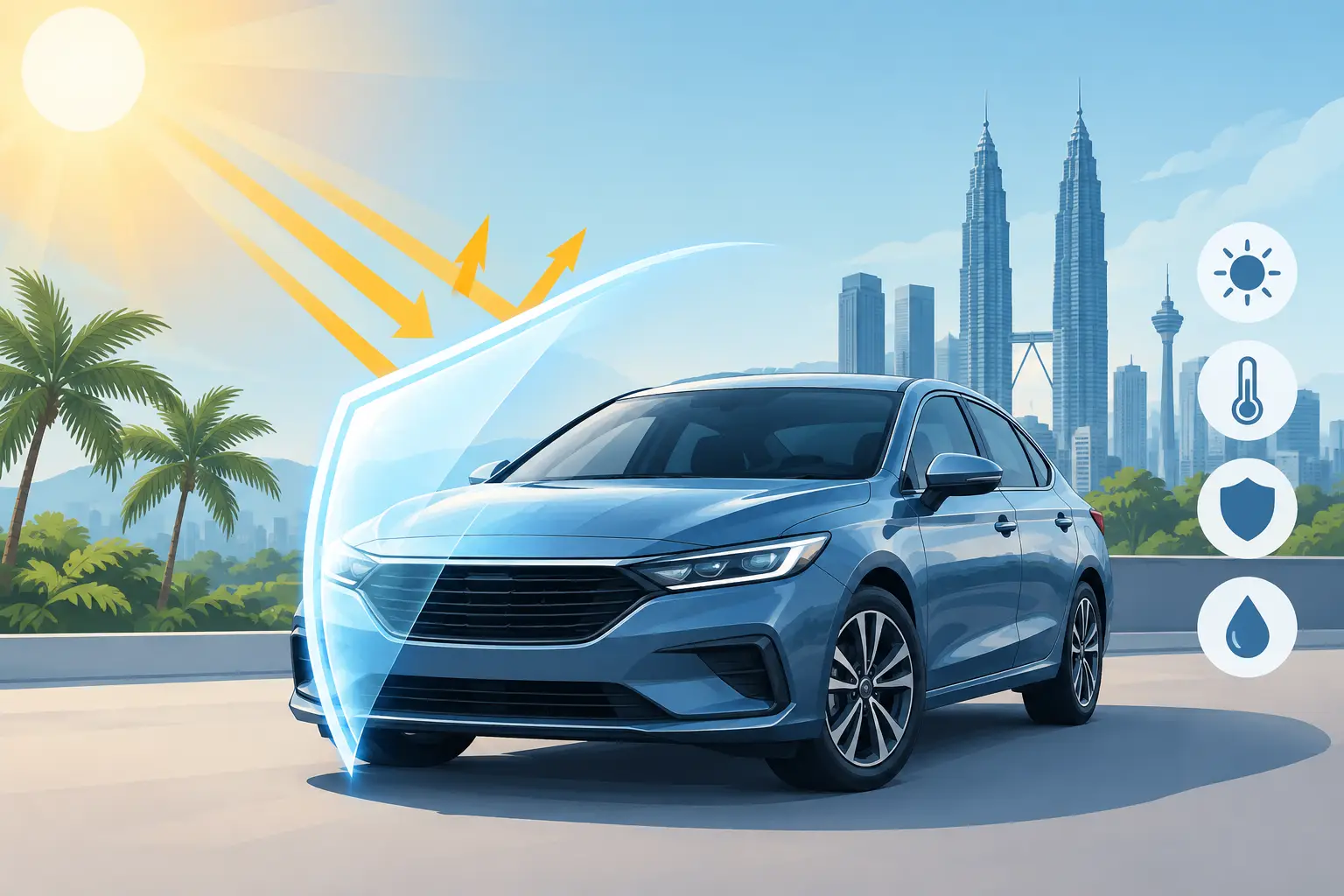
Malaysia is demanding on automotive paint. Strong sunlight gradually dulls exposed surfaces. Heat bakes contaminants onto the clear coat. Heavy rain leaves mineral marks when it dries, while city driving brings road grit, construction dust, tar, and flying debris. Even a car that spends most of its time in a covered parking lot is not fully sheltered from the daily commute.
Careful washing helps, but it cannot stop physical impact. A wash routine can remove grime before it stains; it cannot prevent a stone from chipping the bumper at highway speed. Wax and many spray coatings improve gloss and water behavior, but they are thin sacrificial layers, not impact barriers. The question is not whether your car needs care. It is which type of protection matches the risks it actually faces.
Paint Protection Film: The Defense Layer
Paint protection film, commonly called PPF, is a transparent or colored TPU film applied over painted panels. TPU is valued because it is flexible, durable, and able to absorb the kind of small impacts that would otherwise mark a painted surface. On quality self-healing films, light swirl marks can reduce with warmth, helping the film retain a cleaner appearance over time.
PPF is especially effective where damage starts first: the front bumper, hood, front fenders, side mirrors, rocker panels, door edges, and areas behind the wheels. A full-front installation makes sense for drivers who frequently use highways. Full-body PPF is often the choice for high-value vehicles, darker paint colors, or owners who want maximum coverage without changing the factory color.
There is also a styling side to PPF. Gloss film can preserve and intensify a paint-like shine. Matte PPF can transform a gloss factory finish into a refined satin-matte statement while maintaining a protective barrier. Color-infused TPU film goes further, giving the car a new personality while combining the visual change and protective benefits in one installation.
That said, PPF is not invincible. A serious impact can still damage the film and possibly the panel underneath. Its job is to take the first hit and reduce the likelihood of damage, not to make a vehicle indestructible. Film quality, preparation, installation technique, and aftercare all influence the final result.
What Self-Healing and Hydrophobic Really Mean
These terms are often used casually, so it helps to keep them simple. Self-healing refers to a top layer that can recover from fine surface marks under heat. It does not mean deep cuts disappear forever. Hydrophobic properties help water bead and roll away more easily, which can make washing simpler and reduce how strongly grime clings to the surface.
Neither feature replaces maintenance. Your car still needs safe washing, prompt removal of bird droppings and tree sap, and sensible parking habits. But they make ownership less stressful and help the protected finish stay sharper between detailing sessions.
Vinyl Wraps: Protection With a New Personality
Vinyl wrapping is the better route when transformation is the main goal. With thousands of colors and finishes available, a wrap can move your car far beyond factory options: deep metallic tones, satin neutrals, bold gloss shades, textured details, or a bespoke graphic that is unmistakably yours.
A quality vinyl wrap creates a protective layer against light abrasions, UV exposure, and daily grime while covering the original paint. It is an excellent option for an owner who wants a fresh visual identity without committing to a permanent repaint. When installed and removed correctly, the original finish can remain preserved underneath.
However, vinyl and PPF should not be treated as identical products. Vinyl is primarily a color-change and styling material. PPF is engineered first for higher-impact surface defense. If your priority is resisting stone chips on a high-mileage highway car, PPF is typically the stronger choice. If your priority is changing a white factory car into a satin olive build that turns heads at every light, vinyl wrapping is often the more natural fit.
For some builds, the best answer is a combination: PPF on high-impact zones and vinyl on the sections where color expression matters most. The right configuration depends on the vehicle, the finish you want, and how you drive it.
Choosing Coverage That Makes Sense for Your Car
There is no single “best” level of coverage. A daily commuter that spends long hours on expressways faces different risks from a weekend car that rarely leaves the city. A black luxury sedan may show swirls and marks more easily than a silver SUV. A low-slung performance car will be more vulnerable around its front bumper and side skirts.
Start with your real habits. Think about where you park, how often you travel on highways, whether you follow trucks or construction traffic, and how long you plan to keep the vehicle. Also consider what bothers you most: paint chips, faded gloss, wash swirls, or a factory color that never felt like you.
Partial PPF coverage can be a practical choice for drivers who want targeted defense where it matters most. Full-body PPF makes more sense when preserving the entire original finish is the priority. A wrap is ideal when the vehicle should feel like a personal statement rather than another stock car in the parking lot. There is no need to overprotect a car for a lifestyle it does not have, but underprotecting a prized finish can become frustrating quickly.
Installation Quality Is Part of the Protection
Premium material can still disappoint when preparation and installation are rushed. The surface must be properly cleaned and decontaminated before film goes on. Panels need careful alignment, controlled edge work, and thoughtful trimming around sensors, badges, curves, and complex body lines. On modern cars, these details separate a tidy installation from one that looks temporary.
A professional studio will assess existing paint condition first. Film can protect paint, but it does not erase deep scratches, stone chips, or poor previous repair work. In some cases, paint correction or touch-up may be appropriate before installation so the final finish looks clean rather than merely covered.
After application, allow the film time to settle and cure as advised. Avoid aggressive washing immediately afterward. Once it is ready, use pH-balanced wash products, clean microfiber towels, and sensible techniques. Avoid scraping at edges, using abrasive polishes, or letting fuel spills, bird droppings, and tree sap sit for extended periods.
Protect the Finish, Then Make It Yours
The most satisfying builds do not choose between style and preservation. They consider both from the beginning. A gloss PPF finish can keep an elegant factory color looking rich. Matte PPF can create an understated performance look. A premium wrap can turn a familiar car into something genuinely personal, while preserving the paint beneath for the future.
At Project Unicorn, that approach is the point: thoughtful protection should never make a car look generic. It should give you the confidence to drive it, enjoy it, and let it reflect your taste every time it catches the light.
Your car will still face heat, rain, traffic, and the occasional careless parking neighbor. The difference is whether its finish is left to absorb every daily battle alone. Choose protection around how you live with the car, then give it a look worth protecting.