
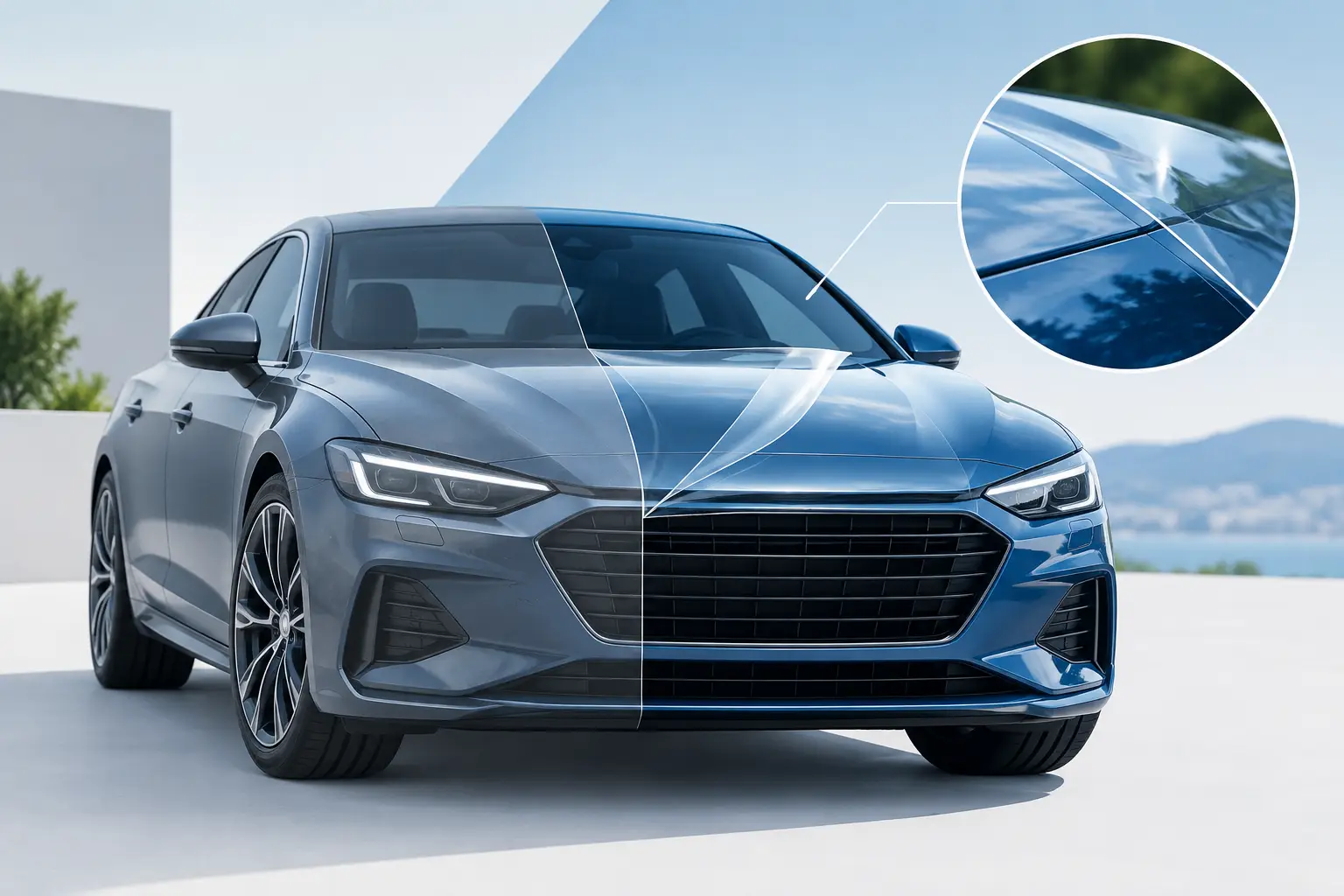
A clear protection film should disappear into the design of your car. On a deep black sedan, it should preserve that pool-like reflection. On a metallic gray SUV, it should let the flake pop under sunlight. On a color TPU build, it should deliver an even, rich finish without looking cloudy, plasticky, or flat. That is why TPU film clarity is not a minor spec on a brochure. It is the difference between protection that elevates your ride and material that gets in the way of it.
For Malaysian drivers, clarity has to survive more than the first day after installation. Heat, UV exposure, rain, road grime, and frequent washing all test whether a film continues to look premium months and years down the road. Here is what actually determines a clean, crystal-clear result.
What TPU Film Clarity Really Means
Clarity is the film’s ability to let light pass through without distortion. When a transparent TPU paint protection film is clear, the original paint color, gloss, metallic flake, and body lines remain visually sharp. It should not create a hazy veil over the panel or turn crisp reflections into a soft blur.
But clarity is not only about transparency. A premium finish also needs optical consistency. This means the hood should look as clear as the door, a curved bumper should not appear wavy, and overlapping sections should be planned carefully so they do not distract from the vehicle’s design.
For colored TPU films, the conversation changes slightly. You are not trying to reveal the factory paint exactly as it is. Instead, clarity refers to the depth, smoothness, and cleanliness of the new color layer. A good colored TPU finish looks intentional and polished, with strong visual depth rather than a dull, rubbery appearance.
Why Clear TPU Looks Better Than Basic Protection Films
TPU, or thermoplastic polyurethane, is valued in paint protection because it combines elasticity with impact resistance. It can absorb the punishment of everyday driving from light stone chips, road debris, fingernail marks around door handles, and other small hazards that gradually age a paint surface.
The premium advantage is how that protection can remain visually discreet. High-quality TPU films are engineered with stable polymers and a refined top coat so the film can stay clear while offering features such as self-healing and hydrophobic behavior. Light surface marks can reduce with heat, while water and dirt have a harder time clinging to the surface.
That does not mean every TPU film will look identical. Two films may both be called TPU, yet differ noticeably in gloss, top-coat quality, adhesive construction, thickness, and long-term resistance to yellowing. The material label alone is not a guarantee of an invisible finish.
What Affects TPU Film Clarity Over Time
A fresh installation can look impressive on almost any car. The real test is how it performs after daily exposure to the road. Four factors have the biggest effect on how well the film keeps its clean appearance.
- Material quality: Better films use more stable raw materials and protective top coats. This helps them resist discoloration, staining, and the loss of gloss that can make a car look tired.
- Surface preparation: Film follows the surface beneath it. Contamination, tar, rough paint texture, and uncorrected defects can remain visible after installation, especially under strong sunlight.
- Installation technique: Stretching film too aggressively, trapping contamination, poor edge work, or managing moisture incorrectly can affect the look of the finish. Clear film exposes careless work quickly.
- Maintenance habits: Harsh chemicals, abrasive washing tools, and leaving bird droppings or tree sap on the film for too long can compromise the surface over time.
Malaysia’s climate adds another layer to this. Intense sun and sudden rain are part of normal ownership, not occasional events. A film chosen for strong UV stability and installed with disciplined prep gives your car a better chance of holding its gloss through real local driving conditions.
The Paint Underneath Still Matters
Paint protection film is not paint correction in a roll. It can preserve a beautiful finish, but it cannot fully erase every flaw below it. On darker colors especially, swirl marks, water spots, stone chips, and deep scratches may still be visible through a clear film.
This is where the right recommendation matters. Some cars benefit from paint correction before a gloss TPU application. Others have paint that is already in excellent condition and simply need protection before daily driving begins. If the paint has numerous existing defects, a color TPU film or a different finish may create a more dramatic transformation while still providing surface protection.
The goal should not be to sell the same treatment to every vehicle. It should be to create the best visual result for the paint condition, ownership plan, and personality of the car.
Clarity, Gloss, and Orange Peel Are Not the Same Thing
Car owners often use words like clear, glossy, and smooth interchangeably. They are connected, but they describe different things.
Clarity is about seeing the color and reflections without haze. Gloss is about how strongly the surface reflects light. Orange peel is the textured appearance that can make reflections look slightly uneven, similar to the skin of an orange. Factory paint itself often has some orange peel, and a protection film may follow that natural texture rather than eliminate it.
A glossy TPU film can make paint look richer and wetter, but it will not always create a mirror-flat show-car surface. That depends on the original paint, the chosen film, and the level of paint refinement before installation. On the other hand, a satin or matte TPU film is designed to diffuse reflections. It is not less premium because it looks less glossy. Its beauty comes from a controlled, modern finish that transforms the entire character of the vehicle.
How to Keep Clear TPU Film Looking Premium
The best maintenance is simple, consistent, and gentle. Wash the vehicle regularly to remove road film, dust, and acidic contaminants before they settle. Use pH-balanced car wash products and clean microfiber towels rather than rough brushes that can create unnecessary surface marring.
If bird droppings, tree sap, fuel spills, or insect residue land on the car, clean them sooner rather than later. The top coat is designed to be durable, but no premium film should be treated as indestructible. Park under cover when practical, especially if the car will sit for long periods under direct sun.
Be mindful around edges and seams when pressure washing. A careful wash is perfectly reasonable, but blasting a nozzle too close to a film edge can create problems over time. If you are unsure which products suit your particular film finish, ask the installer instead of experimenting with aggressive degreasers or polishing compounds.
Choosing Between Clear and Color TPU Film
Clear TPU is the right move when you love the factory paint and want to preserve it. It suits owners of new vehicles, rare factory colors, and cars with paint that has been corrected to a high standard. The finished look is understated: your car still looks like itself, just better protected for the roads ahead.
Color TPU is for drivers who want protection and a bolder identity in one application. It can transform the visual presence of a daily driver, performance car, or luxury SUV while adding the benefits associated with TPU protection. The trade-off is straightforward: you are choosing a new exterior expression rather than showcasing the exact original color.
Neither option is automatically better. The smarter choice is based on whether your priority is preservation, reinvention, or a careful balance of both. A well-selected finish should feel right every time you walk back to your car.
At Project Unicorn, the standard is not merely to cover a panel. It is to respect the contours, color, and attitude that make each vehicle worth protecting. When TPU film clarity is handled properly, the film does not ask for attention. Your car does – exactly as it should.