A deep gloss black SUV parked beside a satin gray coupe may look like they left the factory that way. But the route to that finish matters. In the vinyl wrap vs repaint decision, you are not simply choosing a new color. You are choosing how much freedom, protection, permanence, and preparation your vehicle needs.
For drivers who see their car as part of their personal style, vinyl wrapping offers an exciting way to make a statement without permanently changing the original paint. Repainting still has its place, especially when the bodywork needs genuine repair. The right answer depends on what is underneath the surface and what you want your car to become.
Vinyl Wrap vs Repaint: The Core Difference
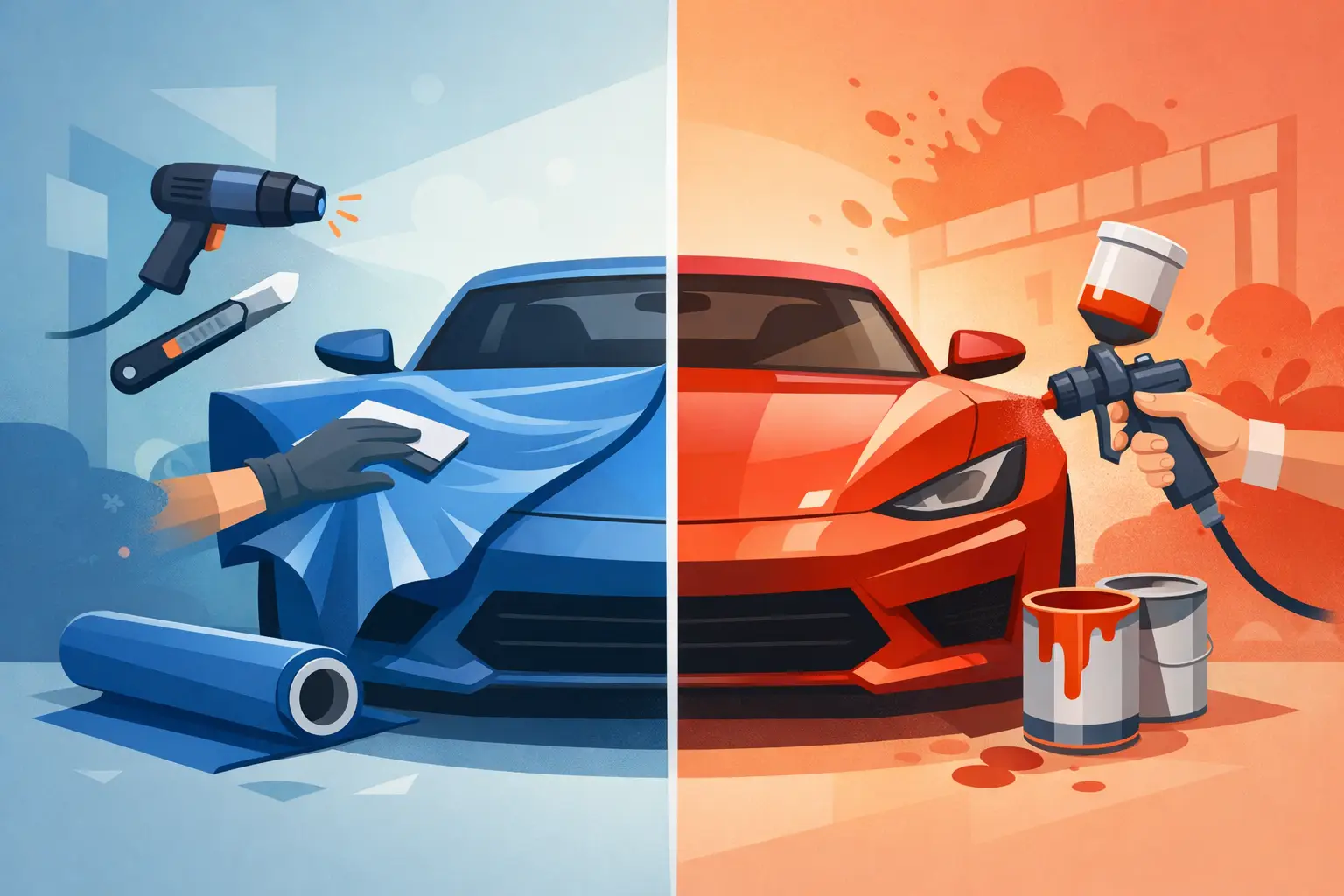
A repaint replaces the vehicle’s visible paint finish. The panels are prepared, damaged areas may be repaired, and new paint is applied before curing and finishing. It is a permanent change that can look exceptional when performed to a high standard, but the quality of preparation and paintwork defines the result.
A color-change vinyl wrap is a precision-applied film laid over the existing paint. It changes the look of the vehicle while keeping the original finish beneath it. When the time comes for another style, or a return to factory appearance, a professionally installed and properly maintained wrap can be removed.
That reversibility is the main reason wraps have become a favorite among owners who enjoy changing their vehicle’s personality. A gloss finish can look refined and factory-like. Satin brings a modern, sculpted character. Matte creates a more aggressive presence, while metallic, pearlescent, and color-shifting films can turn a familiar car into something genuinely distinctive.
When Vinyl Wrapping Makes More Sense
Wrapping is often the smarter choice when your factory paint is still in good condition and your priority is style flexibility. You may love your car but have outgrown its standard silver, white, or black finish. A wrap lets you choose a color and texture that better reflects you without making an irreversible decision.
It also gives original paint a practical layer of coverage from everyday exposure. Malaysian roads bring intense sun, sudden rain, road grime, light scuffs, and the occasional careless parking encounter. Vinyl is not the same as paint protection film and should not be treated as a replacement for impact-focused protection, but it does create a sacrificial outer surface over the painted panels.
For resale-minded owners, preserving clean original paint can be a major advantage. A future buyer may prefer the factory color, and a removable wrap gives the vehicle the option to return to it. This is especially appealing for premium sedans, SUVs, performance cars, and limited-spec vehicles where originality can matter.
A wrap also wins on creative range. Paint can be customized, but specialty vinyl finishes give you access to visual effects that would be difficult or impractical to reproduce through conventional refinishing. Details such as roof wraps, blackout trims, contrasting mirrors, custom graphics, and coordinated accents can create a complete design rather than just a color swap.
A wrap needs healthy paint underneath
Vinyl is not a cover-up for serious paint or body damage. It can conform beautifully to a smooth, well-prepared panel, but it cannot make dents, peeling clear coat, deep scratches, rust, or rough repair work disappear. In fact, those flaws may remain visible through the film and can compromise adhesion.
If your car has localized defects, address them before wrapping. A premium result begins with paint assessment, careful cleaning, decontamination, and detailed installation around edges, trims, and complex body lines. The film may be the visible finish, but the craftsmanship behind it is what makes it look intentional rather than temporary.
When Repainting Is the Better Call
Repainting is the more appropriate route when the original paint has failed or the vehicle has substantial bodywork needs. Clear coat peeling, widespread oxidation, corrosion, deep paint damage, and repaired accident panels require more than a cosmetic skin. Those issues need proper restoration at the paint level.
It can also be the better fit for owners who want a permanent color change and have no intention of returning to the factory finish. A quality repaint, done with correct prep and color matching, can restore a tired vehicle and give it a fresh second life.
The trade-off is permanence. Once factory paint is replaced, it cannot be brought back. Repaint quality can also vary dramatically. Differences in shade, texture, panel blending, dust control, and edge finishing are often most obvious in direct sunlight. A repaint should never be judged only under workshop lighting.
For newer vehicles with sound paint, repainting solely for a color change may be more commitment than necessary. If the goal is to stand out now while retaining future options, vinyl is usually the more flexible creative tool.
Finish, Maintenance, and Daily Reality
A beautiful finish is only satisfying if it suits the way you use your car. Gloss wraps are familiar and easier for most owners to live with because they resemble conventional paint. Satin and matte finishes are dramatic, but they require the right wash process. Abrasive polishing and unsuitable products can alter the texture or create uneven shiny patches.
Paint can be corrected through polishing when it collects swirl marks and light defects. A vinyl wrap cannot be treated exactly the same way. It should be washed gently, kept free from harsh chemicals, and inspected if an edge begins lifting. Parking under cover whenever possible and removing contaminants promptly will help preserve its appearance.
Durability depends on film quality, installation quality, climate exposure, and care. Constant outdoor parking under tropical UV, frequent highway driving, and neglected washing will shorten the visual life of any exterior finish, whether it is paint or film. The best material still needs sensible ownership.
Do not confuse vinyl wrap with PPF
This is where many owners get mixed messages. Vinyl wrap is primarily a color and styling solution. Paint protection film, or PPF, is engineered for stronger protection against stone chips, light scratches, and road abuse. Modern self-healing TPU PPF can also offer hydrophobic behavior and a polished, high-clarity appearance.
If your main concern is protecting a freshly painted bumper, a favorite factory color, or vulnerable front-end panels, PPF is the relevant conversation. If your main goal is transforming the entire visual identity of the car, color-change vinyl is usually the starting point. Some owners choose both strategically: a color transformation where style leads, plus protection in the areas that take the hardest hits.
How to Decide Without Regretting It
Start with the condition of your vehicle. If there is peeling paint, rust, poor previous repairs, or deep damage, get an honest assessment before considering a wrap. A surface problem should be fixed at its source, not hidden behind a new finish.
Then decide how permanent you want the change to be. If you want the freedom to move from satin navy to gloss white in the future, or to restore the original color before selling, wrapping has a clear advantage. If you are restoring an older vehicle and the paint itself needs renewal, repainting is the more logical investment.
Finally, think beyond the color swatch. Consider how the finish will look in sun, rain, parking garages, and after a normal week of driving. A bold finish should still feel right when you walk toward the car on an ordinary Tuesday morning. That is the difference between following a trend and choosing a design that belongs to you.
At Project Unicorn, the goal is not to push every car toward the same treatment. It is to match the material, finish, and level of protection to the owner’s vision and real driving conditions. Your vehicle does not need to blend into the next row of traffic. Choose the finish that lets it feel unmistakably yours.