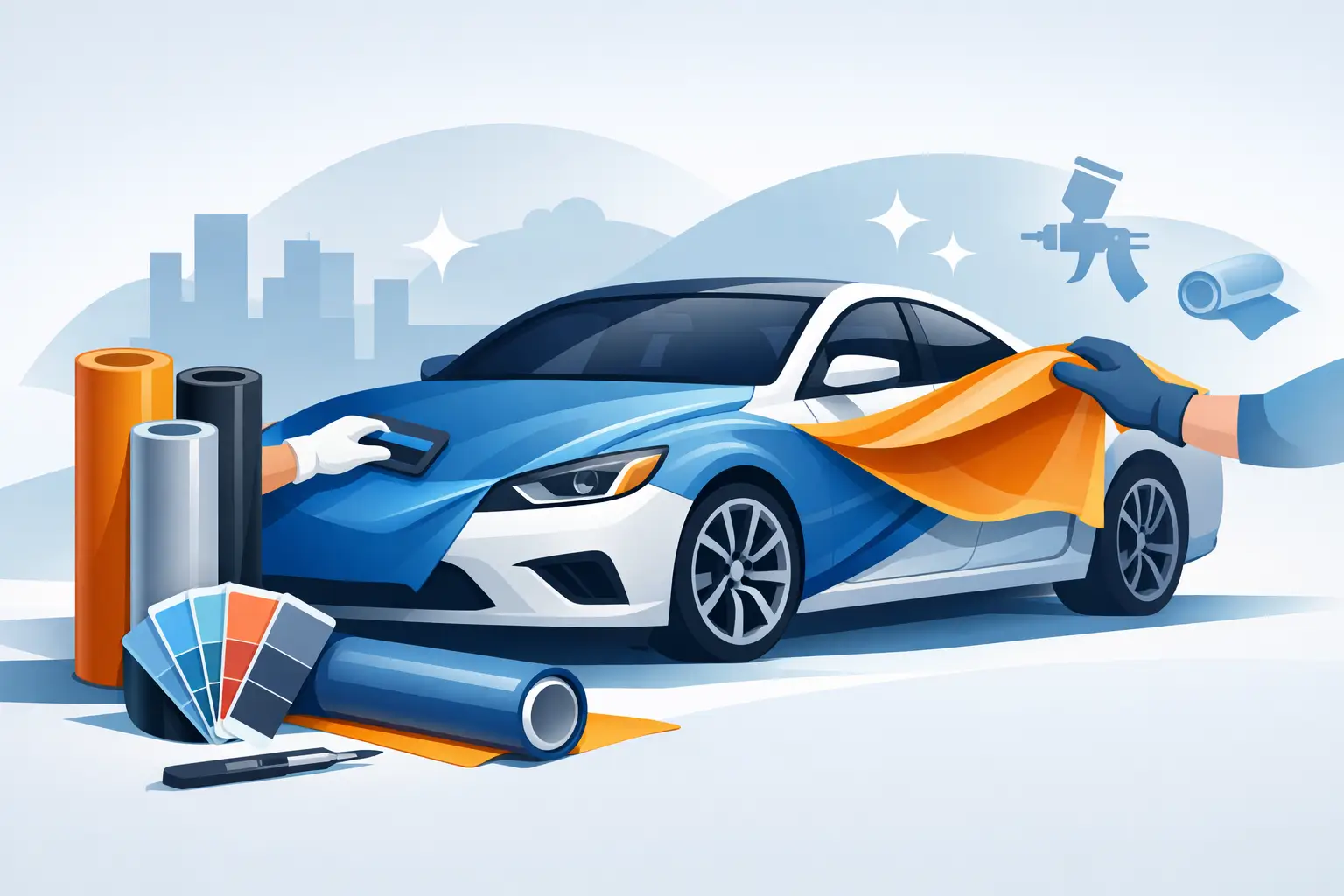
A great wrap is not simply a new color applied over your paint. It is a material decision that affects how your car looks under the sun, how it handles daily driving, and how confidently you can live with it. This premium car wrap materials guide breaks down what actually belongs on a vehicle that deserves more than a quick cosmetic change.
For Klang Valley owners, material quality matters even more. Tropical UV exposure, sudden rain, road grit, heat buildup, and tight urban parking can expose the difference between an authenticated automotive film and a cheap layer that fades, lifts, or leaves a disappointing finish. Your vehicle can be bold, subtle, protected, or all three – but the film must match the mission.
Premium Car Wrap Materials Guide: Start With Your Goal
The first question is not, “Which color looks best?” It is, “What do I want this material to do for my car?” A color change vinyl wrap is designed primarily for visual transformation. Paint protection film, commonly called PPF, is built first for defense against stone chips, light scratches, and wear. They can both elevate the look, but they do not perform the same job.
Choose premium vinyl when you want a fresh identity without committing to a repaint. It is ideal for turning a conservative factory finish into satin black, metallic gray, vivid red, a refined gloss tone, or something genuinely personal. With thousands of colors and finishes available, vinyl gives enthusiasts room to make a statement while keeping the original paint beneath it.
Choose TPU PPF when preserving the paint is the priority. This material is thicker and more impact-resistant than vinyl, making it a smart choice for high-contact areas and owners who regularly drive on highways. Modern PPF is also available in gloss, matte, and color-infused options, so protection no longer has to mean keeping the factory appearance.
For some vehicles, the strongest answer is a combination: PPF on vulnerable zones and premium vinyl where the design matters most. The right approach depends on the car, the paint condition, your driving habits, and how long you intend to keep the transformation.
Vinyl Wrap: The Material for Visual Identity
Premium automotive vinyl is engineered to conform around curved body panels, mirrors, bumpers, and complex contours. That conformability is what allows a skilled installer to create a finish that looks intentional rather than like a sticker sitting on top of the car.
The quality difference often appears in subtle places. Better vinyl has more consistent color, a refined surface texture, stable adhesive behavior, and a higher chance of staying smooth around edges over time. It also responds more predictably during installation, which matters on sharp body lines and deeply sculpted modern vehicles.
Gloss, matte, satin, and metallic are not interchangeable
Gloss vinyl gives the cleanest factory-like effect. It suits owners who want their car to look freshly painted, but in a color the manufacturer never offered. A quality gloss finish can look especially striking on sedans, coupes, and SUVs with strong body lines.
Matte has a flatter, more aggressive personality. It reduces reflections and gives the vehicle a more purposeful presence, though it needs thoughtful maintenance because certain stains or rubbing marks can show more easily. Satin sits between gloss and matte, offering a smooth, elegant sheen that feels modern without being loud.
Metallic and specialty finishes bring more movement into the design. Under direct light, they can reveal depth, flake, color shift, or a brushed effect that a standard paint finish may not deliver. These films work best when the rest of the vehicle is considered too. Wheel finish, trim color, window tint, and bodykit details should support the visual direction rather than compete with it.
What vinyl can and cannot protect against
A premium vinyl wrap creates a useful barrier against minor scuffs, light surface abrasion, and UV exposure. It can help preserve the original paint from daily wear, especially on a carefully maintained vehicle. But vinyl is not the same as impact protection.
If your concern is stone chips at highway speed, door dings, or repeated abuse on a front bumper, vinyl has limits. It is thinner than PPF and does not offer the same level of resilience. Calling vinyl “paint protection” without explaining that trade-off creates the wrong expectation. It protects the paint in one way, while PPF protects it in another.
TPU PPF: Built for the Road, Not Just the Reveal
Premium PPF is typically made from thermoplastic polyurethane, or TPU. In plain language, it is a flexible protective film designed to absorb and resist the everyday punishment that can slowly ruin a paint finish. Think gravel flicked up on the highway, debris around construction zones, scratches from bags or fingernails near door handles, and the usual risks of spirited weekend drives.
The standout feature of quality TPU PPF is self-healing. Fine swirl marks and light scratches can soften or disappear with warmth, depending on the film and the damage involved. This does not make the film indestructible. A deep cut or a hard impact can still damage it. The advantage is that the film takes the hit first, helping the paint underneath stay in better condition.
Hydrophobic top coats are another meaningful benefit. Water tends to bead and roll away more easily, which can make washing and routine upkeep less frustrating. In Malaysia’s rain-heavy conditions, that cleaner behavior is more than a showroom feature. It helps the vehicle maintain a sharper appearance between details.
Clear PPF versus color-infused TPU film
Clear gloss PPF is the choice for owners who love the original paint and want to preserve its depth. Matte PPF can convert a glossy painted surface into a stealthier look while adding serious defense. Both are smart options for luxury vehicles, performance cars, and daily drivers whose paint is still in excellent condition.
Color-infused TPU film takes the idea further by combining a color change with PPF-level protection. It can be an excellent fit for owners who want their car to feel completely different but do not want to sacrifice durability for style. The material is usually a higher-investment choice than standard vinyl, so it makes the most sense when protection is as important as visual impact.
Material Quality Is Only Half the Result
Even the best film can disappoint when preparation and installation are rushed. A premium wrap should begin with an honest assessment of the paint. Deep scratches, peeling clear coat, rust, poor previous repairs, and heavily textured surfaces may remain visible through film or affect adhesion. Wrap material is transformative, but it is not a magic eraser for damaged panels.
Installation details matter just as much. Proper panel cleaning, careful edge work, controlled heat, and accurate tension help the film sit naturally across the vehicle. On high-end cars, complex bumpers, aerodynamic trims, parking sensors, and delicate finishes require patience rather than shortcuts.
Ask about product authenticity, the intended use of the chosen film, and what level of aftercare it needs. A professional studio should explain the difference in plain language, not hide behind technical jargon. You should know whether you are choosing a styling layer, a protection layer, or a carefully planned balance of both.
How to Choose the Right Finish for Your Lifestyle
A garage-kept weekend car can carry a more expressive finish because it faces less daily exposure. A commuter SUV that spends hours outside may benefit from a practical satin vinyl or protective TPU film in high-impact zones. A supercar owner may prioritize full-body PPF to preserve a delicate factory finish, while a driver with a newer sedan may prefer a premium color wrap that makes every parking lot arrival feel more personal.
Also consider upkeep. Gloss shows its beauty through crisp reflections, but it can reveal dirt quickly. Matte and satin look exceptional when clean, yet they should be washed with products and techniques suited to non-gloss surfaces. PPF is forgiving in many ways, but it still deserves regular washing and sensible care. No film stays premium by being ignored.
The best material is not always the thickest, flashiest, or most expensive option. It is the one that supports the way you drive, the look you want, and the level of protection you expect without compromise. At Project Unicorn, that conversation is where a generic change becomes a vehicle with its own point of view.
Your car already gets you where you need to go. The right film gives it a reason to be noticed when it arrives – while helping the finish beneath stay worth protecting.