
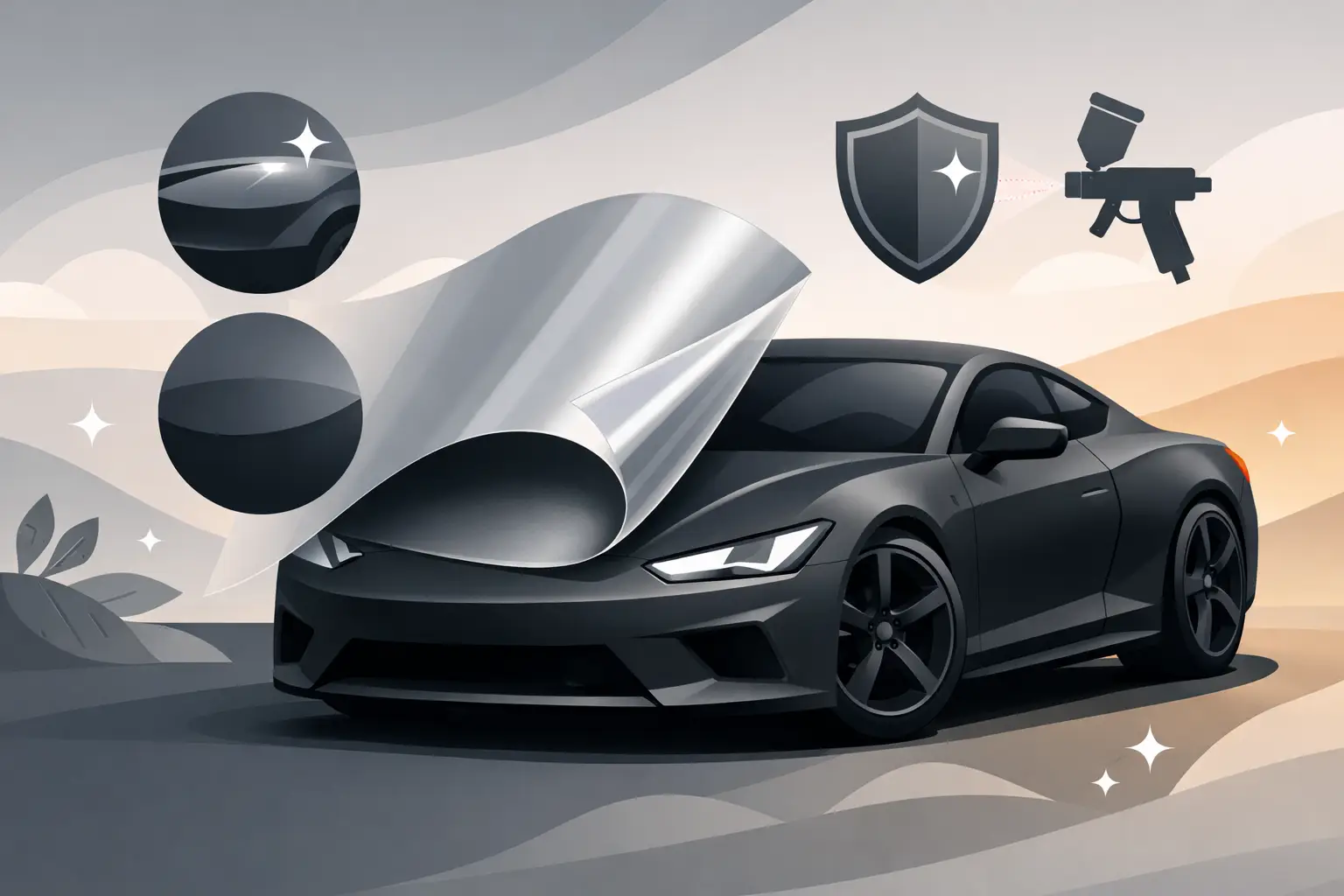
Black paint looks incredible for about five minutes after a wash. Then the dust shows up, the swirl marks start catching light, and every little imperfection suddenly feels louder than it should. That is exactly why matte ppf for black cars has become such a smart choice for owners who want drama without the constant stress. You keep the bold presence of a black car, but trade the high-maintenance shine for a cleaner, more intentional satin-matte look with real protection underneath.
Why black cars work so well with matte PPF
A black car already has presence. Matte PPF changes how that presence is expressed. Instead of looking glossy and reflective, the surface becomes softer, deeper, and more aggressive. On the right body lines, it can make a sedan look sharper, an SUV look more premium, and a sports car look properly menacing.
The reason this finish works especially well on black is contrast control. Gloss black reflects everything – sky, buildings, light poles, fingerprints, water spots. Matte PPF tones that visual noise down. The car still looks dark and rich, but the finish appears more curated, less busy, and often more expensive.
For many owners, this is the sweet spot between styling and practicality. You are not repainting the car. You are transforming the surface appearance while also adding a protective layer against chips, light scratches, and daily wear.
What matte PPF actually does
At a basic level, matte paint protection film is a transparent urethane-based film designed to protect the original paint. When applied over gloss black paint, it changes the finish to a matte or satin appearance, depending on the film brand and the underlying color.
That means it is doing two jobs at once. First, it gives the car a stealth-style visual upgrade. Second, it helps shield the original paint from the things that make black cars frustrating to own – road debris, light abrasions, bug stains, bird droppings, and UV exposure.
On premium TPU-based films, you also get features like self-healing behavior for minor surface marks and hydrophobic properties that help water bead and release more easily. That does not make the car maintenance-free, but it does make day-to-day ownership less punishing.
Matte PPF for black cars vs gloss black paint
This is where expectations matter. Matte PPF will not make your car look “better” in every situation. It will make it look different.
Gloss black paint has maximum reflectivity. It pops hard under showroom lights and looks liquid when perfectly detailed. If you love that mirror-like finish and enjoy regular polishing, gloss still has a special appeal.
Matte PPF moves in the opposite direction. It reduces glare, hides some visual clutter, and gives the car a more modern, stealthy character. It usually photographs beautifully and tends to look cleaner from a distance even when the car has seen a few days of real driving.
The trade-off is that matte finishes have their own rules. You cannot treat them like gloss paint. Machine polishing to chase shine is off the table because that can alter the finish. Spot correction also needs a different approach. So while matte PPF can be easier to live with in some ways, it also requires the right maintenance mindset.
The biggest benefits in real ownership
For black cars, the visual change is only half the story. The real value shows up over time.
One of the biggest advantages is protection against swirl-inducing wash wear. Black paint is notorious for revealing every contact mark. A quality matte PPF layer takes the abuse first, which helps preserve the original clear coat underneath.
Another benefit is a more forgiving appearance. Matte and satin surfaces do not bounce light around the same way gloss does, so certain light imperfections are less obvious at a glance. That matters for daily-driven cars in places where heat, rain, dust, and traffic grime are part of normal life.
Then there is the reversibility factor. If you ever want to return to the original gloss black finish, the film can be removed by a proper installer without the commitment of a permanent repaint. For owners who want a fresh look without losing factory paint, that flexibility is a big win.
The trade-offs most people should know first
Matte PPF is not a magic shield, and it is not for everyone.
First, the finish will show some contaminants differently. Fingerprints can still appear, especially on high-touch areas like door handles and trunk zones. Greasy smudges may be more visible on certain matte surfaces than on a freshly dusty gloss surface. Proper washing products matter more than people think.
Second, damage repair works differently. If a section of film gets deeply gouged or torn, that panel usually needs replacement rather than polishing or touch-up in the traditional sense. The upside is that the original paint below may still be protected. The downside is that film ownership is about maintaining the layer, not endlessly correcting the surface.
Third, not every black car gives the same final look. A matte film over solid black paint can look different from matte film over metallic black paint. Some combinations lean satin, some feel flatter, and some make metallic flake subtly glow through the surface. If you care about the exact finish, sample viewing matters.
Is matte PPF a good choice for daily drivers?
Usually, yes – especially if you want your car to stand out without becoming a full-time detailing project.
For a daily-driven black sedan or SUV, matte PPF makes a lot of sense because it blends style with usable protection. Highway miles, parking lot exposure, and regular urban driving all take a toll on dark paint. A protective film helps absorb some of that wear while giving the car a distinct look that does not feel overdone.
The caveat is owner behavior. If you run your car through rough wash methods or use random cleaning chemicals, you can shorten the life and appearance of the film. Matte finishes reward careful maintenance. They do not demand obsessive care, but they do expect the right habits.
Who should skip matte PPF for black cars?
If your favorite thing about black paint is the deep gloss after a full correction and ceramic detail, matte PPF may not satisfy you. It intentionally removes that wet-look shine.
It may also be the wrong fit if you want the cheapest route to a style change. Matte PPF is a premium solution because it combines appearance and protection in one system. If protection is not a priority and you only want a temporary aesthetic change, your decision process may be different.
And if you are extremely particular about exact panel-to-panel uniformity, installer quality becomes non-negotiable. Matte surfaces can be less forgiving of poor edges, contamination, or uneven finishing. The material matters, but craftsmanship matters just as much.
How to maintain matte PPF without ruining the look
The best approach is simple, not aggressive. Wash the car regularly so dirt does not sit and bond to the film. Use products intended for matte or satin-safe surfaces. Avoid waxes or polishes designed to add gloss, because they can change the visual consistency of the finish.
Drying technique matters too. Clean microfiber towels, gentle contact, and proper wash methods go a long way. If bird droppings, bug residue, or tree sap land on the film, remove them early. Matte surfaces are stylish, but they are not meant to be neglected.
For owners in hot, humid environments like Malaysia, this becomes even more relevant. Heat, UV, sudden rain, and road grime can all test a finish quickly. A quality film helps, but long-term results still come down to how the car is washed, stored, and inspected.
What to look for before committing
If you are seriously considering matte ppf for black cars, focus on three things: film quality, installer experience, and finish expectations.
High-grade TPU film generally offers better clarity, durability, and self-healing performance than lower-end alternatives. An experienced studio will also know how to handle complex edges, deep curves, badges, trim transitions, and high-visibility panels so the result feels factory-level rather than aftermarket-obvious.
Just as important, ask to see how matte film looks on black in real lighting, not only under perfect indoor conditions. Morning sun, basement parking, cloudy weather, and night lighting can all change how the finish reads. The right choice is the one that still looks right to you in everyday life.
At Project Unicorn, we see this decision as more than protection alone. For the right owner, matte PPF turns a black car into something more deliberate – less ordinary traffic, more personal statement.
A black car does not need extra noise to stand out. Sometimes the smartest move is simply changing the texture of the statement and protecting it while you are at it.