
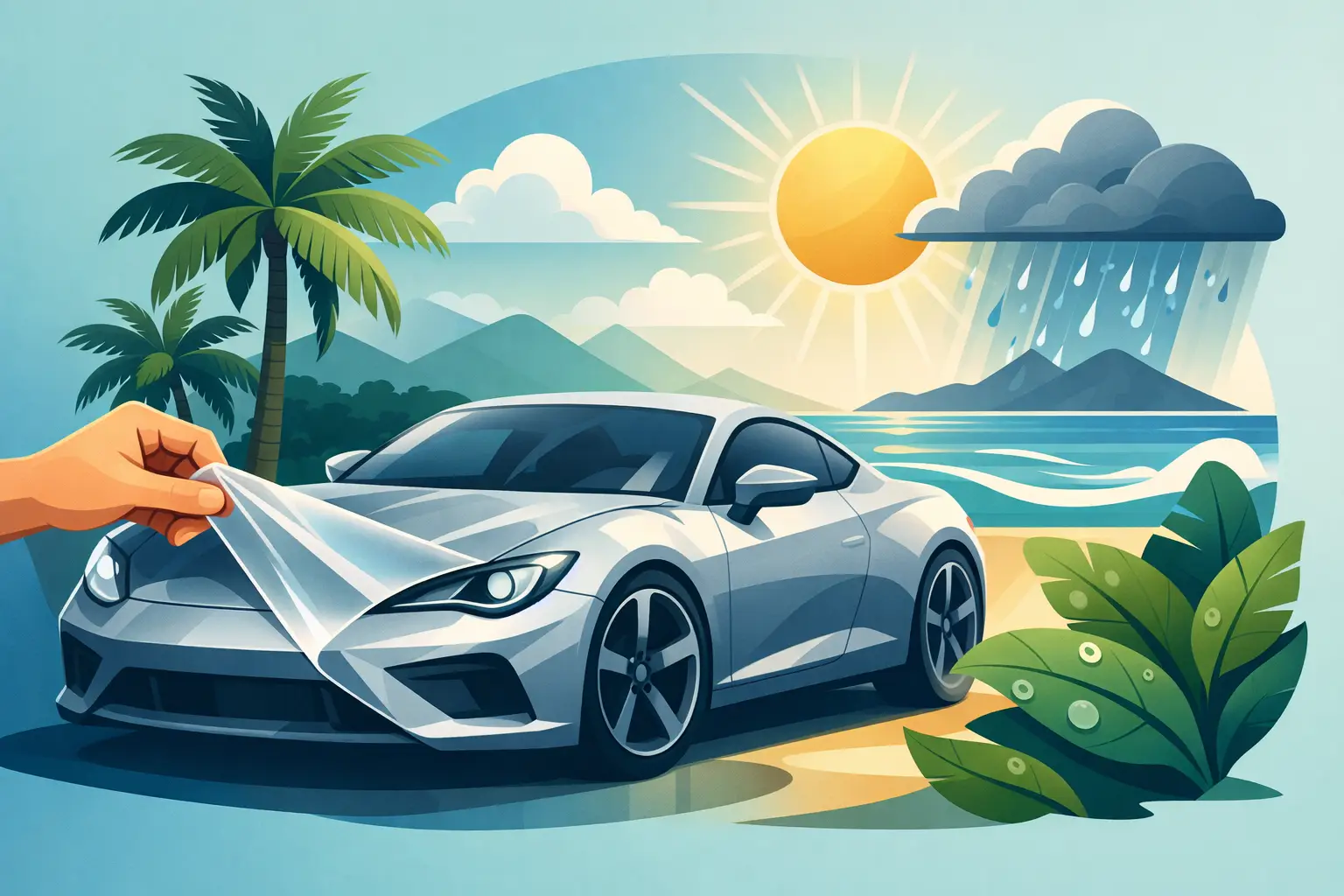
Park a car outside in Malaysia for a few months and the climate starts editing the finish for you. UV fades depth, heat bakes surfaces, sudden rain leaves mineral marks, and daily road grit works like sandpaper on the front end. That is exactly why TPU PPF for tropical climate is not just a luxury add-on for exotic cars – it is one of the smartest ways to keep paint looking sharp when the weather never really gives your car a break.
For owners who care about appearance, resale, and that fresh-detailed look, the real question is not whether paint protection film sounds good on paper. It is whether the material can actually handle a hot, humid, rain-heavy environment without turning into another maintenance headache. The short answer is yes, but only when the film itself is the right type and the installation is done properly.
Why TPU PPF works in tropical climate
Not all paint protection film behaves the same way under heat. That matters more in a tropical country, where body panels sit under intense sun, then get drenched, then heat up again. This constant expansion, contraction, and exposure cycle is tough on any surface layer.
TPU, or thermoplastic polyurethane, is preferred because it is flexible, durable, and better suited to real-world abuse than older film types. It is designed to absorb minor impact from stone chips, resist staining better, and recover from light swirls or surface marks through self-healing properties. On a daily driven sedan or SUV, that means the nose, fenders, mirrors, and door edges stay cleaner and less beaten up over time. On a performance or luxury car, it helps preserve the finish that people notice first.
The tropical advantage is not magic. TPU does not make a car immune to damage. What it does is create a sacrificial, high-clarity layer that takes the wear instead of your original paint. In a climate with strong UV, high humidity, tree sap, bug splatter, and regular rainwater exposure, that layer earns its keep quickly.
The real threats to paint in Malaysia
People usually think about stone chips first, but tropical damage is broader than that. UV exposure is a big one. Even when a car is not parked in direct sunlight all day, repeated exposure slowly dulls gloss and ages the clear coat. Dark-colored cars show this faster, especially black, blue, and red finishes.
Then there is heat. Hot panels make contamination stick harder. Bird droppings, bug remains, and road grime can bake into the surface if not cleaned quickly. Add afternoon rain and urban driving, and you also get water spotting, grime accumulation, and more frequent washing. Every wash carries some risk of micro-marring, especially on softer paint systems.
This is where TPU PPF for tropical climate makes the most sense. It addresses the full pattern of wear, not just one dramatic event. It helps with impact, but it also supports easier cleaning and reduces the visual aging that comes from repeated exposure.
What to look for in TPU PPF for tropical climate
If you are choosing film for a hot and humid environment, clarity alone is not enough. A film can look great on day one and disappoint later if it does not handle heat, moisture, and contamination well.
Start with a high-quality TPU base. This affects flexibility, durability, and how naturally the film sits over complex body curves. Better TPU films tend to maintain gloss more consistently and are less likely to become visually tired under harsh weather.
The top coat matters just as much. This is the part that helps with hydrophobic behavior, stain resistance, and self-healing. In tropical driving, where rain and road film are part of normal life, a strong top coat helps water shed more cleanly and makes wash maintenance easier. It will not stop every water spot, but it can reduce how aggressively contaminants cling to the surface.
Adhesive quality is another overlooked factor. Poor adhesive performance can show up as lifting edges, bubbling, or premature failure, especially around tight curves, high-heat zones, or frequently washed panels. In a tropical climate, where heat cycles are constant, stable adhesion is not optional.
Does TPU PPF stop yellowing?
This is where honesty matters. Good TPU films are far more resistant to yellowing than older generations of film, but no material should be sold as beyond aging forever. Tropical climate speeds up everything. Sun, heat, pollution, and wash chemicals all add stress over time.
The goal is not immortality. The goal is slow, graceful wear with strong visual retention. A premium TPU PPF should stay clear, maintain surface performance, and protect the paint underneath for years when it is properly cared for. If a film starts off with poor material quality, tropical weather will expose that weakness faster.
That is why the installer and product selection matter together. Great film poorly installed is still a problem. Average film installed beautifully still has limits.
Full-body or high-impact areas?
It depends on how you use the car and how particular you are about finish quality.
For many owners, protecting the front bumper, hood, fenders, side mirrors, and door cups covers the zones that take the most abuse. This is a practical route for daily drivers that spend time on highways or crowded city roads. It gives real protection where chips and scuffs happen most.
Full-body coverage makes more sense when the vehicle has softer paint, a darker finish that shows every flaw, or a premium look you want to preserve across every panel. It is also the stronger option for enthusiast cars, luxury vehicles, and custom-styled builds where consistency matters. If you invested in a standout finish, partial protection can feel like wearing designer sneakers in the rain with no socks.
Installation quality matters more in hot weather
Tropical climate exposes lazy workmanship fast. Poor edge wrapping, contamination under film, stretched corners, and inconsistent panel prep do not stay hidden for long once heat and moisture get involved.
A proper installation starts before the film touches the car. The paint must be correctly decontaminated, inspected, and prepared. On some vehicles, minor correction may be needed first, because PPF locks in whatever sits beneath it. Then the film has to be patterned, aligned, and laid with care so it conforms cleanly without tension where it should not be.
This is especially important on modern vehicles with aggressive curves, large gloss-black trim sections, and complex front-end shapes. The cleaner the install, the better the long-term result. In a premium studio environment, the goal is not just protection. It is protection that still looks like part of the car, not a layer added on top of it.
Maintenance is easier, not unnecessary
One of the biggest misconceptions about PPF is that once it is installed, you can forget about care. That is not how tropical ownership works.
TPU film makes maintenance easier because contaminants are less likely to bite directly into your paint, and the surface is generally easier to wash. But you still want proper cleaning habits. Letting mineral-heavy rainwater dry repeatedly under full sun can leave spots. Leaving bird droppings for days is still a bad idea. Harsh chemicals can still shorten the best film’s visual life.
The good news is that maintenance becomes more forgiving. Light swirls can heal, gloss stays more consistent, and the original paint remains protected underneath. For owners who actually enjoy seeing their car looking fresh week after week, that difference is noticeable.
Who benefits most from TPU PPF in the tropics?
If your car lives outdoors often, sees highway miles, or wears a finish you genuinely care about, you are the target user. This includes daily commuters who are tired of front-end chips, SUV owners who want easier upkeep, and enthusiasts who want their paint to stay crisp through real use.
It also makes sense for anyone planning long-term ownership. Paint damage in tropical climate is cumulative. You do not notice every small hit in the moment, but after a year or two, the front end looks older than the mileage suggests. PPF slows that visual aging in a way waxes and basic coatings simply cannot match.
For owners who see the car as part of their identity, not just transportation, TPU PPF sits in that sweet spot between style and preservation. It protects the finish you fell in love with while keeping the car photo-ready for far longer.
At a studio like Project Unicorn, that balance matters. A car should be protected, yes, but it should also still feel like your statement on the road.
The best way to think about TPU PPF in tropical climate is simple: if the weather keeps testing your paint every day, give your car a surface that is built to answer back.