
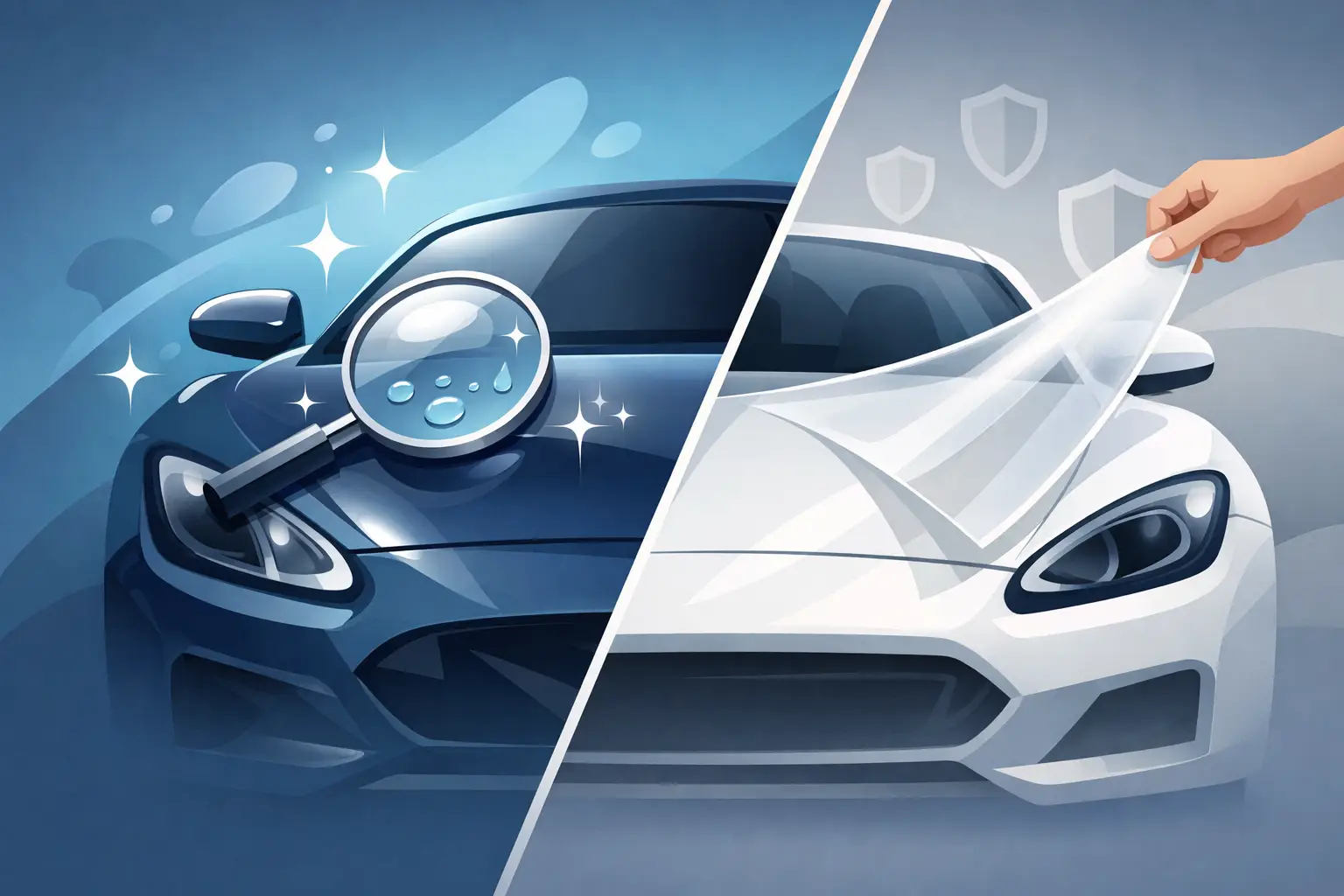
A black car looks incredible for about five minutes after a wash in Malaysia. Then the sun hits, dust settles, road grime builds up, and every little swirl or chip starts showing its face. That is why the ceramic coating vs ppf question comes up so often. Both are premium protection options, but they do very different jobs, and choosing the wrong one usually means paying for a result you did not actually want.
If you care about how your car presents every day, not just on delivery day, this choice matters. One option is mainly about easier upkeep and a cleaner, glossier finish. The other is about putting a physical barrier between your paint and the abuse of real-world driving. They can overlap a little, but they are not interchangeable.
Ceramic coating vs PPF: what each one actually does
Ceramic coating is a liquid-applied protective layer that bonds to the surface of your paint. Its biggest strengths are gloss, slickness, hydrophobic behavior, and easier maintenance. Water beads up, dirt is less likely to cling, and washing the car becomes less of a chore. It also adds a sacrificial layer against light chemical contamination, UV exposure, and minor wash-induced marring.
Paint protection film, or PPF, is a transparent or colored urethane film installed over the paintwork. This is a physical shield, not just a surface treatment. Good PPF is designed to absorb impact from road debris, reduce stone chip damage, resist light scratches, and in many cases self-heal when exposed to heat. If ceramic coating is a performance topcoat, PPF is armor.
That difference is the whole conversation. If your biggest frustration is constant washing, dull paint, and water spotting, ceramic coating speaks to that. If your biggest fear is rock chips on the highway, sand abrasion, careless door brushes, and front-end damage, PPF is the stronger answer.
Where ceramic coating wins
Ceramic coating is a smart fit for owners who want their car to stay cleaner-looking between washes and maintain a rich finish with less effort. It enhances gloss on paint, and on the right surface prep, that shine can look deep and crisp. On daily drivers, that easier maintenance is often the real luxury. The car simply feels less tiring to own.
It also works well for drivers who are not constantly facing heavy expressway debris or rougher driving conditions. If your car spends more time in city traffic, covered parking, and regular hand washes, coating can deliver a lot of satisfaction without adding the bulk of a film layer.
Another reason people choose it is visual purity. Some owners want the paint to look like paint, with no added film edge and no change in surface feel. A properly applied coating keeps the factory look while making the finish pop.
Still, this is where expectations need to stay realistic. Ceramic coating does not stop stone chips. It does not make your car scratch-proof. It does not save the front bumper from flying debris on a fast highway run. If chip resistance is the main goal, coating alone is not enough.
Where PPF wins
PPF is for owners who want true impact protection. The front bumper, hood, fenders, side mirrors, side skirts, and high-contact areas take abuse every day. Gravel, road debris, bug splatter, accidental brushing, and harsh washing can all mark paint. PPF absorbs much of that punishment before your original finish does.
This is especially valuable on darker paint colors, softer factory paint systems, and cars with low front ends or wider bodywork. It also makes a lot of sense for luxury cars, performance cars, and enthusiast builds where preserving original paint quality matters beyond simple appearance.
The best PPF installations also bring style into the equation. Gloss PPF can amplify depth while protecting the paint. Matte PPF can transform a gloss finish into a satin-like look without repainting. Newer color-infused TPU films go a step further by combining visual transformation with protection, which is a strong option for owners who want individuality and preservation in the same package.
PPF is not invincible, though. A hard enough impact can still damage the film. It also requires skilled installation, because corners, edges, and complex panels separate average work from premium work very quickly. The material is only part of the story. Craftsmanship is where the final result lives.
Ceramic coating vs ppf for Malaysian roads and weather
Local driving conditions make this decision more than a style preference. Heat, UV exposure, sudden rain, road grime, highway mileage, and tight urban parking all add up. In places like Klang Valley, your car can go from spotless to stressed in a single commute.
Ceramic coating helps in this climate because it makes wash maintenance easier and supports UV resistance. Water behavior improves, and cleaning off grime becomes less frustrating. If your car is parked outdoors often, that extra defense against environmental fallout is useful.
PPF, however, addresses the kind of wear that tropical weather does not. Construction dust, expressway debris, and daily contact damage are mechanical problems, not just surface contamination problems. That is where film has the upper hand. For many drivers here, especially those who spend serious time on highways, the front end takes enough punishment to justify that extra barrier.
So if you are deciding based on the environment alone, coating helps with maintenance pressure, while PPF helps with damage pressure. Most owners feel one of those pain points more strongly than the other.
Which one looks better?
This depends on what you mean by better.
Ceramic coating usually wins if your goal is a freshly detailed, glassy finish on well-corrected paint. It adds slickness and visual sharpness that many owners love, especially on black, white, gray, and metallic colors.
PPF can also look outstanding when installed properly, especially modern premium films with strong optical clarity. On some cars, the look is almost indistinguishable from bare paint to the casual eye. Matte and satin PPF options create a more customized visual statement that coating alone cannot achieve.
If your priority is pure gloss enhancement, coating often feels more direct. If your priority is preserving that finish while adding serious surface defense, PPF carries more weight. For owners who want both looks and protection, combining them can create the most complete result.
Do you need both?
Sometimes, yes. Not because it sounds premium, but because the two products solve different problems.
A common strategy is PPF on the high-impact areas, then ceramic coating over the rest of the vehicle, or even over the PPF itself if the system allows. That gives you chip defense where it matters most and easier cleaning across the whole car. It is a practical choice for people who use their cars regularly but still want them to present like a weekend machine.
This approach makes a lot of sense if you are particular about both appearance and preservation. You are not choosing style over protection or protection over style. You are assigning each product to the role it does best.
How to decide without overcomplicating it
Ask yourself one question first: what annoys you more right now?
If the answer is washing, water spots, fading gloss, and a car that never seems to stay clean, ceramic coating is probably the better first move. If the answer is stone chips, front-end damage, and anxiety every time you tail a truck on the highway, start with PPF.
Then think about ownership style. Are you keeping the car long term? Is it a special model, a fresh respray, or a factory color you really want to preserve? Do you care about resale condition, or is this more about keeping your pride and joy looking sharp every day? Those details matter more than hype.
It also depends on the car itself. A city-driven SUV used mostly for family runs may benefit most from easier maintenance. A low-slung coupe or premium sedan that sees fast roads regularly may gain much more from physical film protection. Neither answer is more correct. The right answer fits the way your car actually lives.
At Project Unicorn, that is usually where the conversation starts – not with product jargon, but with how you drive, where you park, and what kind of finish you want to wake up to six months from now.
The smartest protection choice is the one that matches your habits, not just your wishlist. When your car looks unique and stays protected in the ways that matter to you, that is when ownership feels properly premium.