
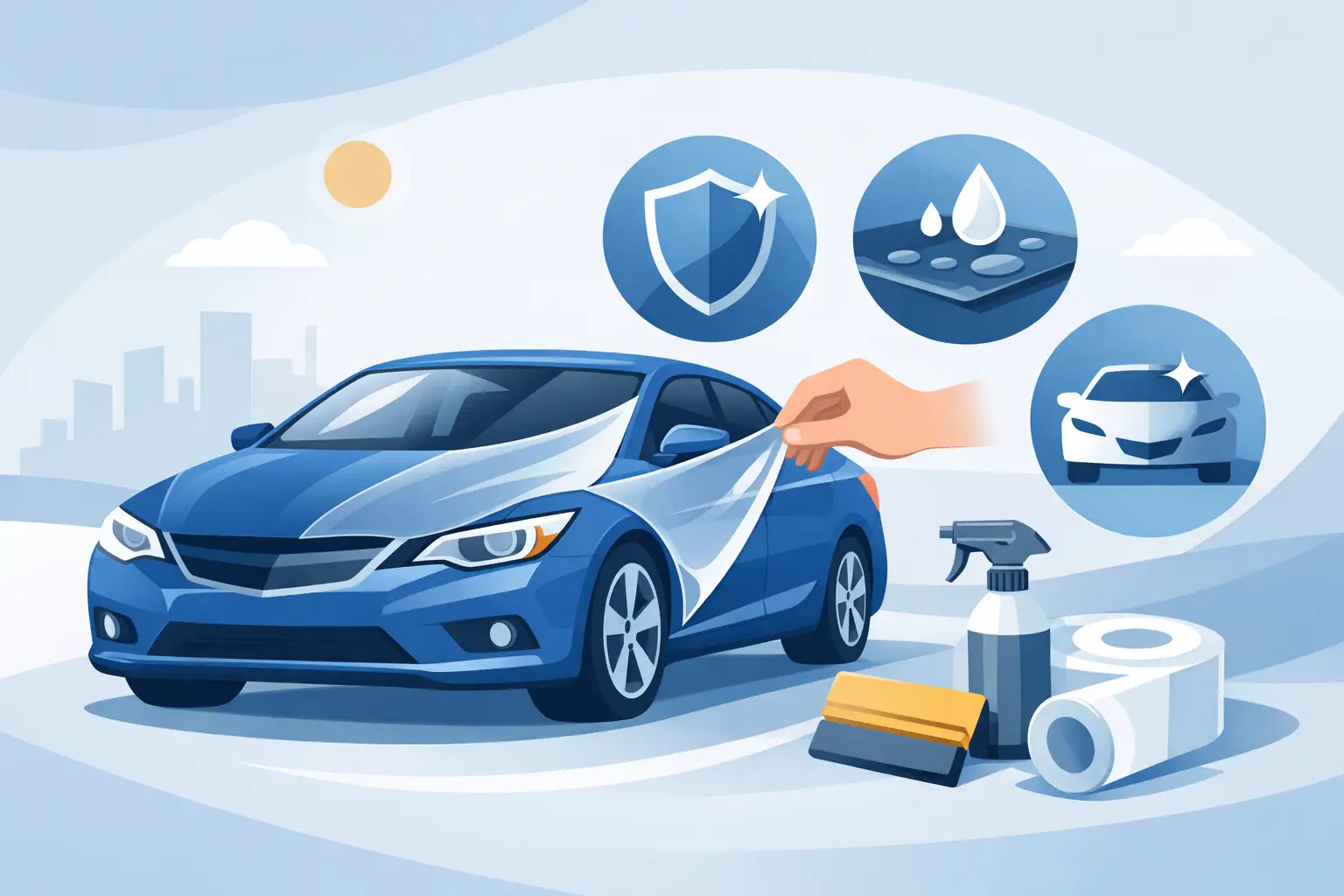
Your car does not get chipped in a showroom. It happens on real roads – highway debris, tight parking spots, harsh sun, and the daily wear that slowly steals that fresh-painted look. If you are wondering how to choose PPF, the right answer is not just “pick the thickest film” or “buy the most expensive option.” The right PPF is the one that matches your car, your driving habits, your finish goals, and the standard of installation behind it.
That matters even more if you actually care about how your car looks every day. PPF is protection, yes, but for many owners it is also peace of mind. You get to enjoy the car without treating every highway trip like a risk.
How to choose PPF without guessing
The first thing to understand is that not all PPF is built for the same owner. Some films are made to preserve a factory gloss finish as invisibly as possible. Others are designed to create a satin or matte look while still protecting the paint underneath. Newer options even bring color into the equation, which changes PPF from a purely defensive product into part of the car’s visual identity.
So before comparing brands or features, decide what job the film needs to do for you. Are you protecting a new daily driver from stone chips? Keeping a black car easier to maintain? Preserving an exotic or performance car that sees highway speeds often? Or do you want protection and a more distinctive finish at the same time? Those are different goals, and the best choice changes with them.
Start with your real-world use
A city-driven sedan that mostly sees short commutes faces different risks than an SUV doing frequent highway runs. Front-end impact zones matter more for some drivers. Full-body coverage makes more sense for others, especially if the vehicle has wide arches, exposed side surfaces, or paintwork that is expensive or difficult to match.
Be honest about how you use the car. If you drive daily in mixed traffic, park in public spaces, and spend time on highways, partial protection may feel smart at first but leave obvious unprotected areas later. If the car is a weekend machine with limited mileage, you may be able to focus on high-impact zones instead of wrapping every panel.
Understand the main film types
When people ask how to choose PPF, they often jump straight to finish and skip material quality. That is backwards. The base material affects durability, clarity, stain resistance, and how well the film ages in heat and sun.
TPU PPF is generally the premium standard because it offers flexibility, impact resistance, and self-healing properties. Minor swirl marks and light surface marring can relax with heat, helping the film stay cleaner-looking over time. This is especially valuable in a climate with strong UV exposure and regular heat, where lower-grade films can yellow, dry out, or lose their visual clarity faster.
Not every TPU film performs the same way, though. Some prioritize gloss and optical clarity. Others focus more on top-coat performance, such as hydrophobic behavior and stain resistance. A film can sound impressive on paper but still disappoint if it hazes too easily, attracts water spotting, or does not sit cleanly on complex body lines.
Gloss, matte, or colored PPF?
Gloss PPF is the safest choice if you want your paint to look like paint – just better preserved. It suits owners who love factory color, especially on deeper shades where clarity and reflection matter.
Matte or satin PPF works well if you want a more tailored look without repainting the car. It can transform the visual character completely, but it also changes how the car must be maintained. You lose some of the traditional reflective look and gain a more understated, design-led finish.
Colored TPU PPF is where styling and protection meet in a bigger way. It offers a more expressive route for owners who want a fresh identity while still getting the functional benefits of PPF. The trade-off is that product authenticity and installation quality become even more important, because you are judging both protection and visual finish.
Thickness matters, but not the way most people think
There is a common belief that thicker always means better. Not exactly. Thickness can help absorb impact, but the total performance of PPF depends on more than one number. Adhesive quality, top-coat technology, flexibility, and how cleanly the film wraps edges all matter.
A film that is too stiff may not conform as well around sharp curves, deep recesses, or intricate bumper shapes. On modern cars with aggressive styling, that can affect both coverage and appearance. A slightly different film with better flexibility and top-coat performance may give a more refined result in the real world.
This is why the installer’s recommendation should not sound generic. If the same film is being pushed for every hatchback, SUV, and supercar, that is a red flag. Good advice should consider panel shape, paint color, usage, and finish expectations.
The finish should match the paint beneath it
Some paints benefit more from PPF than others. Black paint, for example, shows every little mark, dust layer, and wash imperfection. A high-clarity gloss film can make ownership much more enjoyable because it helps preserve the visual depth while reducing the panic over every tiny blemish.
Lighter metallic colors tend to hide minor defects better, so your priority may shift toward chip resistance and long-term clarity rather than maximum visual enhancement. Matte factory paints deserve special attention because damage is harder to correct conventionally. In those cases, PPF is often less about preference and more about smart preservation.
If your car already has a specific personality, the film should amplify it, not fight it. A premium protection solution should feel intentional, not like an afterthought.
Installation quality is part of the product
You are not only choosing a film. You are choosing the hands that will shape, stretch, align, and finish it. That is why installer quality is often the biggest difference between a result that looks premium and one that looks obvious.
Look for clean edge work, well-fitted corners, and a finished appearance that does not scream “there is plastic on this panel.” Poor installation can lead to lifting edges, trapped contamination, visible lines, and premature failure even if the film itself is solid.
This is especially important on high-visibility panels like hoods, bumpers, mirrors, and fenders. Complex curves expose weak workmanship quickly. A well-installed PPF job should look intentional up close, not only from a distance.
Ask better questions before you commit
Instead of asking only what brand of PPF is being used, ask what finish suits your paint, what coverage makes sense for your driving pattern, and how the film behaves over time in local conditions. Ask how edges are handled, how difficult panels are approached, and what kind of aftercare is recommended.
The answers should be clear and confident, not overly technical for the sake of sounding impressive. Premium service does not mean confusing explanations. It means you leave knowing why a certain film and coverage plan fit your car.
Coverage choice changes the value equation
Some owners only want front-end protection. Others want full-body coverage because they know the side panels, doors, rear arches, and trunk lip also take abuse over time. There is no universal right answer here.
Partial coverage can be a practical move if your goal is to defend the highest-impact areas first. Full-body coverage makes more sense when you care about consistent protection, a cleaner long-term appearance, or preserving a special finish across the entire vehicle.
If your car has bold sculpting, flared bodywork, or a finish you want to preserve for years, full coverage often feels more complete. If the car is more functional and you simply want to reduce the damage that shows up fastest, focused coverage may be enough.
Maintenance still matters
PPF is not a force field. It reduces risk and makes the paint easier to live with, but it still needs proper washing and sensible care. Hydrophobic top coats help with water behavior and routine cleaning, but no film stays perfect if neglected.
That is another reason to choose a film based on your lifestyle, not just specs. If you want low-stress ownership, prioritize stain resistance, self-healing behavior, and ease of maintenance. If your car is garage-kept and detailed often, you may care more about finish character and optical clarity.
For drivers in Malaysia, where heat, rain, road grime, and UV exposure all play a role, this balance becomes even more relevant. A film that looks good on day one but struggles in daily conditions is not the premium choice it first appeared to be.
Project Unicorn approaches PPF the same way serious owners do – not as a one-size-fits-all add-on, but as a tailored protection and styling decision built around the car itself.
The best PPF choice is the one that lets you drive, park, and enjoy your car with less hesitation and more pride. Pick the film that fits your roads, your standards, and the version of your car you actually want to see every morning.