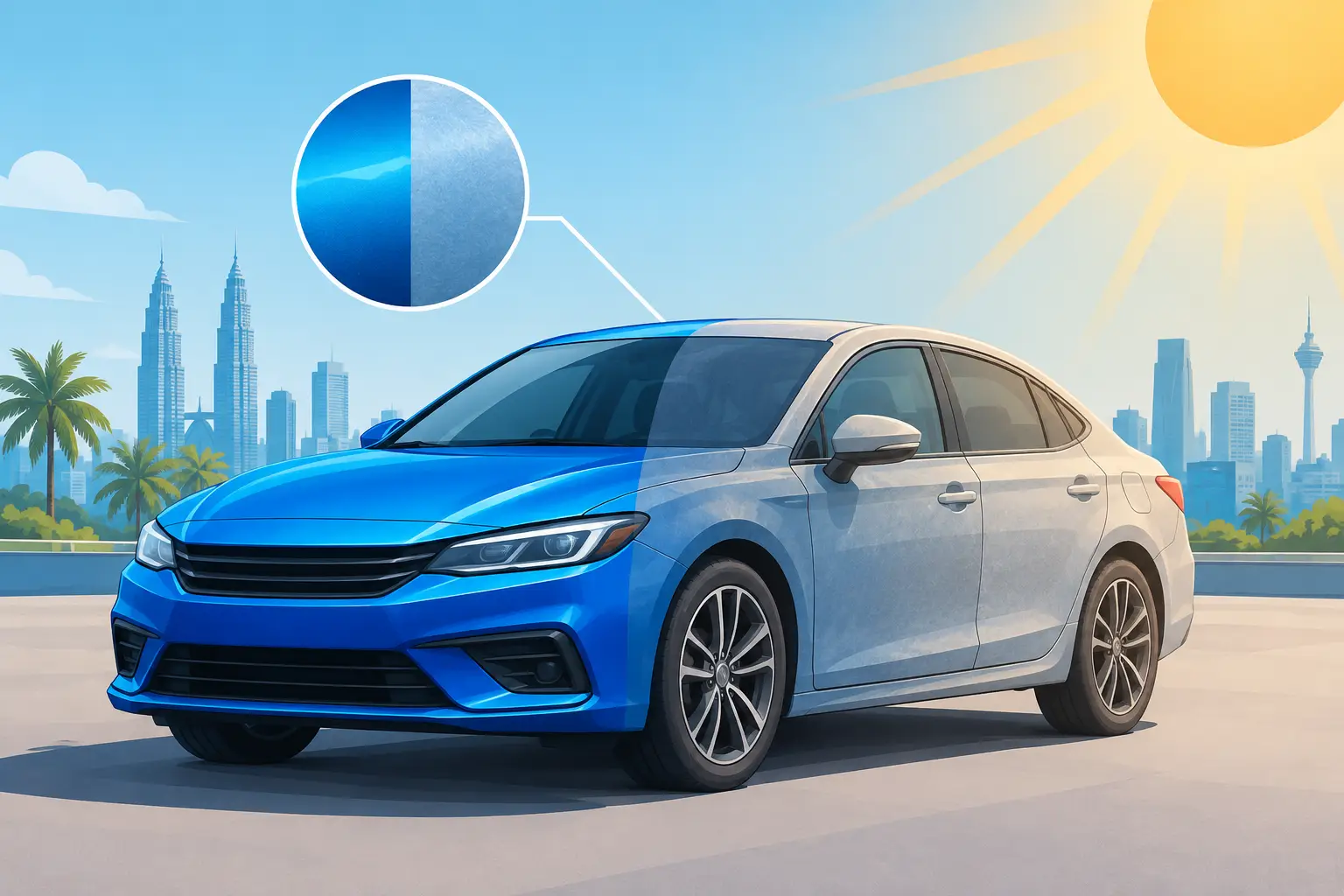
A satin black hood that looked stealthy and expensive on day one should not turn patchy, chalky, or slightly brown after months of parking outdoors. So, can vinyl wraps fade? Yes, they can – but noticeable fading is usually the result of material quality, constant UV exposure, harsh maintenance, or a combination of all three.
For drivers in Malaysia, this is not a small concern. Our sun, heat, rain, and daily road grime put exterior finishes under serious pressure. The good news is that a properly selected, professionally installed premium wrap can hold its color and character for years when it is cared for correctly. The goal is not simply to make your car stand out today. It is to make sure it still looks like a statement next year.
Can Vinyl Wraps Fade in Malaysian Weather?
Vinyl is exposed to more than sunshine. Every day, a wrapped vehicle can face UV radiation, high surface temperatures, sudden downpours, humidity, tree sap, bird droppings, fuel residue, and pollution. Over time, those elements can affect the pigments and protective top layer of the film.
Fading normally appears as a loss of richness rather than a dramatic overnight color change. A deep gloss red may begin to look flatter. A bold blue may lose some of its intensity. Dark wraps can also show a dull, weathered appearance when the surface is neglected. On lighter colors, the change may be less obvious, but uneven exposure can still create different shades between covered and uncovered panels.
Not every wrap ages the same way. A premium automotive film from an authenticated manufacturer is engineered with UV-resistant pigments and a protective surface layer. Lower-grade films may look attractive at first, but they often have less stability when exposed to tropical conditions. This is why choosing a color by appearance alone is risky. The film’s construction matters as much as the finish you see under studio lights.
What Actually Causes a Vinyl Wrap to Fade?
Sunlight is the main cause, especially ultraviolet radiation. UV energy gradually breaks down color pigments and can weaken the film’s surface over extended exposure. A car parked outdoors every working day will naturally age faster than one kept under cover, even if both receive the same quality wrap.
Heat accelerates the process. Dark colors absorb more heat, which is one reason a black, deep purple, or dark metallic wrap may need more thoughtful care than a silver or white finish. That does not mean dark colors are a bad choice. It simply means they reward owners who wash consistently, remove contaminants early, and avoid leaving the car under direct sun whenever practical.
Harsh chemicals are another quiet culprit. Strong degreasers, acidic cleaners, abrasive compounds, and unapproved solvents can strip away surface protection or stain the film. An aggressive wash routine can make a premium wrap look tired long before its time. The same goes for scrubbing with rough brushes or dirty towels, which can create fine scratches that scatter light and make the finish appear dull.
Contaminants matter too. Bird droppings, insect residue, tree sap, and industrial fallout can etch or stain a wrap if left sitting on the surface. Malaysia’s frequent rain does not automatically clean a car. Rainwater can dry with mineral deposits and carry pollutants that leave marks, especially on darker finishes.
The Difference Between Fading, Staining, and Dullness
These issues can look similar from a distance, but they have different causes. True fading is a permanent loss or shift in color due to UV and weather exposure. Staining is localized discoloration caused by contaminants, chemical residue, or water spots. Dullness is often a surface issue – fine scratches, neglected grime, or old protection that no longer beads water effectively.
That distinction matters because not every tired-looking wrap needs replacement. A professional inspection can reveal whether the finish needs a careful decontamination and protection service, or whether the film has genuinely reached the end of its visual life.
How Long Should a Quality Vinyl Wrap Keep Its Color?
There is no honest one-size-fits-all answer. The lifespan of a wrap depends on the film, the color and finish, how much sun it receives, where the vehicle is parked, and how it is maintained. A vehicle kept in a covered garage and driven regularly but cared for properly will usually retain its appearance much better than a car that lives outside seven days a week.
Gloss finishes tend to make swirl marks and water spots more visible, while matte and satin films can be more sensitive to incorrect cleaners or accidental polishing. Metallic, chrome-inspired, and specialty finishes may require even more careful product selection. The more distinctive the look, the more important it is to follow the right maintenance routine.
A quality wrap is not a permanent replacement for paint, and it should never be sold as one. It is a high-impact styling layer that can also help shield the factory paint beneath from everyday wear. When the time comes to remove or renew it, a properly installed film on healthy original paint can reveal a surface that has been protected from much of the sun, grime, and minor abrasion it would otherwise have faced.
How to Keep a Vinyl Wrap Looking Rich and Even
The best wrap care is simple, consistent, and gentle. Wash the car before dirt has a chance to build into the surface. Use a pH-balanced automotive shampoo, clean microfiber towels, and plenty of lubrication. Rinse thoroughly, particularly around edges, badges, and panel gaps where residue can collect.
Whenever possible, dry the vehicle after washing or rain. Letting hard-water minerals bake onto the film in direct sun is one of the fastest ways to create stubborn spots. If bird droppings, tree sap, or fuel splashes land on the wrap, remove them as soon as possible with a wrap-safe cleaner and a soft microfiber towel. Do not scrub aggressively.
Parking strategy makes a real difference. Covered parking, a shaded spot, or a quality car cover can reduce the total UV load your vehicle receives. It is not always realistic to avoid the sun completely, especially for a daily driver in the Klang Valley, but reducing long periods of direct exposure will help preserve the finish.
Avoid automatic car washes that use stiff brushes. They can create fine marks, lift vulnerable edges, and leave behind chemicals that are not designed for specialty films. Touchless washes can be a better option, provided the detergents are wrap-safe and the pressure is not aimed aggressively at film edges.
For owners who want an extra layer of defense, a film-compatible sealant or ceramic coating can help improve water behavior and make cleaning easier. This does not make vinyl immune to fading or damage, and it cannot reverse color loss that has already happened. What it can do is reduce how easily grime and contaminants cling to the surface, making proper maintenance less of a chore.
Choosing the Right Wrap Before Fading Becomes a Concern
The easiest way to avoid premature fading starts before the wrap is installed. Choose an authenticated automotive-grade film, not a generic material selected purely because it offers a certain shade. Ask about the film’s intended exterior use, its care requirements, and whether the finish suits your parking and driving habits.
Installation also matters. A clean, detail-focused application helps ensure the film sits correctly around curves, edges, and complex body lines. Poor preparation or rushed workmanship may not directly cause UV fading, but it can shorten the wrap’s useful life through lifting, trapped contamination, and uneven wear.
At Project Unicorn, the styling conversation is not just about picking a color from a wall of samples. It is about matching the finish to the vehicle, the owner’s personality, and the reality of how that car is used. A vivid gloss, refined satin, or dramatic metallic can all look exceptional – when the material and care plan are chosen with intention.
Your car does not need to hide from the Malaysian sun to stay distinctive. It simply needs the right film, skilled application, and a little respect after it leaves the studio. Treat the wrap as part of your car’s finish, not as a disposable accessory, and it will keep making the right impression every time you pull up.