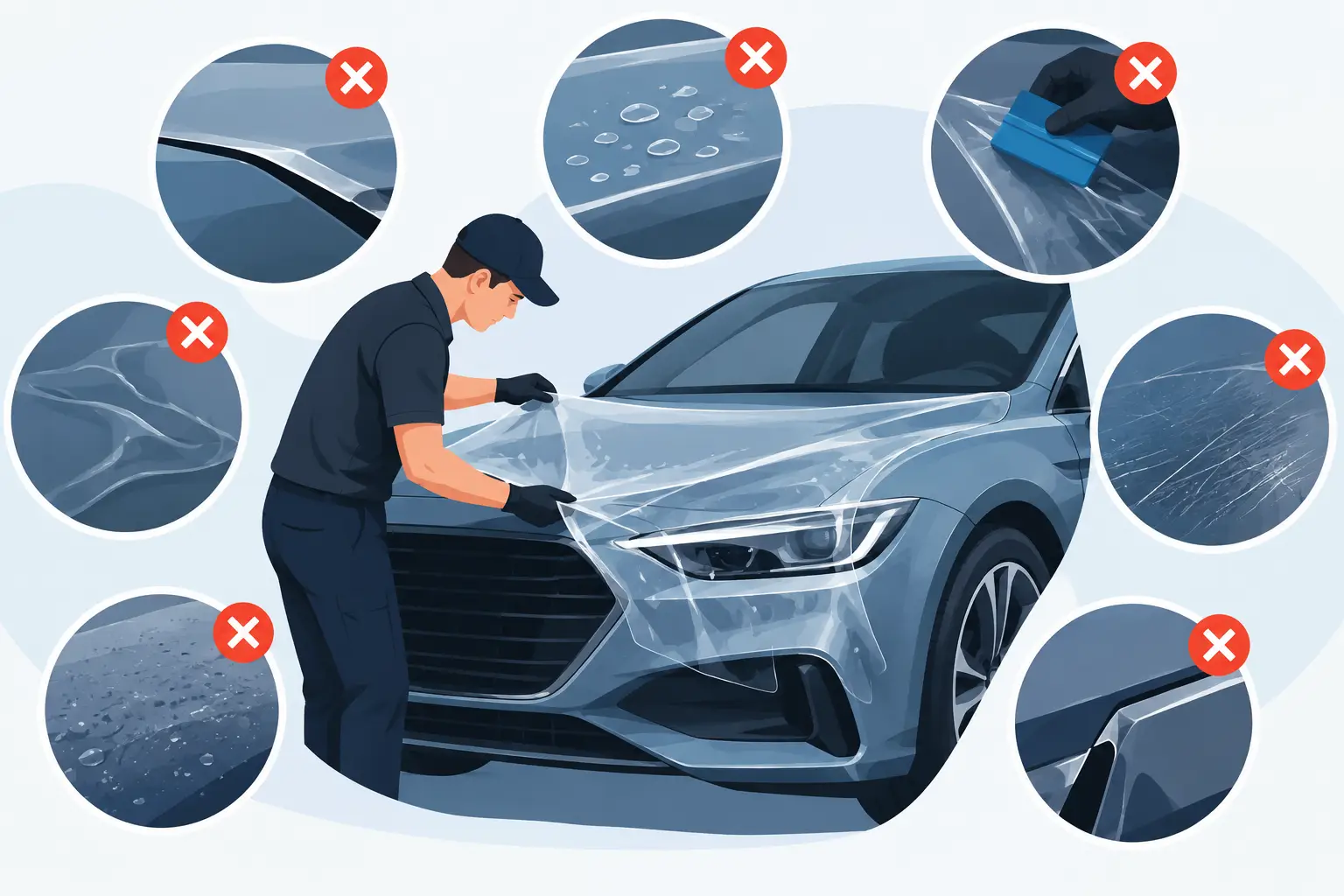
A fresh paint protection film install should make your vehicle look sharper, not make you stare at every corner wondering why something feels off. The most expensive PPF installation mistakes are not always obvious on collection day. Some reveal themselves after a few hot Malaysian afternoons, a highway drive, or the first proper wash. By then, lifting edges, trapped contamination, and stretched film can turn a protection upgrade into an avoidable frustration.
PPF is designed to preserve the finish you already love. Quality TPU film can help defend high-impact areas from stone chips, light scuffs, road grime, and UV exposure while keeping the vehicle’s original paint looking clean beneath it. But premium material alone does not guarantee a premium result. The preparation, pattern choice, installation environment, and finishing work matter just as much.
1. Applying PPF Over Poorly Prepared Paint
Paint protection film does not hide every paint defect. In fact, gloss PPF can make certain flaws more noticeable because it creates a smooth, reflective surface over them. Swirl marks, water spots, bonded contaminants, old wax residue, tar, and touch-up paint ridges can all affect the final appearance and adhesion.
A proper installation begins with inspection and decontamination. The surface must be thoroughly cleaned, and the installer should identify chips, deep scratches, repaint areas, or previous coating residue before film ever touches the panel. If correction work is needed, it should be discussed upfront rather than covered over and forgotten.
This is especially relevant for daily-driven vehicles in Klang Valley. Road dust, construction debris, tropical rain, and parking under trees can leave behind contamination that is easy to miss but difficult to hide under clear film.
2. Choosing Coverage Based Only on the Lowest Quote
Partial-front PPF, full-front PPF, and full-body protection all serve different purposes. The mistake is not choosing partial coverage. The mistake is choosing it without considering how and where the vehicle is driven.
A city commuter may prioritize the bumper, hood, fenders, side mirrors, and headlights because these areas take the bulk of front-end impact. An SUV that sees frequent highway mileage may need more strategic coverage around rocker panels, lower doors, and rear arches. A low-slung sports car may need extra attention around its wide front bumper, side intakes, and exposed lower sections.
The right coverage is a design decision as much as a protection decision. It should account for the vehicle’s shape, paint condition, road use, and the finish you want to preserve. A well-planned installation looks intentional. A rushed coverage plan can leave highly exposed areas vulnerable while protecting panels that rarely take damage.
3. Ignoring Panel Edges and Wrap Quality
The most visible PPF installation mistakes often happen at the edges. A film line that stops too early, a corner that is not properly anchored, or an edge left exposed to dirt and water will eventually draw attention. On white, black, and high-gloss paint, even a small unfinished edge can disrupt an otherwise beautiful result.
Whenever panel geometry allows, the film should be wrapped around edges for a cleaner, more integrated look. This is not possible on every panel, and forcing film into inaccessible areas can create unnecessary tension. The goal is not to promise invisible film everywhere. The goal is to make smart, clean decisions based on the vehicle’s construction.
Door handles, bumper curves, headlights, badges, and sharp body lines require patience. These are the areas where a detail-oriented studio separates a considered install from a generic one. Clean edge work also reduces the chance of dirt collecting along the boundary over time.
4. Stretching the Film Too Aggressively
PPF is flexible, but flexible does not mean indestructible. Aggressive stretching can distort the film, weaken adhesive performance at stressed areas, and create visible tension near deep curves. It may look acceptable at first, then begin to lift or shrink back after repeated heat cycles.
Modern vehicles are full of challenging shapes: sculpted bumpers, sharp creases, recessed sensors, wide fender arches, and complex aerodynamic trim. These areas demand the correct installation technique, not brute force. In some cases, a carefully placed relief cut or a purpose-designed pattern produces a cleaner, more durable finish than trying to force one large piece of film around every contour.
This is where it depends on the car. A Porsche front bumper, a high-performance SUV’s lower valance, and a sedan’s simple hood each require a different approach. Good workmanship follows the panel, not a one-size-fits-all process.
5. Trapping Dust, Fibers, or Moisture Under the Film
A few tiny particles may be unavoidable in real-world film installation, especially around difficult panel edges. But visible debris in central viewing areas, large water pockets, or repeated contamination under the film are signs that the installation environment or process was not controlled carefully enough.
PPF should be installed in a clean, well-managed workspace. The vehicle, tools, hands, and surrounding area all matter. One loose microfiber fiber can become surprisingly obvious beneath a glossy surface, particularly under direct sunlight.
Moisture management matters too. Installation solutions need time to settle and evaporate. A faint haze or small moisture pocket can sometimes clear during the normal curing period, while a hard particle or air bubble will not magically disappear. The difference should be explained clearly when you collect your car, so you know what is normal settling and what requires attention.
6. Cutting Directly Into the Paint
Custom trimming is sometimes necessary, but blades and paint are never a casual combination. Cutting too deeply near an edge, badge, or body line can score the clear coat. The film may hide that damage temporarily, only for it to become a painful surprise when the PPF is removed years later.
The safest process minimizes cutting on the vehicle wherever possible. Purpose-made patterns, careful positioning, and controlled trimming techniques help reduce risk. If a custom solution is required, precision is everything.
This is one reason high-value vehicles deserve more than a quick install. The film is there to protect original paint and support long-term resale appeal. An installation process that damages the surface underneath defeats the entire purpose.
7. Skipping the Curing and Aftercare Period
Your new PPF needs time to settle. Fresh edges are more vulnerable before adhesive fully stabilizes, and aggressive washing too soon can interfere with areas still curing. Heavy rain, normal driving, and light surface moisture are usually part of life, but avoid pressure washing directly at film edges immediately after installation.
For the first few days, treat the finish with a little patience. Do not pick at corners, press repeatedly on a small bubble, or use harsh chemicals because the surface looks slightly different while moisture is still evaporating. If something concerns you, ask the installer instead of trying to fix it at home.
After curing, maintenance is straightforward. Regular washing, clean microfiber towels, and sensible drying habits help keep the film looking clear. Self-healing TPU PPF can recover from many fine surface marks with heat, but it is not a license to neglect the car. Deep impacts and sharp objects can still damage any protective layer.
8. Treating PPF as a Generic Product
Not all paint protection film is built for the same visual result or ownership goal. Gloss PPF is ideal when you want to preserve or enhance paint depth. Matte PPF can transform a gloss-painted vehicle into a satin-like statement while protecting the original finish underneath. Color-infused TPU films bring another level of individuality, combining a new visual identity with protective properties.
The mistake is choosing based on a product name alone. Ask how the film will look on your paint color, how it handles self-healing, whether it has hydrophobic characteristics, and how its finish will age under sun, rain, and frequent washing. A premium film should complement the car’s personality, not make it look plastic, patchy, or unfinished.
At Project Unicorn, the philosophy is simple: protection should never come at the expense of presence. Whether your car is a refined daily driver or a weekend machine built to turn heads, the best PPF installation respects every line, curve, and detail that made you choose it in the first place.
Your vehicle does not need to look like every other car in the parking lot. Choose film, coverage, and craftsmanship with the same care you would bring to the rest of your build, then let the finish speak for itself.