
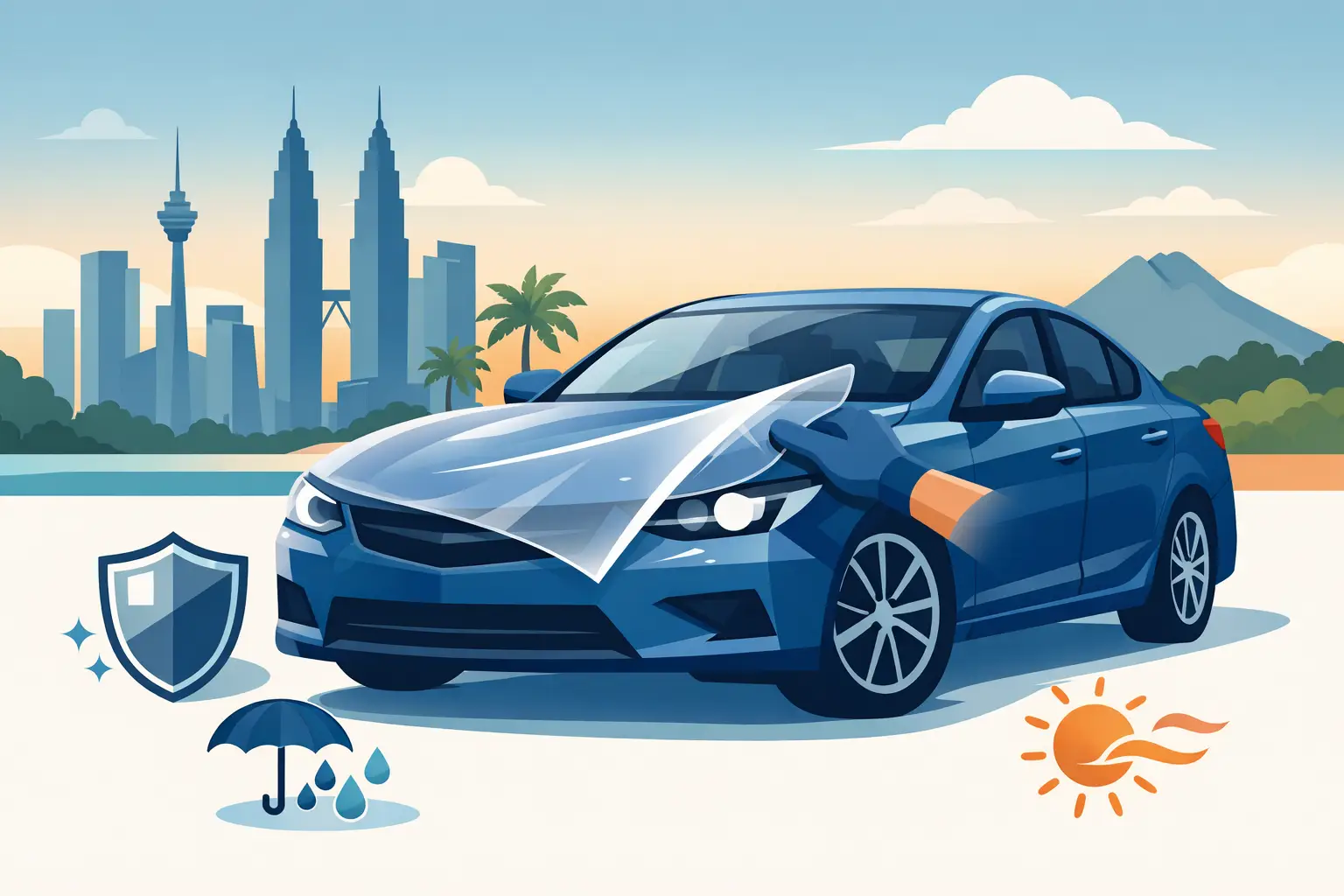
A fresh paint finish can lose its edge faster than most owners expect. One highway run behind a lorry, a tight mall parking bay, or a season of intense sun and rain can leave chips, scuffs, and stubborn marks on the panels you notice first. So, is PPF worth it in Malaysia? For many owners, yes – but only when the coverage, material, and installation standard match how the car is actually driven.
Paint protection film is not just for supercars that spend weekends under studio lights. A well-chosen PPF package can make just as much sense on a daily-driven SUV, sedan, or hatchback that faces Klang Valley traffic, expressway debris, uncovered parking, and frequent washes. The real question is not whether PPF is a luxury. It is whether preserving the original paint matters to you.
What PPF Actually Protects Against
PPF is a clear or colored thermoplastic polyurethane film applied over painted body panels. Premium TPU film is designed to absorb the impact of small road debris before it reaches the paint beneath. It adds a sacrificial layer to the areas that usually take the most abuse.
That matters on Malaysian roads. Loose stones, sand, tar, insects, motorcycle traffic, construction dust, and flying debris can all leave their mark, especially on the front bumper, hood, front fenders, mirrors, and side skirts. Dark-colored cars make those chips painfully obvious. White or silver cars may hide them better, but the damage is still there.
Quality PPF also brings practical features that owners appreciate after living with the car for a while. Self-healing top coats can reduce the appearance of light swirl marks and fine scratches when exposed to heat. Hydrophobic properties help water and grime release more easily during washing. Gloss PPF can retain a deep, wet-looking finish, while matte PPF gives a factory-like satin transformation while protecting the paint underneath.
It does not make a car invincible. A hard impact, deep key scratch, careless collision, or aggressive abrasion can still damage both film and paint. Think of PPF as premium armor for everyday threats, not a force field.
Is PPF Worth It in Malaysia for Daily Drivers?
For a daily driver, PPF is most worthwhile when you want to keep the car looking sharp without becoming anxious about every drive. If your route includes highways, industrial areas, construction zones, or crowded urban parking, the front end is constantly exposed to minor hazards. Those small hits add up over time.
Owners who keep their cars for years often see the value most clearly. Original paint in clean condition carries pride of ownership and can support a stronger impression when it is time to sell or trade in. A car with fewer stone chips, less paint correction history, and consistent panel finish simply presents better.
The same applies to newer cars. The first few months are when owners tend to care most about keeping the finish flawless. Protecting high-impact panels early means you are preserving factory paint from day one rather than trying to disguise damage later.
That said, full-body PPF is not automatically the right choice for every vehicle. If your car is older, already has widespread paint defects, or is used mainly for short, low-risk journeys, selective coverage may be the smarter move. The best decision is based on exposure, ownership plans, paint condition, and how particular you are about appearance.
Full-Body vs. Front-End Coverage
There is no single correct PPF layout. Coverage should be intentional, not simply bigger for the sake of it.
Front-end protection is often the practical starting point because the bumper, hood, fenders, and mirrors receive the highest concentration of stone chips. For many daily drivers, protecting these panels delivers the most visible benefit. Adding door edges, door cups, trunk loading areas, and side skirts can also be sensible where contact and abrasion are common.
Full-body PPF is for owners who want a consistently protected finish across the entire car. It is particularly compelling for vehicles with complex body lines, softer paint finishes, high-gloss dark colors, or a strong resale and preservation focus. It also gives design-minded owners an option to change the surface character with matte or color-infused TPU film while retaining the protection advantages of PPF.
The important part is not choosing the largest package. It is choosing protection for the panels that match your real-world use. A daily SUV that spends time on highways may need a different approach from a weekend Porsche that lives in covered parking but sees spirited drives.
Malaysian Heat, Rain, and Parking: The Real Test
Malaysia’s climate is demanding on vehicle surfaces. Strong UV exposure can gradually dull unprotected finishes. Sudden rain turns dusty roads into grime, while roadside contaminants and bird droppings can become harder to remove if left sitting too long. PPF helps create a more resilient outer layer, but maintenance still matters.
Covered parking is helpful, yet it does not eliminate risk. The more common threats are often close-range: another car door opening too wide, bags brushing against paint, careless loading at the trunk, or a bumper meeting a low curb. PPF is especially useful because it protects the paint from the minor scars that happen in normal ownership.
A premium film must also be installed properly for tropical conditions. Poor preparation, rushed panel work, exposed edges, contamination, and careless cutting can spoil the result. The film itself may be excellent, but workmanship determines whether it sits cleanly around curves, sensors, vents, badges, and difficult body contours.
What Good PPF Installation Should Look Like
A premium result should look intentional, not obviously covered. On a properly installed vehicle, the film should follow the body lines cleanly and allow the paint finish to remain the star.
Before installation, the paint needs careful assessment and preparation. Film can preserve a surface, but it does not erase deep scratches, rock chips, or poor previous paintwork. If imperfections are trapped beneath the film, they remain visible. This is why a studio should explain the condition of your paint honestly before recommending coverage.
Look closely at the details: panel alignment, edge finishing, corners, complex bumper shapes, and areas around sensors or trim. Clean work takes time because each panel has its own challenges. On high-end cars, there is little room for shortcuts. On daily drivers, the same principle applies. Your car deserves a finish that looks refined up close, not just impressive in a social media photo.
At Project Unicorn, that approach means treating protection as part of the design process. The goal is not to cover a car in film and call it done. It is to preserve the finish while keeping every line, gloss level, and styling choice looking right.
The Trade-Offs You Should Know Before Applying PPF
PPF is a serious upgrade, so it deserves a clear-eyed decision. First, film has a lifespan. It is not permanent, and it should eventually be removed and replaced when it reaches the end of its best-looking life. Quality material and correct care help, but no protective film should be treated as forever.
Second, maintenance is easier, not unnecessary. You should still wash the car regularly, remove bird droppings promptly, and avoid harsh cleaning habits. The advantage is that you are maintaining film rather than repeatedly correcting the factory paint beneath it.
Third, not all films are equal. Material quality affects clarity, stain resistance, yellowing resistance, hydrophobic behavior, and self-healing performance. Installation quality affects everything you can see: edge lines, trapped debris, stretch marks, and long-term finish. Authenticated, world-class materials paired with experienced workmanship are where the investment starts to make sense.
Finally, be realistic about your expectations. PPF can preserve paint exceptionally well against daily wear, but it cannot undo existing damage or replace careful driving. It gives you more confidence on the road, not permission to stop caring for the car.
When PPF Makes the Most Sense
PPF is a strong choice if you have a new car, drive regularly on highways, own a dark-colored vehicle, park in public spaces often, or plan to keep your car looking close to new for years. It also makes sense if you value original paint and want your car to remain a polished personal statement rather than just transport.
It may be less urgent if the car is already heavily worn, rarely driven, or due for a major cosmetic transformation soon. In those cases, a targeted plan can still protect the panels that take the most punishment without overcommitting.
The smartest move is to inspect your own car honestly. Look at the bumper, hood edge, mirrors, door cups, side skirts, and trunk lip. Those marks tell the story of how and where you drive. Let that story shape your protection plan, then enjoy the road knowing your paint has a better chance of staying worthy of a second look.