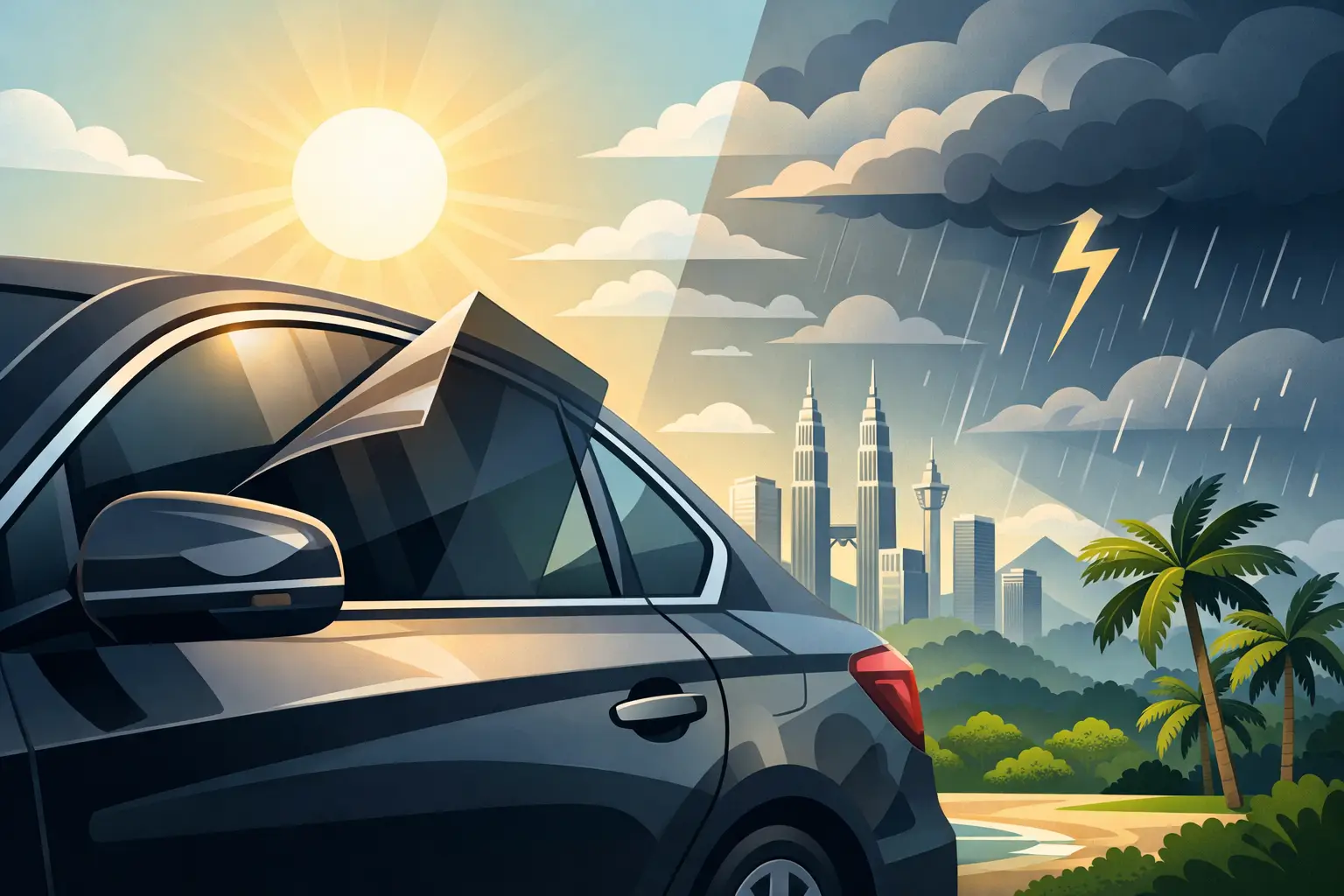
Park your car under the afternoon sun in Malaysia for 20 minutes and the cabin tells you everything you need to know. The steering wheel burns, the seats trap heat, and the air conditioning has to work overtime before the drive even starts. That is exactly why choosing the best window tint for Malaysian weather is not a cosmetic extra – it is part comfort upgrade, part UV defense, and part daily sanity saver.
The catch is that not all tints solve the same problem. Some dark films give privacy but do very little against heat. Some premium films stay impressively clear while blocking a huge amount of infrared heat. And some options look good on paper yet fall short where Malaysian drivers actually feel it most – long traffic jams, open-air parking, and harsh midday sun bouncing off glass and dashboards.
What makes the best window tint for Malaysian weather?
Malaysia is not just hot. It is humid, bright, and relentless. A window film that feels acceptable in a milder climate may feel underwhelming here because our driving conditions expose every weakness quickly.
The best window tint for Malaysian weather usually comes down to four things working together: strong heat rejection, effective UV protection, clear visibility, and long-term stability. If one of those is missing, the ownership experience changes fast. A film can look dark from outside, but if the cabin still heats up aggressively, it is not doing the real job most drivers want.
Heat rejection matters because it directly affects comfort. A good tint helps reduce the amount of solar heat entering through the glass, which means the cabin gets less oppressive when parked and the air conditioning can cool the interior more efficiently. That does not turn your car into a refrigerator in the sun, but it absolutely changes how punishing the cabin feels.
UV protection matters for both people and the car itself. Over time, UV exposure contributes to faded interiors, cracked trim, and leather that ages faster than it should. For drivers who care about preserving a cabin as much as the exterior, this is a serious point, not a side benefit.
Then there is clarity. The best tints are not automatically the darkest ones. In fact, many premium films are chosen because they reject heat exceptionally well while keeping the view out clean and comfortable. That matters on rainy evenings, basement parking ramps, and roads with mixed lighting.
Why darker is not always better
A lot of drivers still assume a darker film means stronger heat protection. It sounds logical, but it is only partly true. Darkness mainly affects visible light transmission. Heat rejection depends more on the film technology itself.
That is why a high-performance nano ceramic or sputtered film can outperform a darker basic film while still maintaining a more refined look and better visibility. For daily drivers in the Klang Valley, this matters more than people expect. You want privacy and style, yes, but you also want a car that feels noticeably calmer inside when the sun is brutal and the traffic is crawling.
There is also the driving side of the equation. Very dark film can become tiring in low-light conditions if the product quality is mediocre or if the installation is not well matched to the glass area. A premium result is about balance, not just making every window look blacked out.
Sputter vs nano ceramic for Malaysian roads
If you are narrowing down premium tint types, sputter and nano ceramic are the two categories most worth paying attention to.
Sputter tint
Sputter film uses a metallic coating process designed to improve solar performance. In plain terms, it is chosen because it can deliver strong heat rejection and a crisp, premium finish. For drivers who want serious performance and a polished appearance, it is a strong contender.
The trade-off is that product quality matters a lot. Not every metallic-based film is created equal, and poor-quality options can bring unwanted side effects. When done properly with authenticated materials and proper installation, sputter film remains a high-performance choice for hot climates.
Nano ceramic tint
Nano ceramic film has become a favorite for good reason. It is designed to reject heat effectively without relying on heavy darkness, and it is often appreciated for maintaining excellent optical clarity. That makes it especially attractive for owners who want a premium cabin feel without compromising the driving experience.
For Malaysian weather, nano ceramic is often one of the smartest all-around choices because it performs where daily drivers actually feel the difference – under direct sun, in stop-and-go traffic, and during long commutes when cabin comfort matters most. It suits everything from executive sedans to family SUVs to enthusiast builds that deserve a cleaner, more sophisticated finish.
The numbers that matter, and the ones that confuse people
Tint marketing can get technical fast. You will usually hear terms like UV rejection, infrared rejection, and visible light transmission. All of them matter, but they do not carry equal meaning unless they are explained properly.
Visible light transmission tells you how much light passes through the film. That affects how dark the tint appears. It is useful, but it does not tell the full story of heat control.
UV rejection is easier to understand. Higher UV blocking helps protect skin and the vehicle interior. This is one of the most practical long-term benefits of quality film.
Infrared rejection is where many premium films separate themselves. Infrared heat is a major part of what makes a parked car feel punishing. A film with strong infrared performance can make a very noticeable difference in real-world comfort. That said, numbers should never be read in isolation. A film can advertise one impressive statistic while being less balanced overall. The best recommendation always comes from looking at the complete performance profile, not a single headline claim.
How to choose the right tint for your car, not just the brochure
The right film depends on how you use your car.
If your vehicle spends hours in open parking, heat rejection should lead the conversation. If you drive often at night or in heavy rain, visibility becomes even more important. If you own a luxury or enthusiast car with a carefully finished interior, UV protection and film clarity deserve extra weight because you are protecting both the experience and the materials.
Vehicle type matters too. A large SUV with a big glass area can benefit greatly from high-performance film because there is simply more glass allowing solar energy into the cabin. A compact sedan may cool faster, but a premium tint still makes a real difference in comfort and interior preservation.
Aesthetic goals should also be part of the recommendation. The right tint should complement the vehicle, not overpower it. On a refined build, the best result often looks understated and expensive rather than aggressively dark. On a bolder setup, the tint should still feel intentional and clean, especially when paired with premium wraps, PPF, or body styling details.
Installation quality changes the result more than most people think
Even an excellent film can feel disappointing if the installation is poor. Dust contamination, edge lift, uneven finishing, or rushed application take away from both performance and appearance.
A premium tint job should look tight, clean, and consistent across the vehicle. More importantly, the installer should be able to explain why a certain film suits your driving habits instead of pushing a one-size-fits-all package. That is where a real studio mindset stands apart from generic workshop talk. The best outcome is not just a film applied to glass. It is a tailored recommendation with craftsmanship behind it.
For drivers who care about long-term ownership, aftercare and product authenticity matter too. Window tint is not something you want to second-guess six months later when the heat is still intense and the finish starts showing its weaknesses.
So, what is the best window tint for Malaysian weather?
If you want the short answer, the best window tint for Malaysian weather is usually a high-performance nano ceramic or sputter film installed properly and chosen based on your real driving conditions. Not the darkest film. Not the cheapest one. Not the one with the flashiest single number.
For most drivers, nano ceramic is the easiest premium recommendation because it balances heat rejection, UV protection, and clear outward visibility extremely well. For owners who want a strong performance-oriented solution with a premium finish, sputter film is also a compelling option when sourced and installed correctly.
The best choice is the one that makes your cabin more comfortable at 3 p.m., protects your interior over the years, and still looks right on the car every time you walk back to it in the parking lot. That is the real standard.
At Project Unicorn, that belief runs through everything we do – a car should not only stand out, it should also feel better to live with every single day. Choose a tint that works as hard as the Malaysian sun, and your drive starts improving before you even turn the key.