
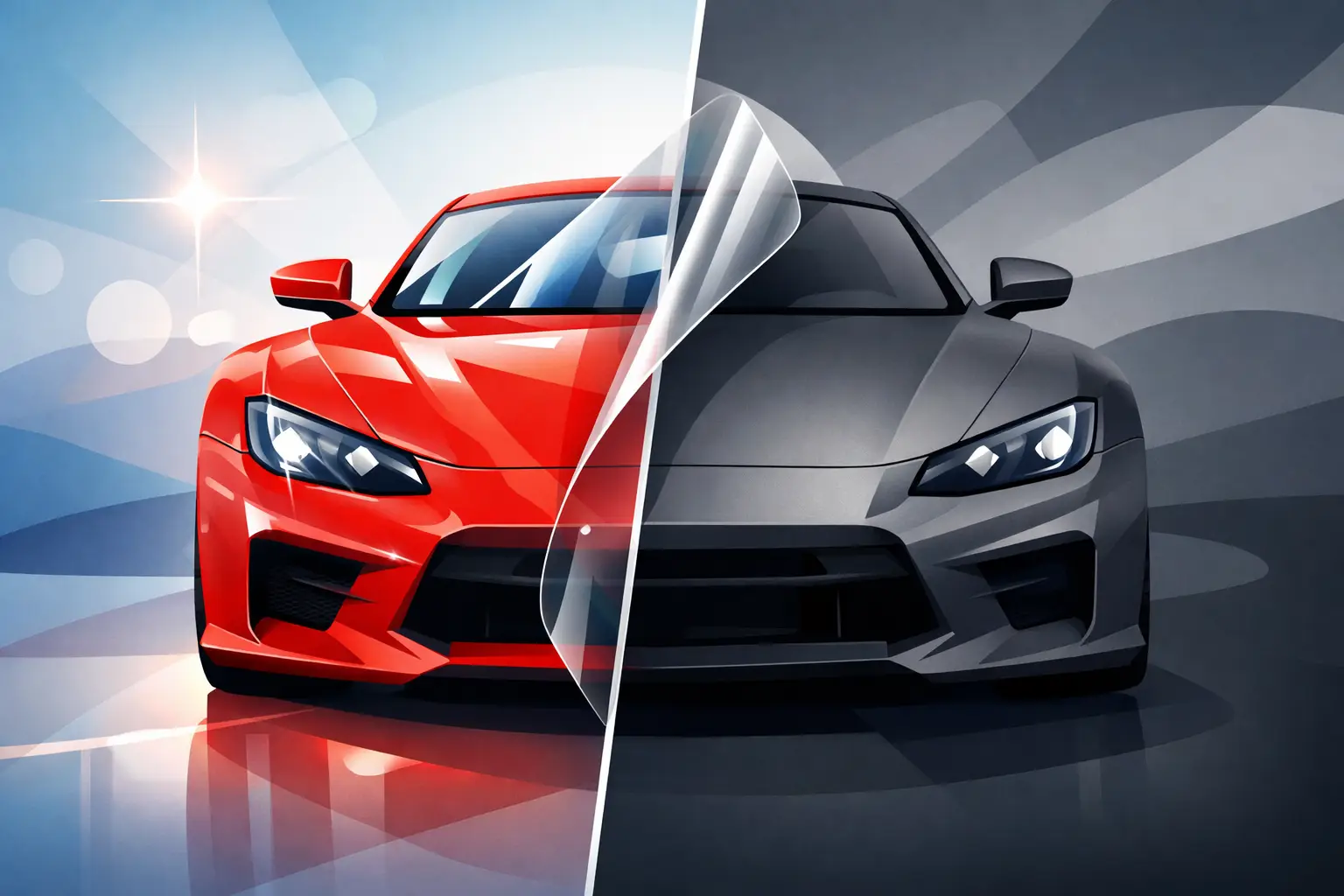
Your car can wear protection two very different ways. In the gloss ppf vs matte ppf conversation, the real question is not which one is better on paper – it is which one looks right on your vehicle, fits your routine, and still feels satisfying six months into Malaysian sun, rain, traffic, and weekly washes.
PPF is not just about blocking stone chips and preserving paint. It also changes how your car presents itself. One finish amplifies depth and reflection. The other softens the body lines into something more understated, modern, and deliberate. If you care about how your vehicle turns heads in a parking lot and how easy it is to live with every day, the finish matters as much as the protection itself.
Gloss PPF vs matte PPF: the visual difference
Gloss PPF is the clean, high-definition look most owners already understand. It keeps paint looking wet, reflective, and rich. On black, red, blue, and metallic factory colors, gloss film tends to make the car look freshly detailed more often. It works especially well for owners who love that polished showroom effect.
Matte PPF changes the personality of the car. Instead of sharp reflections, you get a smooth, satin-like surface that feels more bespoke. It can turn a standard factory gloss paint finish into something that looks more exclusive without repainting the car. On SUVs, performance sedans, and coupes, matte often creates a more aggressive and curated presence.
Neither is automatically the premium choice. They are premium in different ways. Gloss says immaculate. Matte says intentional.
What protection do both options actually give?
This is where many owners overcomplicate things. In terms of core paint protection, high-quality gloss and matte PPF are far more similar than different. Both are designed to shield the paint from light road debris, minor scratches, swirl marks, bug splatter, bird droppings, and the daily wear that slowly ages a car before its time.
If the film is a proper TPU-based product, both finishes can also offer self-healing behavior under heat and hydrophobic properties that help water and grime slide off more easily. That means the biggest decision is often not raw protection level, but finish preference, maintenance habits, and the kind of statement you want your car to make.
The catch is that the finish changes how damage, dirt, and touch-ups may appear over time. That is where the choice gets more personal.
Gloss PPF is easier to love if you already love gloss paint
Most car owners are naturally comfortable with gloss because it feels familiar. If you already enjoy washing your car, spotting reflections under lights, and seeing metallic flakes pop in the sun, gloss PPF usually feels like the safe and satisfying move.
It also tends to be more forgiving when your goal is to preserve the factory look rather than transform it. A newer vehicle with beautiful OEM paint often benefits from gloss film because the finish stays true to the original design language of the car.
There is also a practical side. Gloss surfaces can be easier to visually match with the rest of the vehicle if you are protecting only certain panels instead of wrapping the entire car. That matters for owners who want protection without changing the vehicle’s overall appearance.
Matte PPF is for owners who want protection with attitude
Matte PPF is not just a protective film. For many people, it is also a styling decision. It lets you keep the original paint underneath while giving the car a more custom finish up top. That makes it appealing if you want something more distinctive than standard gloss but do not want the commitment of permanent paintwork.
This finish works especially well on cars with strong body lines. Matte tends to emphasize shape over reflection, so the silhouette becomes the hero. On some vehicles, that looks stealthy and muscular. On others, it looks elegant and modern.
But matte asks for a little more certainty from the owner. You need to genuinely like the muted look, because it is a stronger visual statement than gloss. Some people fall in love instantly. Others miss the sparkle and shine after the first few weeks.
Which one is easier to maintain?
For everyday ownership, gloss usually feels more straightforward. It behaves more like traditional paint, and many owners are already familiar with how a gloss car should look after a wash. Water spots, fingerprints, and light dust still appear, but the finish is familiar enough that upkeep feels intuitive.
Matte is not high-maintenance in the dramatic sense, but it is less forgiving if you expect it to behave like gloss. You cannot chase shine on a matte surface because shine is not the goal. Certain maintenance mistakes stand out faster, especially if someone uses the wrong products or polishing mindset on the finish.
This is why installer guidance matters. A good studio will explain how to wash, dry, and care for the film according to its finish, not just hand over the car and hope for the best.
Gloss PPF vs matte PPF for daily drivers
If your vehicle is a daily commuter through city traffic, highways, open parking, and unpredictable weather, both options can make sense. The difference comes down to what bothers you more.
If you want a finish that looks freshly detailed, blends naturally with factory styling, and feels easy to live with, gloss is usually the better daily-driver choice. It suits owners who want protection first and style enhancement second.
If your daily driver is also your personal statement, matte can be incredibly rewarding. It gives even familiar models a more custom, upscale identity. For owners who are bored of seeing the same stock-looking cars everywhere, matte makes the vehicle feel more yours.
For luxury and performance cars, the choice is more emotional
On higher-end vehicles, finish choice often comes down to character. A gloss finish can highlight the richness of the paint and preserve the brand’s intended visual drama. Curves look liquid, metallic tones glow, and the car carries that classic high-end shine.
Matte, on the other hand, can make an exotic or performance car feel more exclusive because it is less expected. It shifts the vibe from glamorous to tailored. The result can look stunning, but only when the installation is precise. On premium cars, poor edges, misaligned sections, or rushed finishing ruin the effect immediately.
That is why craftsmanship matters just as much as product quality. A bold finish deserves a clean install.
What about dirt, marks, and long-term appearance?
This is where honest expectations help. Gloss tends to show reflections and surface contamination in a way most owners are used to noticing. Matte tends to show texture and uniformity more clearly, which means certain stains or inconsistent care habits may become more obvious.
Neither finish is magic. If the car is neglected, both will look tired. If the film is cared for properly, both can keep the vehicle looking far newer than unprotected paint.
Another thing to consider is your personality as an owner. If you are particular about appearance and enjoy regular upkeep, either finish can work beautifully. If you want the least mental friction and the most familiar ownership experience, gloss usually wins.
When should you choose gloss, and when should you choose matte?
Choose gloss if you love factory-style shine, want the paint to look richer rather than different, or prefer a finish that feels more traditional day to day. It is the natural fit for owners who want strong protection while keeping that polished, high-clarity look.
Choose matte if you want protection with a stronger design statement, prefer a stealthier or more modern aesthetic, or want to transform the car’s presence without changing the original paint underneath. It is for owners who see their vehicle as more than transport and want a finish that feels curated.
If you are torn, the smartest move is to stop treating it like a spec-sheet decision. Look at your car’s shape, color, and personality. Think about where it is parked, how often it is washed, and whether you smile more at deep reflections or muted surfaces. That answer is usually more accurate than any trend.
At a studio like Project Unicorn, the best recommendation is rarely one-size-fits-all because the right finish should match the car and the owner in equal measure.
The best PPF finish is the one that still feels right every time you walk back to your car, glance over your shoulder, and think, yes, that is exactly how it should look.