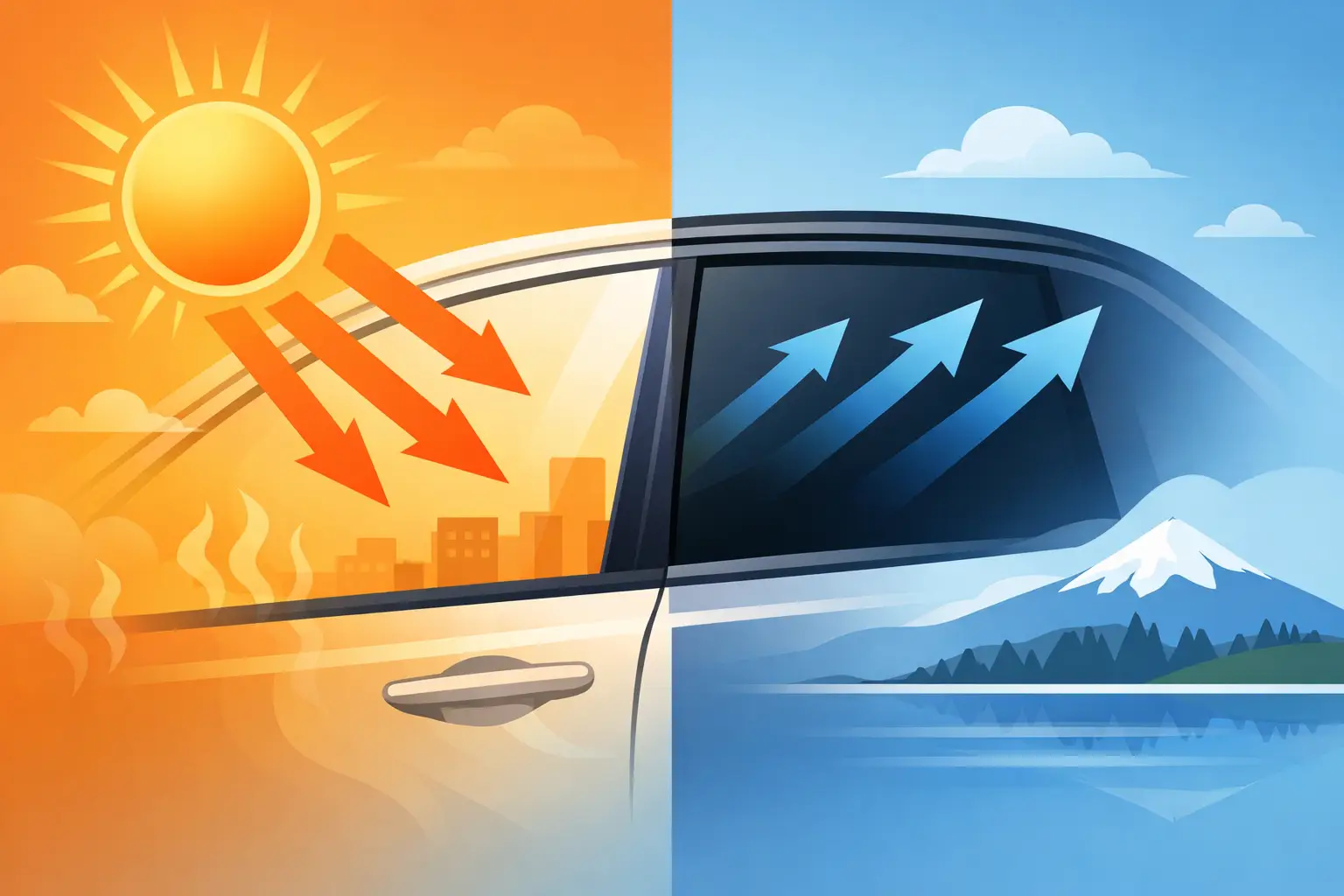
Step into a car that has been parked under afternoon sun and you feel the difference instantly. Seats bite, the steering wheel burns, and the cabin holds heat like an oven. If you are searching for the best window tint for heat reduction, the real answer is not just about choosing the darkest film. It is about choosing the right technology for how you drive, where you park, and how much comfort you expect every day.
In a hot, bright climate, window tint is not a cosmetic extra. It changes how your cabin feels, how hard your air conditioning has to work, and how protected your interior stays over time. The trick is knowing which type of tint actually blocks heat well, and which ones simply look dark from the outside.
What actually makes a tint good at blocking heat?
A lot of drivers assume darker film means cooler cabin. Sometimes it helps, but darkness alone is a poor shortcut. Heat rejection comes from how the film handles solar energy, especially infrared heat, not just visible light.
That is why two cars with similar-looking tint can feel completely different in the sun. One may still feel warm and harsh, while the other stays noticeably calmer and easier to cool down. The difference usually comes down to film construction, material quality, and installation precision.
When people ask for the best window tint for heat reduction, they are usually trying to solve three things at once. They want less cabin heat, less glare, and better UV protection for themselves and the interior. A quality film should balance all three without making night driving uncomfortable.
Best window tint for heat reduction: which type wins?
If heat control is the priority, ceramic and sputter films are usually the strongest options. They are built for performance, not just appearance.
Nano ceramic tint
Nano ceramic film is one of the most popular premium choices for drivers who want strong heat rejection without going excessively dark. It works by filtering a significant portion of infrared heat while still allowing useful visibility. That matters if you want a cleaner, more refined look and still need confident driving in rain or at night.
Another reason ceramic stands out is stability. Good ceramic films resist fading and continue performing well over time. They also do not interfere with electronics the way older metallic films sometimes can. For modern vehicles packed with smart sensors, GPS, and signal-dependent systems, that is a real advantage.
The trade-off is simple. Ceramic is a premium-grade solution, so expectations should be premium too. Not all ceramic films are equal, and a cheap film labeled ceramic may not perform like a true high-performance one.
Sputter tint
Sputter film is another serious contender if you want excellent solar control. This type of film uses advanced metal particle layering to reflect heat effectively, often delivering very strong overall heat rejection. In real-world driving, that can translate into a cabin that cools faster and stays more comfortable during long daytime commutes.
Sputter tint is especially appealing for drivers who want a high-performance feel with a refined finish. On the right vehicle, it can complement the glass nicely without looking overly flashy.
Its trade-offs depend on the specific film and vehicle. Some metal-based technologies can be more sensitive when paired with certain electronic systems, so product selection matters. This is where expert recommendation becomes more important than chasing specs alone.
Dyed tint
Dyed film is usually the entry-level option. It improves appearance, cuts some glare, and can help a little with heat, but it is generally not the best choice if your main problem is aggressive cabin temperature.
For drivers who regularly park outdoors or spend a lot of time on the road in strong sun, dyed tint often falls short. It may look the part, but it does not usually deliver the same level of heat rejection as ceramic or sputter film.
The specs that matter more than darkness
Window tint marketing can get noisy fast. You will see percentages, terms, and performance claims everywhere. To make a smart decision, focus on the specs that actually affect comfort.
Infrared rejection
This is one of the biggest indicators of heat-blocking performance. Infrared energy is a major source of the heat you feel on your skin and inside the cabin. A film with strong infrared rejection usually feels better in direct sun, even if it is not the darkest option.
Total solar energy rejected
This figure gives a broader picture of how much solar energy the film blocks. It is useful because it looks beyond appearance and measures real thermal performance. A higher number generally means better heat control, though it should be read alongside other specs rather than in isolation.
UV rejection
UV protection is not the same as heat rejection, but it absolutely matters. High UV rejection helps protect leather, dashboards, trim, and skin from long-term sun exposure. Most premium films perform very well here, so this is often a baseline expectation rather than the deciding factor.
Visible light transmission
This is the amount of visible light that passes through the film. Lower visible light transmission means a darker tint. It affects privacy and style, but it is not a direct measure of heat rejection. Some lighter premium films outperform darker low-grade films by a wide margin.
Choosing the right tint for your car and driving style
There is no single best film for every owner because usage matters.
If your car is a daily driver that sits in open parking for hours, prioritize heat rejection and UV protection first. This is where a high-performance ceramic or sputter setup makes the most sense. The comfort payoff shows up every single day, especially on front side windows and the windshield area where legal compliance and visibility need careful consideration.
If you drive a luxury car, performance SUV, or enthusiast build, the decision is also about finish and balance. The best tint should not fight the design of the vehicle. It should enhance the glassline, preserve visibility, and feel like part of a complete transformation rather than an afterthought.
If night driving is a big part of your routine, avoid choosing film based on privacy alone. A tint that feels perfect at noon can become frustrating in wet nighttime conditions if it is too dark for your comfort level. The smarter move is often a higher-performing film in a moderate shade.
Why installation matters as much as the film
Even the best film can disappoint if the install is rushed. Heat rejection performance depends on proper fitment, clean glass preparation, and careful application. Poor edges, contamination, bubbling, or inconsistent alignment will not just ruin the look. They can shorten the life of the tint and make the entire upgrade feel cheap.
A premium car deserves precision, but so does a daily commuter. Good installation is part of the value. It is what makes the finish look factory-clean and the performance feel intentional.
That is also why expert consultation matters. A skilled studio will ask how you use the car, whether you prioritize cabin comfort, privacy, visibility, or aesthetics, and then recommend the right film instead of pushing a one-size-fits-all package.
Common mistakes drivers make when shopping for heat-reducing tint
The first mistake is chasing the darkest film. Dark glass may look aggressive, but it does not guarantee stronger heat control. The second is focusing only on one number from a spec sheet. High infrared rejection sounds impressive, but the full performance picture matters more.
Another common mistake is treating all premium-sounding films as equal. Terms like ceramic can be used loosely, and product quality varies. The final mistake is ignoring aftercare and workmanship. A beautiful install with authenticated, high-performance film will almost always age better than a bargain solution that looked good on day one.
So, what is the best window tint for heat reduction?
For most drivers who want the strongest balance of comfort, clarity, and long-term performance, nano ceramic tint is often the best all-around choice. It delivers serious heat rejection, excellent UV protection, and a premium finish without depending on extreme darkness.
For drivers who want top-tier solar control and are open to a more performance-focused film profile, sputter tint is also a strong option. In the right setup, it can be exceptionally effective.
The better question is not just which film is best on paper. It is which film is best for your car, your roads, your parking habits, and your expectations. That is where a premium studio makes the difference. A tailored recommendation will always outperform a guess based on shade alone.
If your goal is a cabin that feels cooler, looks sharper, and holds its comfort longer under real-world sun, choose technology first, shade second, and craftsmanship every time. That is how a car stops feeling standard and starts feeling properly finished.